Cryptocurrencies are property, Singapore court rules, as it freezes US$7m in 'stolen' crypto

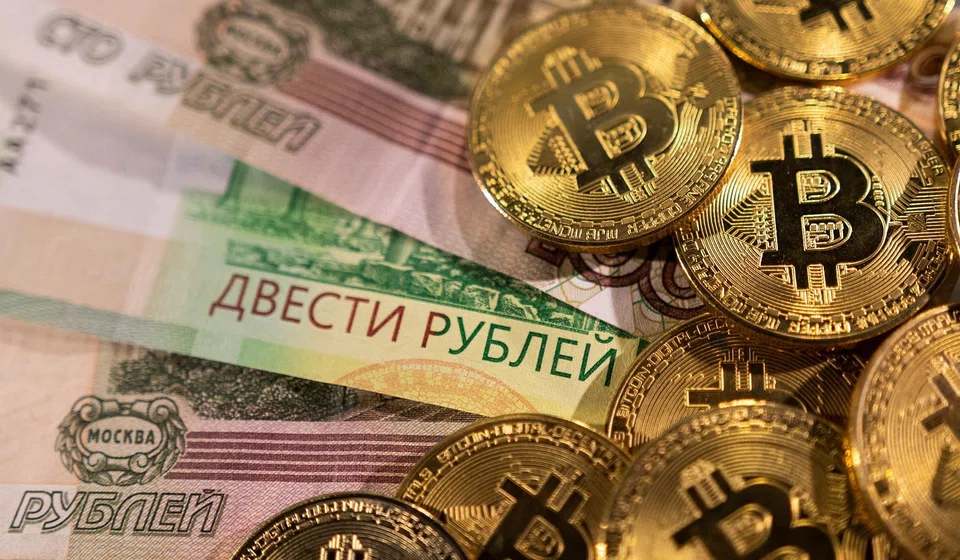
SINGAPORE'S High Court has allowed an application by an American entrepreneur to freeze over US$7 million in crypto assets he claims had been stolen by unknown individuals and entities.
In a judgement made public on Friday (Mar 4), the court ruled on 2 novel points of law.
First, cryptocurrencies are a property right and, when stolen, can be be subject to proprietary injunction.
Second, the court has jurisdiction to grant interim orders against defendants with unknown identities.
Crypto exchanges were also asked to disclose information that could help recover the stolen assets.
The court heard that before the alleged theft, the plaintiff, who is unnamed in the judgement, had stored his cryptocurrencies in 2 decentralised wallets accessible through mobile apps via a password or biometric keys.
The wallets can also be accessed using "recovery seeds", which typically comprise a sequence of words.
In January 2021, the plaintiff was on vacation with 7 acquaintances in Mexico.
While he was out one night, the plaintiff called one of these acquaintances to help retrieve cash from his apartment which they were residing. He shared the passcode to access the safe over the phone, and the acquaintance had read it aloud to confirm it.
The following night, the plaintiff discovered that his crypto was withdrawn without his knowledge and consent.
Around 110 bitcoin and 1,498 ether were transferred from the 2 wallets in 3 transactions, within 4 minutes.
This amounted to US$7.09 million based on the value of the cryptocurrencies then.
The plaintiff believes the thieves obtained his recovery seeds by accessing the safe after the acquaintance read the passcode aloud. The plaintiff had sought a proprietary injunction and worldwide freezing injunction against the unknown "thieves".
In the judgment, High Court judge Lee Seiu Kin ruled that cryptocurrencies are recognised as property as they are distinct based on their "computer-readable strings of characters", have exclusive ownership, are "potentially desirable" by third parties, and have "some degree of permanence or stability".
Justice Lee also acknowledged the risk of the defendants further dissipating the stolen assets, which would make it even more difficult for the plaintiff to recover them.
He added that the risk in this case is heightened by the nature of cryptocurrency. "The stolen cryptocurrency assets are susceptible to being transferred by the click of a button, through digital wallets that may be completely anonymous and untraceable to the owner, and can be easily dissipated and hidden in cyberspace," Justice Lee said.
The judge also granted a worldwide mareva injunction that freezes up to US$7.09 million of the defendants' assets.
Justice Lee also ruled that the court can grant interim orders against the defendants even though their identities were unknown when the plaintiff brought his case before the court.
"There is nothing in our Rules of Court that requires a defendant to be specifically named," he said.
The court heard that the plaintiff later managed to identify 2 individuals who are part of the group of crypto thieves and will serve the orders on them via email as their physical whereabouts are unknown.
The plaintiff was also able to trace part of the stolen crypto to 2 wallets held by crypto exchanges based in Singapore but incorporated in Cayman Islands and Seychelles, respectively, a US-incorporated crypto exchange, and a US-incorporated digital payments firm. The 2 US-incorporated entities have wholly-owned subsidiaries in Singapore.
All 4 entities are believed to be "innocent third parties". Nevertheless, the 2 Singapore-based exchanges were ordered to disclose information they had collected in relation to the relevant accounts as well as details of all transactions involving these accounts from the dates the stolent funds were credited against them.
Decoding Asia newsletter: your guide to navigating Asia in a new global order. Sign up here to get Decoding Asia newsletter. Delivered to your inbox. Free.
Copyright SPH Media. All rights reserved.