How to regulate the crypto world: market players offer myriad solutions but little concurrence
Due diligence requirements, customer knowledge assessments among possibilities, say exchange operators, traders polled by BT

Kelly Ng
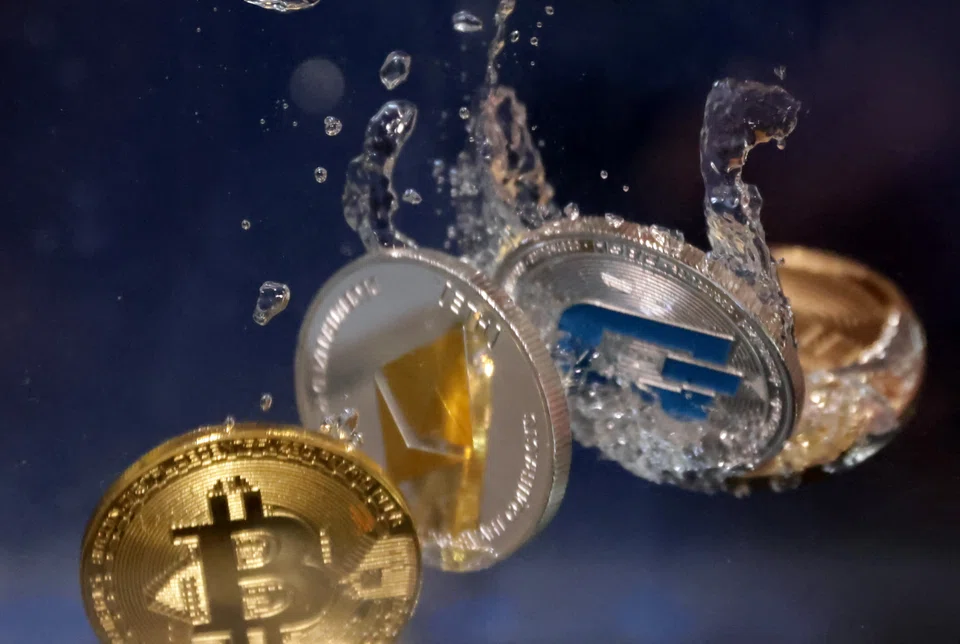
THE ongoing cryptocurrency rout, triggered in part by the collapse of popular stablecoin TerraUSD, has sent regulators around the world scrambling to strengthen investor protection.
Singapore authorities, who have consistently taken the view that cryptos are not suitable for retail investors, issued their strongest warning yet last week and signalled that further regulations are at hand.
“Retail investors especially should steer clear of cryptocurrencies. We cannot emphasise this enough,” Deputy Prime Minister Heng Swee Keat said at a tech summit last Tuesday (May 31), where he noted that some have lost their life savings to the recent Terra meltdown.
Singapore recognises the need to “adapt its rules” to facilitate innovation and yet address the key risks of crypto assets, he added.
Singapore’s Payment Services Act 2019 (PSA) currently requires entities that offer payment instruments, including digital tokens, to be licensed. But the authorities have also granted many companies temporary exemptions from the law while their licence applications are being reviewed.
Earlier this year, the Monetary Authority of Singapore (MAS) also issued guidelines against the public promotion of crypto trading. Industry associations are working on a code of practice for self-regulation on this front.
The Business Times (BT) polled crypto stakeholders – including investors, crypto companies and lawyers – on what other rules they would want to see.
Regulating exchanges
Most of their suggestions involve regulating the primary intermediaries between retail investors and crypto assets – the crypto exchanges.
One is for exchanges to conduct due diligence on the coins and tokens listed, with the regulator providing a checklist of necessary information and documentation.
“Otherwise, the exchanges have an incentive to just onboard (as many altcoins as they can) for the listing fees,” said a crypto investor who works in traditional finance.
A Jun 1 report by the Economist Intelligence Unit (EIU) noted that “fierce competition between exchanges has led to the listing of a large number of unique tokens in recent times, with no attempt on the part of exchanges to undertake proper due diligence before allowing such listings”.
Swarup Gupta, an EIU industry manager, said that exchanges can be influential: “Retail investors, in particular, lack the ability to assess such tokens prudently and, therefore, believe that a listing on a major crypto exchange is proof of their investment-worthiness.”
Indeed, TerraUSD’s collapse has shone an uncomfortable spotlight on the regulatory framework in Singapore. Terraform Labs and Luna Guard Foundation, the 2 organisations that support the stablecoin, are both registered in Singapore but unlicensed.
Another possibility would be to subject exchanges to capital requirements, similar to the minimum capital-adequacy ratios banks are held to.
Last year, the Basel Committee on Banking Supervision, the global banking regulator, called for banks with exposure to cryptocurrencies to face tougher capital requirements.
But Desmond Yong, chief strategy officer at Digital Treasures Centre, was concerned that doing so could “stifle startups with promising products, but on bootstrap budgets, from growing and developing”.
EIU’s Gupta suggested instead mandating that customers’ assets be isolated from the exchange’s corporate funds, which would facilitate recovery in bankruptcy proceedings.
The United States has reportedly been pressing for such legislation, after leading crypto exchange Coinbase’s recent admission that customers would be treated as general, unsecured creditors in the event of bankruptcy.
Chua Peiying, a partner in Linklaters’ financial regulation group, recommended introducing insider dealing and other market conduct rules, similar to those in place for traditional finance. This may help prevent rug-pull or pump-and-dump scams, she said.
Such rules currently cover securities under Part 12 of the Securities and Futures Act 2001, but do not apply to digital payment tokens under the PSA.
Her suggestion comes as a former employee of non-fungible token marketplace OpenSea was last Wednesday charged with insider trading, marking the cryptosphere’s first such indictment.
Testing and empowering investors
Lawyer Chris Holland, a partner at Singapore-based compliance, legal and C-Suite solutions firm Holland & Marie, said that companies providing digital-payment token services should conduct suitability tests before onboarding retail customers in Singapore.
MAS currently requires financial institutions to assess investors’ knowledge and experience before allowing them trade some higher-risk products.
“Assuming only retail purchasers who have the requisite knowledge and risk tolerance would be permitted to purchase digital payment tokens in Singapore, the risks presented by cryptocurrency advertisements to the general public should decrease and could lead to (the) service providers being able to conduct fair and balanced advertising of their services,” he said.
Linklaters’ Chua added that such knowledge assessments could “ward off inexperienced, new or gullible investors who are merely hopping onto a trend”.
Another lawyer, Ronald Wong of Covenant Chambers, said that exchanges and digital asset wallet providers should also consider implementing a “kill switch” mechanism - similar to what was recently mandated for banks here - for customers to freeze their accounts.
“Given the value of digital assets at stake and the volume of transactions, such mechanisms will engender trust and encourage wider user adoption in this ecosystem,” he wrote in a LinkedIn post last week.
Another crypto investor said that he would benefit from greater clarity on MAS’ Investor Alert List, which lists unregulated individuals and entities that “may have been wrongly perceived as being licensed or regulated”.
“There’s little transparency about how and why MAS includes a particular entity on the (list),” he noted.
Another investor suggested having a platform for users to submit complaints on crypto companies that may be operating unlawfully or engaging in practices harmful for investors.
Regulations should level playing field
Still, many crypto players BT spoke to declined to recommend specific regulations. Some said doing so would be too “preliminary”, and they did not want to mar relationships with the regulators.
Others were more concerned about the global implications of regulations.
Gemini’s chief compliance officer for the Asia-Pacific, Andy Meehan, said: “What is more important here is for regulators across the globe to commit to a consistent set of regulations.”
If only a few jurisdictions attempt to strengthen regulations, investors could just move their money instead.
Already, entities in Singapore operating under a PSA exemption appear to have an edge over licensed entities, or those serious about seeking a licence, said one employee at a crypto company.
“They have a lot more room to offer products that we can’t under MAS’ guidelines, such as crypto derivatives. Some are comfortable operating in this grey area, and if things catch up with them, they will just pack up and leave,” he said. “But in the near term, these less-regulated players have more flexibility to offer products with higher margins.”