

HSBC to grow alternative funds in broader Asean market
Singapore
HSBC is zeroing in on Asean markets to beef up its asset management business in the region, specifically as it expands its focus on alternative assets and ESG (environmental, social and governance) funds.
This strategy refresh has the bank shifting away from a distribution-only model to include in-house funds from this year, carving out new investment teams to meet demands, a top executive told The Business Times.
Malaysia, Thailand, Indonesia and the Philippines - where HSBC's wealth and personal banking business currently serves - are priority markets in its asset management push.
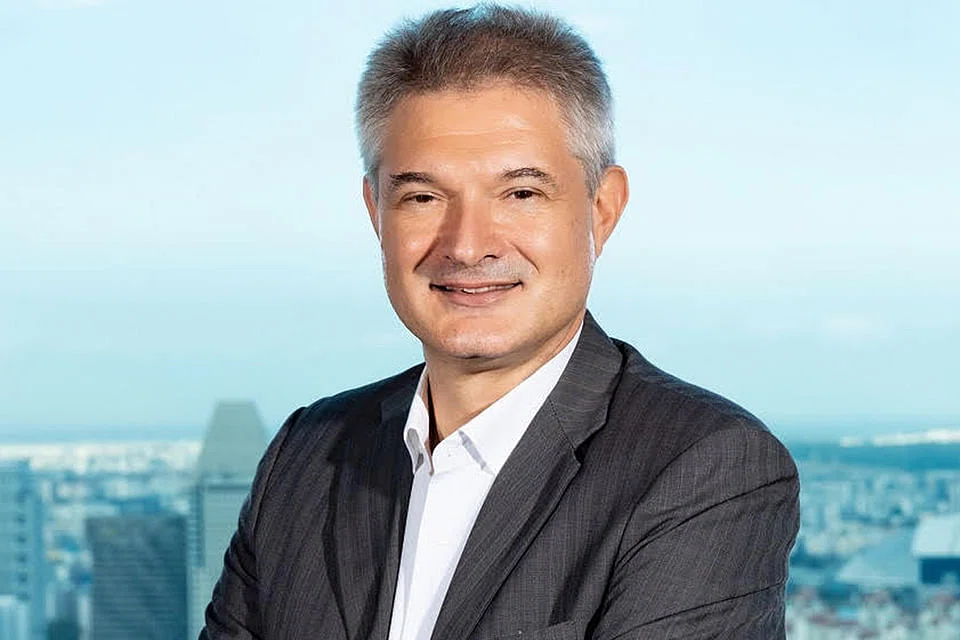
"This is really part of a wider strategy to expand from what is today very much a Singapore base," said Patrice Conxicoeur, Singapore chief executive and head of South-east Asia for HSBC Asset Management.
To date, almost two-thirds of HSBC AM's assets under management (AUM) in South-east Asia come from Singapore. Across Asia, AUM grew 11 per cent year on year to US$190 billion on strong net flows and positive fund performance, contributing to 31 per cent of global AUM as at end-September 2021.
The asset management opportunity in South-east Asia is expected to hit US$3.5 to 4 trillion in AUM by 2025, with more than half from the institutional segment, according to a report by Deloitte.
HSBC AM has its eye on both the private wealth and institutional segments - from retail and high net worth investors to fund distributors, insurance, institutions, sovereign wealth funds and corporates.
"The mass affluent and high net worth population in South-east Asia will continue to drive very substantial growth in demand for wealth, health and even insurance products for individuals and families and business owners," said Conxicoeur.
He observed that alternative assets have gained significant traction in recent years as regulations evolve in tandem with an increasingly sophisticated investor base.
"The idea that there is an illiquidity premium that should be captured over time has become mainstream now, and is being applied by investors across the spectrum," noted Conxicoeur.
Today, prolonged low interest rates globally have escalated the hunt for assets that offer better yield or income over equities and fixed income.
Data from Preqin showed that AUM for Asean's private equity and venture capital industry came in at a record US$33 billion in September 2020, almost doubling in 5 years.
In June, HSBC AM consolidated all of its existing alternatives businesses under a single unit, HSBC Alternatives, with a combined AUM of US$45 billion and a 150-strong team.
A Singapore-based direct real estate team was recently set up to further build out the alternatives business in the region and provide locally invested real estate exposure to the bank's global client base.
While demand for non-traditional assets is on the rise, Conxicoeur acknowledged that competition will be fierce as more asset managers capitalise on the boom. "The danger is that this could become very crowded... very undifferentiated."
One of the ways HSBC AM is looking to innovate is by integrating ESG themes into alternatives.
In May, it appointed a new climate technology team to provide investors with early exposure to tech startups that are addressing the challenges of climate change.
The team's venture capital investment strategy will focus on companies across the energy, transportation, insurance, agriculture and supply chain sectors, with the first fund expected to be launched by end-2021 with an intended cornerstone investment from HSBC.
As at October, globally there are US$3.1 trillion of private capital AUM managed by firms committed to ESG investing, representing 36 per cent of total private capital AUM, according to Preqin data.
Last August, HSBC AM partnered with Pollination, a specialist climate change investment firm, to "mainstream natural capital as an asset class", said Conxicoeur.
This venture will bring to markets private funds that are focused on nature-based assets, with themes such as sustainable forestry, coastal restoration and wildlife protection.
"You might say nature is the oldest thing in the world. By definition, that would be right, but nature-based investment solutions are something innovative," said Conxicoeur.
The ability to quantify natural capital value creation, he stressed, will be key to unlocking more financing. As the saying goes, what can be measured can be managed.
"Ultimately, all of this must lead to numbers, things that we can measure, aggregate and very importantly, things that we can report about to our investors," he noted.
As it is, inconsistent approaches to reporting across the industry and a lack of high-quality data make getting a full view of any private company's ESG performance tricky and comparing them nearly impossible, according to Preqin.
To tackle some of these challenges, HSBC AM pools databases from external sources with its own research to evaluate companies, with a longer-term goal to develop an in-house scoring system.
"This scoring system is something that needs to be adjusted industry by industry. What matters to a utility producer will obviously not be the same as to a bank or an insurance company. There's a real need for granularity," said Conxicoeur.
In the traditional assets space, HSBC AM has launched several funds focused on climate change and social issues such as rising healthcare costs.
While retail and high net worth investors' appetite for the Global Equity Sustainable Healthcare and Climate Change funds "remains muted", demand is expected to pick up in 2022, according to Conxicoeur.
Overall, the bank's Singapore retail customers' investments into ESG-themed funds have grown 4-fold year on year.
Amid market volatility, more investors are approaching sustainable investing as a long-term strategy as opposed to one that could be more tactical in nature, said Conxicoeur.
"In these times, you may want to think about sustainability perhaps as part of your risk management strategy. The sustainability and responsible investment agenda is a primary source of bright spots (in the market) because there are genuine opportunities around."
TRENDING NOW
‘We don’t want to stay as we are’: CEO Patrick Ng builds a more resilient Huationg
URA to review guidelines on floor space to give developers more design flexibility: Chee Hong Tat

He built the Vingroup empire. Now South-east Asia’s richest man is handing some key roles to his sons
32 companies, 6 individuals bag accolades at Singapore Corporate Awards 2026

