
Indonesia raises reserve limit while keeping key rate steady
 Add BT as a preferred source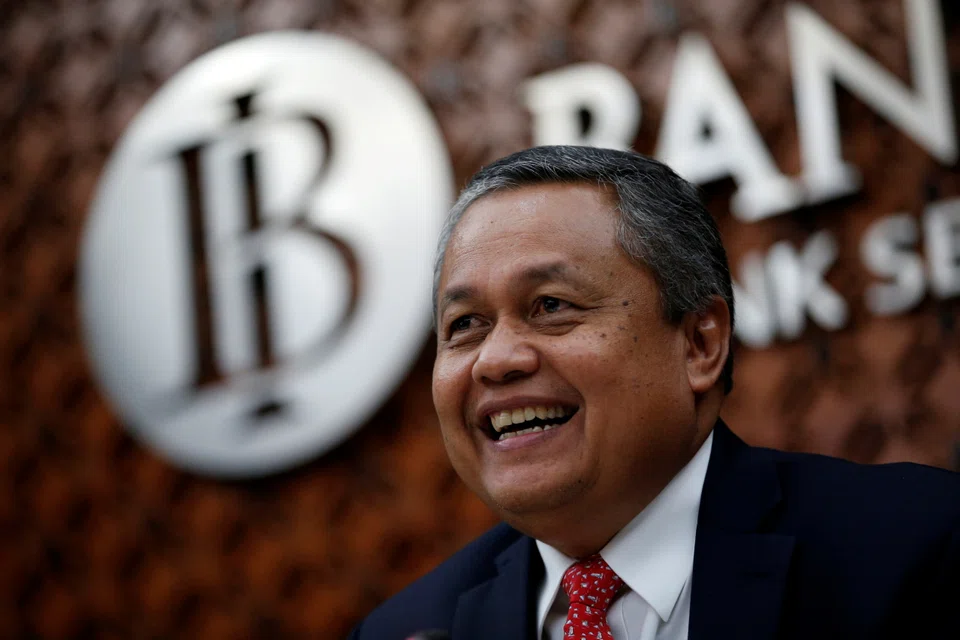
INDONESIA'S central bank tightened reserve limits on lenders, while keeping the benchmark interest rate unchanged, as it seeks to withdraw excess liquidity without hurting the economy's recovery from the pandemic.
Bank Indonesia plans to raise the reserve requirement ratio for banks to 9 per cent in September from previously announced 6.5 per cent, governor Perry Warjiyo said in a briefing on Tuesday (May 24). It left the main seven-day reverse repurchase rate at 3.5 per cent as forecast by 20 of 30 economists in a Bloomberg survey.
The bump up in reserve ratio will force lenders to park more money with the central bank.
Indonesia's government bonds edged lower after the decision while the rupiah was more muted, having strengthened about 0.2 per cent against the dollar earlier on Tuesday.
The move complement's the government's efforts to check price pressures by boosting spending to subsidise energy costs this year. That has given Bank Indonesia more room to keep rates at a record low to support the economy, even as its regional peers in Malaysia and the Philippines joined other central banks in raising borrowing costs to combat inflation.
Although headline inflation in Indonesia climbed to a 3-year high of about 3.5 per cent fanned by volatile food costs, the core inflation measure tracked by Bank Indonesia for setting policy has remained below 3 per cent.
Navigate Asia in
a new global order
Get the insights delivered to your inbox.
The central bank maintained its economic growth forecast for this year at 4.5 per cent-5.3 per cent, a level closer to the rate of expansion seen before the pandemic. It kept its inflation target band at 2 per cent-4 per cent for the current year and the next.
Some key points from the governor's briefing:
- Inflation, global monetary policy normalisation, geopolitical tensions are all risks to slow global growth, Governor Warjiyo said
- Indonesia inflation remains under control, pressures will continue going forward due to global commodities prices
- Sees limited forex inflows into emerging economies, including Indonesia
- Domestic economy supported by strong exports
- Also reiterates 2022 current account deficit forecast at 0.5 per cent-1.3 per cent of gross domestic product
BLOOMBERG
Decoding Asia newsletter: your guide to navigating Asia in a new global order. Sign up here to get Decoding Asia newsletter. Delivered to your inbox. Free.
Share with us your feedback on BT's products and services

