Insurer AGCS 'seeing a much-stronger increase in premiums' for 2019
It will probably take 2-3 years to get back to adequate premium to risk relationship: CEO

Dennis Chan
Singapore
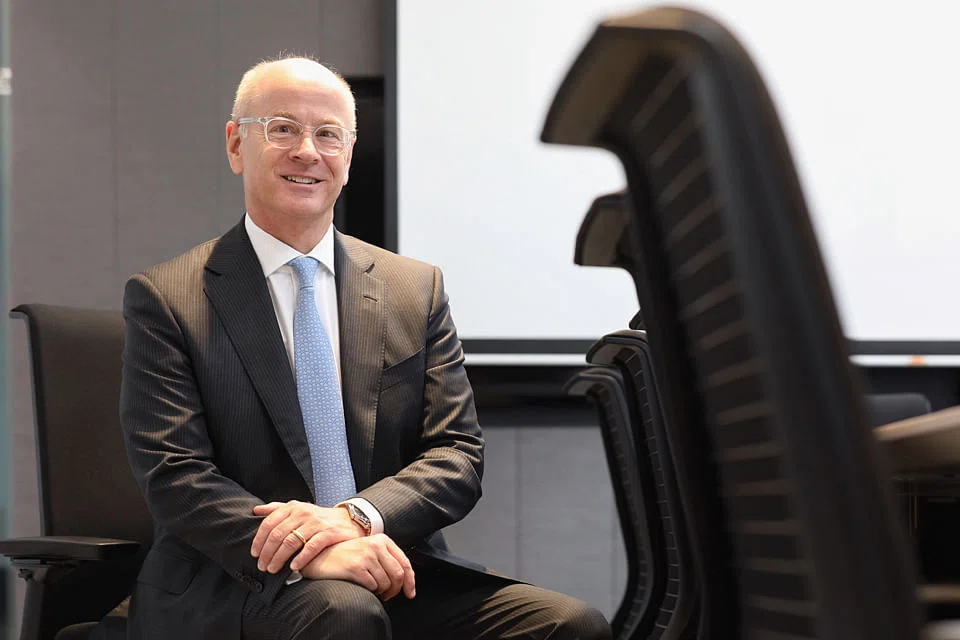
INSURANCE premiums are likely to see a firmer rise this year following a marginal increase in 2018, said Allianz Global Corporate & Specialty (AGCS) chief executive Chris Fischer Hirs.
The overall market rose for the first time in 2018 after years of decline - and it will take several more years of premium adjustments before the risk-reward balance can be restored, Mr Fischer said in an interview with The Business Times.
"Since 2006, rates have been declining, coverage has been expanding. So there is more cover for less premium," he said.
A benign environment for claims in some years, overcapacity in the market and stiff competition have all contributed to the imbalance.
"If you look at the pricing across our international business through all our lines of business over the last decade or so, what we have seen is a continuing erosion of margins and decline in rates. This is driven largely by over-capacity in the market and competition.
"My view is to get back to a premium level that is adequate for the expanded covers that we are writing... (it) will probably take us two, three years."
The challenging environment was reflected in Allianz Group's results. For the first quarter ended March 31, property-casualty unit AGCS reported a 24 per cent drop in operating profit to 106 million euros (S$162 million) despite a 23 per cent rise to 1.29 billion euros in net premiums earned.
AGCS's combined ratio - a measure of profitability - deteriorated by 5.1 percentage points to 99.7 per cent. The ratio is derived by dividing cash outflows - including incurred losses and expenses - by the total premiums collected. A ratio below 100 per cent indicates that the insurer is making an underwriting profit.
For 2017 and 2018, AGCS's ratio exceeded 100 per cent. It is not just AGCS; other big players are suffering too.
AGCS's combined ratio of 101 per cent in 2018 was in the lower mid-range compared to its major competitors - and it's better than the industry average of 109 per cent for the corporate insurance segment.
The past two years were also marked by notable claims activities, particularly, in 2017 which had record natural catastrophe events.
According to the National Oceanic and Atmospheric Administration, three major hurricanes - Harvey, Irma, and Maria - struck in 2017, causing some US$265 billion in damages and contributing to the costliest year in terms of weather and climate disasters for the United States.
Mr Fischer said 2018 results were affected by an extraordinary loss pattern and did not reflect the progress the insurer has made in many areas.
"In many segments we - and also the market - have seen higher losses than expected. AGCS showed strong premium growth and significant expense ratio improvements in a challenging loss year."
More customers are also filing claims in the industry, with AGCS's Q1 results also hit by attritional losses that were lower in value but higher in frequency.
"2018 saw very active claims environment across all businesses, all classes, and this has continued into 2019. That's why in 2018 we saw for the first time a light increase in premium and 2019 is certainly seeing a much-stronger increase in premiums," said Mr Fischer.
However, the increase will not be across the board but specific to individual clients and their risks.
"Some clients will be able to renew with no increase but others will need to increase at 50-70 per cent."
Among some of AGCS's notable large losses in Q1 were its exposure to the collapse of a mining dam in Brazil and aviation losses stemming from the crash on March 10 of an Ethiopian Airlines Boeing 737 MAX jet that killed 157 people. Investigators have since determined that a software glitch could have been responsible for the crash and that of another last October, when a 737 MAX aircraft operated by Lion Air dived into the sea, killing all 189 people on board.
The similarities of both accidents have prompted aviation authorities around the world to ground all Boeing 737 MAX aircraft.
As one of the leading global aviation insurers, AGCS has potential exposures to both Ethiopian Airlines and Boeing, which includes an element of coverage for grounding of its aircraft.
However, it is not the lead insurer as it underwrites only single-digit percentage share on both the airline and plane manufacturer for aviation hull and liability.
Mr Fischer could provide little update on the situation from the insurer's point of view.
"We don't know for how long the grounding of 737 MAX will continue as even the Boeing leadership hasn't given any information on the timing. But even as of today, the impact on the aircraft manufacturer as well as on airlines is significant.
"We cannot comment on who may or may not be liable for claims arising from this event. Liability claims of this nature could take several years to fully settle and are therefore difficult to predict the outcome."
Last week, Boeing announced it would create a US$100 million fund over multiple years to help families and communities affected by the deadly crashes.
READ MORE: