

Insurers' critical-illness portfolios healthy, but risks lurk
They say greater awareness of need for health continues to drive demand, but claims for nine of them have more than doubled from 2018-2019

Singapore
ALTHOUGH four out of nine life insurers' critical illness (CI) portfolios reflected an underwriting loss before net investment income in 2019, the outlook for the CI business is still positive as greater awareness of the need for health continues to drive demand.
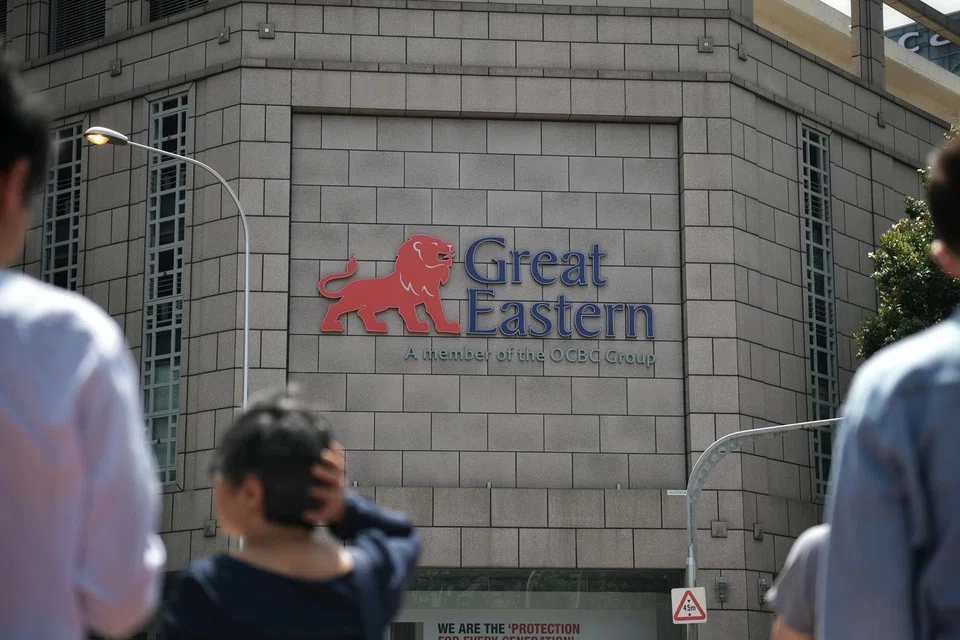
After taking into account investment income, two insurers - Great Eastern life and Manulife - incurred an operating loss on long term CI business.
Insurers maintain that their CI portfolios are healthy. Still, the number of claims for nine insurers has more than doubled from 5,152 in 2018 to 11,535 in 2019.
This underscores the need for prudent management particularly as the new generation of plans covers CI in varying stages and allow multiple claims within a single policy, subject to conditions. The potential benefit is also a multiple of the sum assured.
This suggests that pricing for the long term may be a key challenge, in addition to defining the terms which dictate the eligibility of claims.
While the Life Insurance Association has issued a fresh set of modified definitions for 37 severe stage CIs, The Business Times understands that the definition of early and intermediate stages of CI is up to insurers.
Renewability in a typical long term CI contract is guaranteed as long as premiums are paid, but premiums are not guaranteed to stay level. This gives insurers an additional lever to adjust for sustainability.
The industry takes a number of factors into account in the prudent management of the long term CI portfolios.
One is an estimation of future liabilities and the level of reserves for these liabilities. This has an impact on underwriting results.
Other factors that impact underwriting results include management and distribution costs. A spike in new business would raise distribution costs and may necessitate more reserves.
Low interest rates are also a factor in the calculation of reserves. Since these are long term CI contracts, insurers project the CI liabilities into the future.
A low risk-free discount rate magnifies the current value of liabilities and raises the reserve requirement. Low yields on fixed income assets also reduce investment income which will affect operating results.
In August 2019, the Life Insurance Association announced changes to the CI definitions "for clarity and continued relevance".
For applications signed by August 25, the grace period for transition to new definitions is extended to Feb 25, 2021.
This is because Covid-19 has made it difficult to arrange medical examinations for CI applications.
It is understood that the new definitions aim to enhance clarity and keep pace with medical advancements. They do not take into account insurers' product profitability.
Great Eastern Life (GE), for instance, reported an underwriting loss of S$113.68 million before net investment income. After investment income of S$44.8 million, the operating loss was reduced to S$68.8 million.
GE said the underwriting loss was due to a "one-off reserve strengthening" in 2019.
"The underwriting result for 2020 is expected to be favourable barring any unforeseen circumstances. So far, the claim experience and expenses are within our expectations," said GE.
Manulife's underwriting loss deepened from S$20.7 million in 2018 to S$$46.5 million. After net investment income of S$24 million, the operating result in 2019 was a loss of S$22.36 million.
AXA Insurance managing director Sean Goh said: "Our underwriting loss in 2019 was mainly due to a lower risk-free interest rate which resulted in higher increase in reserves. Overall our claims/gross premium ratio in 2019 was relatively stable compared to the previous year."
AXA reported an underwriting loss of S$3.8 million in 2019. After net investment income of S$16.2 million, its operating result was positive at S$12.43 million.
Tokio Marine Life Insurance Singapore reported an underwriting loss of S$8 million in 2019. After a robust net investment income of S$48.7 million, its operating result was S$40.72 million.
"For the long term product it is felt that 'operating results' would be more reflective of the nature of the business. The operating result is positive," said TM.
"There are many factors relating to underwriting results, for example, the new business strain/reserve build-up due to the nature of business, reinsurance arrangement, expenses. Claim is just one of the many factors.''
Aviva said its results improved thanks to increased take-up of CI policies such as My MultiPay Critical Illness Plan III and riders. It says over the past two years, take-up of CI plans have increased by 20 per cent year-on-year.
"The fact that the claims did not increase at the same pace as our premiums have helped to temporarily boost the underwriting results of the portfolio in 2019. The underlying profitability of the portfolio develops over time as these policies are long term in nature and claims may not occur until much later,'' Aviva said.
Insurers do not expect the new CI definitions to impact the claims process and underwriting results.
Stanley Ng, Prudential's head of product management, said "good product design, effective pricing, continuous experience monitoring and robust underwriting, claims and risk management" are key.
"All products carry a certain amount of risk and the same applies to CI plans. These risks would have been accounted for, even before a product is rolled out to customers," he said.
READ MORE: Critical illness cover: Read the fine print
TRENDING NOW

Grab executives buy back shares after stock hits 3-year low on Atome deal

Simba admits exceeding spectrum limits amid failed M1 deal; parent company Tuas’ full-year profit surges 277%

He built the Vingroup empire. Now South-east Asia’s richest man is handing some key roles to his sons

StarHub, Keppel confirm talks over potential M1 deal

