

Julius Baer posts record 2021 profits as restructuring plans bear fruit

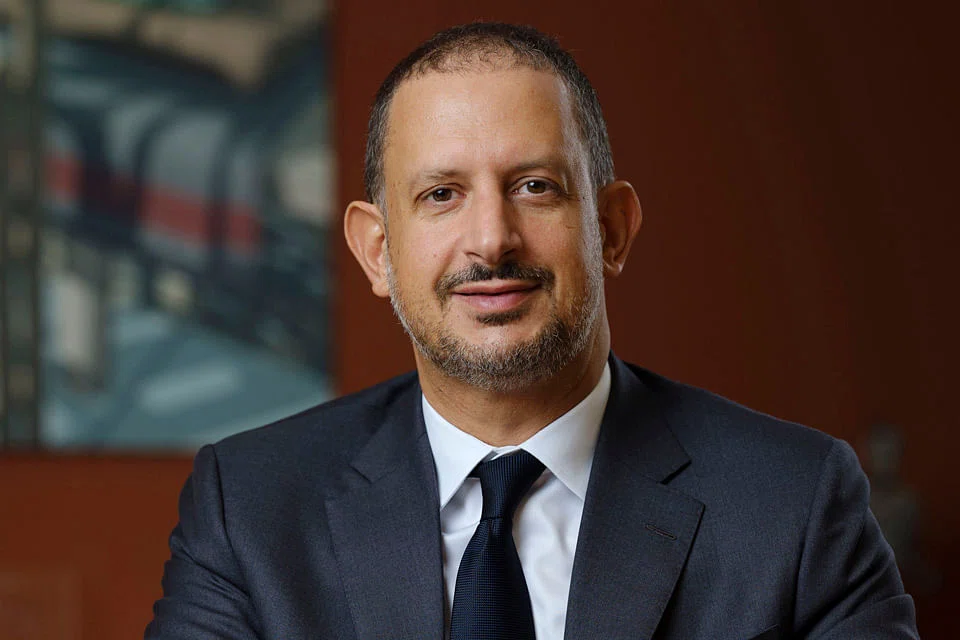
A PIVOTAL strategy to "dynamically modernise" Julius Baer Group has borne fruit well ahead of its three-year target: The group chalked up record net profits in 2021, despite Covid-19 restrictions and a reduction in the number of client relationship managers (RMs).
Net profit rose by 55 per cent to 1.08 billion Swiss franc (S$1.55 billion), marking the first time the 130-year old bank crossed the 1 billion Swiss franc threshold in profitability. Globally the number of relationship managers dropped by 7 per cent to 1,274.
Pre-tax margin improved to 28.2 basis points, from 27.2 basis points in 2020. Cost-to-income ratio also improved from 66.4 per cent to 63.8 per cent. The group's 3-year restructuring plan, announced early 2020, had set targets of pre-tax margins of 25 to 28 basis points, and cost-to-income ratio of 67 per cent or lower by 2022.
Assets under management (AUM) grew 11 per cent to 481.7 billion Swiss franc, with net new monies of 19.6 billion Swiss franc, compared to 15.1 billion in 2020. Asia accounts for about 26 per cent of global AUM, and also about a quarter of global staff strength of over 6,700.
Group chief executive Philipp Rickenbacher said: "When I took over as chief executive in 2019, we set out a clear strategy, shifting primarily from asset gathering to what we call sustainable profit growth, taking into account assets and also revenues and cost. We set out to sharpen our value proposition and deepen our capabilities to invest in new products and solutions, and to be clear on what we want to offer our clients.
"The market environment also offered a reasonable set of opportunities to clients, good volatility and an interesting investment environment. Those 2 elements - execution of the strategy and the market environment - have been the drivers of the best result of Julius Baer in its history."
The strategy centred around three key planks - sharpening and differentiating the value proposition for high net worth (HNW) and ultra HNW clients; investing 20 per cent more in technology to support human advice; and shifting its direction from asset gathering towards sustainable profit growth.
These shifts set out to sustain the group in an environment where competition among private banks continues to intensify. Asset growth alone was insufficient as margins were on a secular decline.
"In the past, the entire industry had an asset-gathering model, where money created revenues and profits. But that logic was broken by 2010; it had become easy to get new money but not revenues, and with negative interest rates, sometimes (the industry had) negative revenues. And the cost base was increasing, so profitability was deteriorating.
"We needed to look at this holistically, to generate net new money from different sources and from enlarging our share of wallet, which is more efficient than bringing in new clients. We needed to look into the pricing of products, to structurally look into our cost base, while still maintaining a personal relationship model."
The group has taken steps to enhance its capabilities, expanding further into areas like family office services; new solutions and mandates in discretionary and advisory portfolio services; and a private asset franchise to better cater for the appetite for private assets. "We've moved out of the old custody and brokerage model of 10 years ago which was very narrow, into a holistic and comprehensive wealth management service model," he said.
In terms of pricing, Julius Baer has an engine to capture the costs a client incurs relative to other clients, and how various market conditions may impact the pricing. "It's normally hard to see the outcome of different pricing elements, and we've brought much more control to that. We can now have very educated discussions with clients about value for money, and in a very disciplined way, we can ensure that the services we provide are ultimately paid for."
The group also has a new compensation framework for RMs, which Rickenbacker describes as "entrepreneurial", rewarding performance. "It obviously sets performance hurdles. I believe we can say with confidence that we want a performance culture. Those who perform well and have the drive can thrive in this environment."
Asia remains a promising growth area. Jimmy Lee, Asia-Pacific head, said: "Asia is still growing at a faster clip than anywhere else in the world... We pay attention to the life cycles of clients from wealth creation to wealth transfer. It is estimated that about one-third of wealth transfer is happening, but the older generation as they live longer, still remains in control. So we have a multi-pronged approach."
TRENDING NOW

Britain’s mansion tax shows the difficulty of targeting wealth

Once staunchly pro-China, Malaysian Chinese businesses are now distancing themselves from Beijing

The only common thing in S-E Asia is that we all eat rice: Cisco’s Asean president

Singapore data centre operator DayOne opts for US IPO at likely US$20 billion valuation

