MAS, Bank of Canada trial could make cross-border payments cheaper, faster, safer
The central banks' domestic payment networks were built on distributed ledger technology platforms and linked up

Fiona Lam
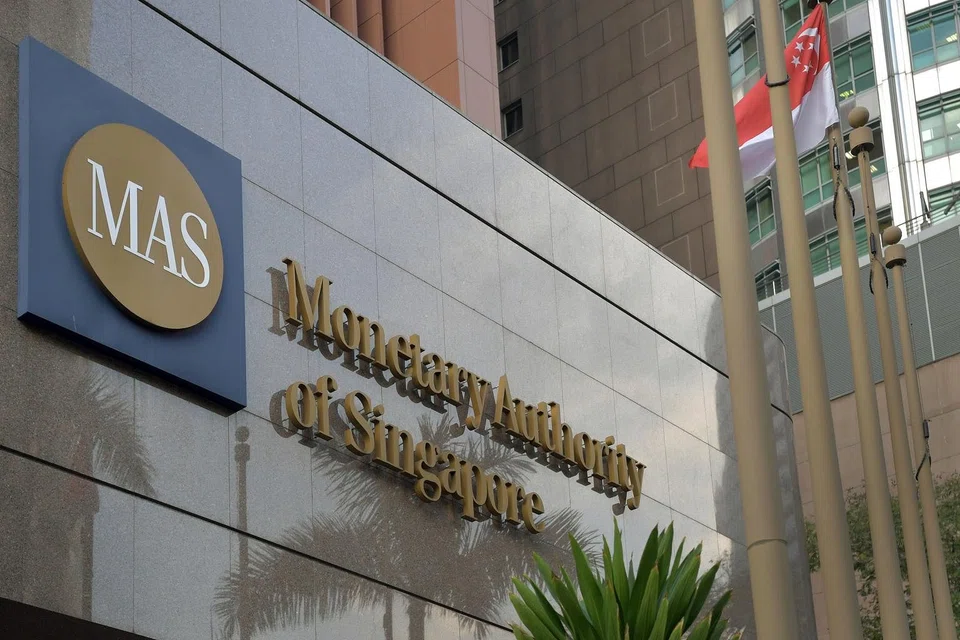
Singapore
A SUCCESSFUL experiment by the Monetary Authority of Singapore (MAS) and the Bank of Canada using central bank digital currencies and distributed ledger technology (DLT) could make cross-border and cross-currency payments cheaper, faster and safer.
This is the first such trial between the two central banks, they said in a joint media statement on Thursday.
Their experimental domestic payment networks, Project Jasper by the Bank of Canada and Project Ubin by the MAS, were built on two different DLT platforms and linked up as part of the test.
Cross-border payments today rely on a correspondent banking network. In cases where multiple correspondent banks are involved, transactions may take days and at high cost to customers, MAS managing director Ravi Menon had said at R3's CordaDay event in March. R3 is a blockchain technology company which provided its open-source platform, Corda, for the project.
Furthermore, there is counterparty risk, liquidity is split, and reconciliation is a "major pain point".
The grand vision, said Mr Menon, is a blockchain based system that allows 24/7 cross-border transactions to be settled in close to real-time.
The project used a Hashed Time-Locked Contracts technique to connect the two networks and allow them to transact directly with each other without a third-party intermediary.
Following the trial, the MAS and the Bank of Canada have jointly published a report that proposes different design options for cross-border settlement systems, highlighting possible limitations and challenges.
They urged the global financial community to build on the findings to make international payments cheaper and more efficient.
"Only through continued collaboration and fundamental research will it be possible for this (DLT) technology to mature and for policymakers to fully understand its potential," said Scott Hendry, Bank of Canada's senior special director of financial technology.
"Project Jasper and Project Ubin have built on previous innovations in the payments area to demonstrate that cross-border payment and settlement can be made simpler and more efficient," Sopnendu Mohanty, chief finTech officer at the MAS, said in the statement. "Together, these projects have addressed many technical questions and brought the technology to a higher level of maturity."
Speaking at the sidelines of CordaDay, R3 chief executive David Rutter had observed that Singapore and the MAS have been quick to spot the potential of technology such as blockchain.
"I think Singapore as a government and certainly, the MAS, are on top of these developments and can move very quickly," said Mr Rutter, whose company raised over US$100 million from backers like Bank of America and Intel in 2017 and has its Asia-Pacific headquarters in Singapore.
Mr Rutter, who sits on the MAS' International Technology Advisory Panel, also believes the regulator has taken "an appropriate approach between caution and open-mindedness" when it comes to regulating new technology.
The Jasper-Ubin project was carried out in partnership with Accenture, which supported the development of the Canadian network on Corda, as well as JP Morgan, which supported the development of the Singapore network on Quorum.
- Additional reporting by Lynette Tan