MAS move on access to SGD, USD for banks 'a pre-emptive measure'
Singapore
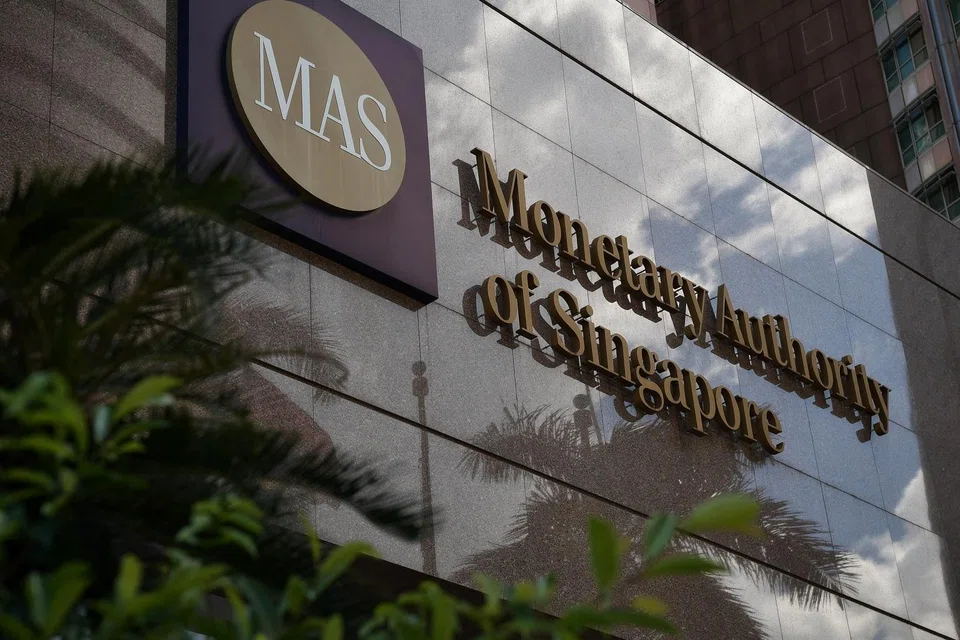
THE latest move by the Monetary Authority of Singapore (MAS) to boost access to Singapore dollar (SGD) and US dollar (USD) funding for banks will give them more flexibility to manage liquidity in times of market stress, strengthening resilience in the sector, said analysts.
This should enable banks to better extend credit to customers to support economic recovery, but is unlikely to affect banks' capital structure and credit profiles, they added.
Among the measures announced by MAS on Thursday is a new SGD Term Facility, which will provide banks and finance companies an additional channel to borrow SGD funds at longer tenors and with more forms of collateral.
Despite their healthy liquidity buffers, MAS said that it is introducing this facility "pre-emptively to provide greater certainty of access to central bank liquidity", which will help to contain any liquidity strains "before they pose a serious challenge".
The new facility will offer SGD funds in one-month and three-month tenors, complementing the existing overnight MAS Standing Facility. A wider range of collateral comprising cash and marketable securities in SGD and major currencies will be accepted.
Pricing will be set above prevailing market rates, in line with the facility's objective to serve as a liquidity backstop. The facility will be launched in the week of Sept 28, 2020.
In addition, domestic systemically important banks (D-SIBs) that are incorporated in Singapore will be able to pledge eligible residential property loans as collateral at the MAS SGD Term Facility.
The acceptance of residential property loans as collateral is only available to D-SIBs and is in line with the practices of major central banks, said MAS. "The expansion of acceptable collateral will help these banks conserve their more liquid instruments and strengthen the effectiveness of the MAS SGD Term Facility in providing liquidity support," it added.
As at September 2020, there are seven D-SIBs in Singapore: DBS Bank, OCBC, UOB, Citibank, Maybank, Standard Chartered Bank and HSBC.
Singapore's central bank will also raise the asset encumbrance limit imposed on locally-incorporated banks under the Banking Act to 10 per cent of a bank's total assets, up from the current limit of 4 per cent.
MAS said that this increase will give the locally-incorporated banks greater leeway to pledge residential property loans as collateral to access funding, so that they can support the financial needs of individuals and businesses that are affected by the Covid-19 pandemic. It added that the 10 per cent limit ensures that these banks maintain a large reserve of unencumbered assets which, coupled with MAS's other prudential rules, safeguards depositors' interest.
Alongside this move, MAS will also expand the range of collateral that banks in Singapore can use to access USD liquidity from the MAS USD Facility. Banks will be able to obtain USD liquidity by pledging a wider pool of cash and marketable securities from Sept 28, 2020, in line with what is accepted at the SGD Term Facility.
The MAS USD Facility was established in March 2020 to support the stability of USD funding conditions in Singapore. Presently, banks in Singapore can borrow USD by pledging eligible SGD-denominated collateral.
Jacqueline Loh, MAS's deputy managing director (markets and development), said that these enhancements to MAS's suite of liquidity facilities will "fortify the resilience of the banking sector and financial markets in Singapore, and enable our banks to continue to support the needs of businesses and individuals here, and in the region through the crisis".
Analysts told The Business Times that the latest move will give banks more tools to manage their liquidity amid continued economic headwinds from the Covid-19 pandemic.
Andrew Gilder, Asia-Pacific Banking & Capital Markets Sector Leader, EY said: "This is particularly important in times of market stress. It's also particularly important that there is an avenue for USD liquidity, which has been constrained at times during the last six months." He said he does not expect the changes to have any impact on banks' capital structure, as the latest announcement by MAS "focuses on liquidity rather than capital".
Priscilla Tjitra, Associate Director, APAC - Bank, Fitch Ratings, concurred: "The latest move is not likely to have a strong bearing on our assessment of banks' credit profiles and it has no direct effects on banks' capitalisation."
She pointed out that there have not been any discernible liquidity issues for Singapore's Big Three banks throughout the pandemic to date.
"We believe the latest MAS initiative is a prudent and forward-looking measure of pre-emption against unforeseen episodes of liquidity tightness, rather than a response to a brewing problem."
Tay Wee Kuang, analyst at Phillip Securities Research believes that the move is a "show of support for the banks in principle", but does not change the way banks are currently operating.
"If anything, the enhanced liquidity facility will provide a safety net for the banks to fall back on, but it does not seem like the banks will require such liquidity facilities in the first place," he said, citing the "low uptake" of previous loan facilities rolled out by the government such as the Enterprise Singapore loan schemes.
"While the latest move by the MAS may seem to cast doubt over the capital and liquidity position of the banks, the banks are still well-positioned and there is no cause for concern," added Mr Tay.
Banks including DBS, OCBC, UOB, Citibank and Standard Chartered have welcomed this move by MAS as a progressive and forward-looking approach to maintain a well-functioning financial market in Singapore.