MAS to step up 'supervisory engagement' to ensure banks meet Sora transition timelines
Key challenge is how to encourage market participants to shift from SOR-based market, which is still deep and liquid, to nascent but developing Sora-based market: top official
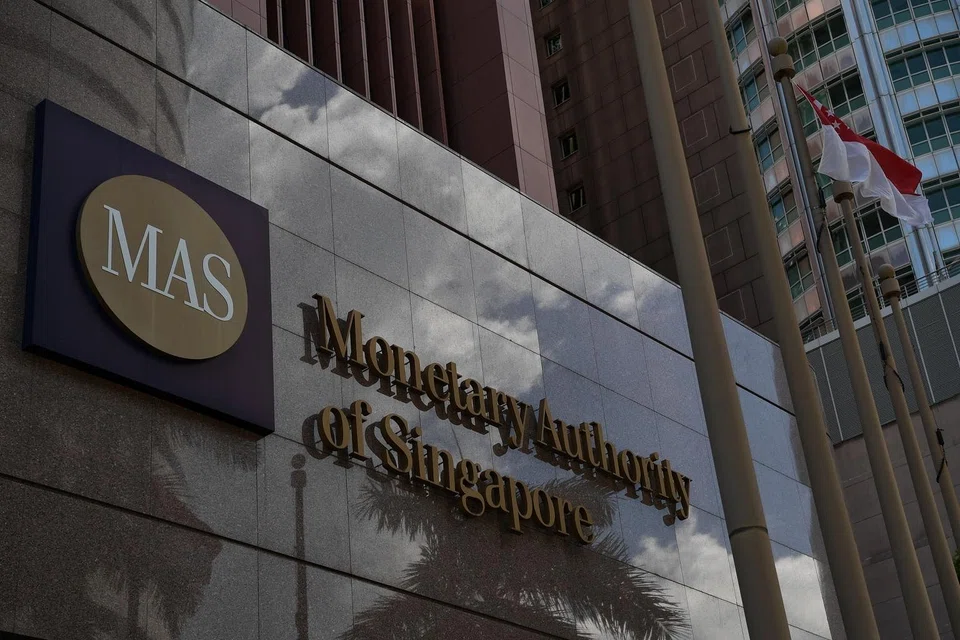
Singapore
THE Monetary Authority of Singapore (MAS) will be stepping up supervisory engagement to ensure that banks in the Republic are well-prepared to transition from Swap Offer Rate (SOR) - a key interest rate benchmark - to the Singapore Overnight Rate Average (Sora) by the end of 2021, said a top official.
Close to S$1.4 trillion notional value of outstanding SGD derivatives contracts referencing SOR, and around 12,000 SOR contracts in SGD cash markets amounting to S$95 billion will mature after end-2021, and will need to transition.
Jacqueline Loh, deputy managing director (markets and development), MAS, warned on Wednesday that banks which do not keep pace with industry transition timelines potentially expose themselves to additional risk, and can expect to have more "intensive supervisory engagement" at the senior management level.
She was speaking at the Association of Banks in Singapore's (ABS) virtual roundtable on SGD interest rate landscape changes, attended by over 1,500 participants from the financial industry, businesses and the media.
Singapore is in the midst of its move from SOR to Sora as the new interest rate benchmark, on the back of the discontinuation of the London Interbank Offered Rate (Libor) at end-2021, which would affect SOR as it uses the US-dollar Libor in its computation.
SOR is used in pricing of bonds and loans to large institutions with hedging requirements, as it is also the reference benchmark in SGD derivatives.
Sora was selected as the new interest rate benchmark as it was found to be the "most robust and suitable alternative", underpinned by a deep and liquid overnight funding market.
In her speech, Ms Loh flagged that the transition of legacy contracts will be a "key part" of the industry-led Steering Committee on SOR transition to Sora's (SC-STS) work in the remaining months.
The key challenge is how to encourage market participants to shift from a SOR-based market which is still deep and liquid, to the nascent but developing Sora-based market, she said.
To do so, MAS will expand its inaugural S$500 million Sora floating-rate notes issuance following the "strong market response", through increasing the issuance sizes and lengthening the range of tenors. More details will be announced before the end of the year.
In addition, to inject greater impetus for market participants to shift from SOR to Sora, guidance on specific deadlines to cease the usage of SOR in new financial products will be outlined by MAS and the steering committee in October this year.
On an individual level, banks and corporates will need to prepare early for a smooth transition. This includes identifying risk exposures, putting in place appropriate contractual fallbacks, ensuring systems' readiness, understanding the features of new Sora products, and ultimately, transacting in these products, Ms Loh said.
Several such loans are already done, such as the three local banks DBS, OCBC and UOB completing Sora commercial loans with early adopters like CapitaLand and Wilmar.
"Riding on these successful pilots, we hope to see more banks start originating new Sora loans across the broader industry," Ms Loh said.
Finally, she added that MAS expects lenders to communicate with customers in a clear, timely and transparent manner on the upcoming transition.
When engaging customers on benchmark transition, banks should take into account MAS's Fair Dealing Guidelines, which include presenting customers with sufficient options, providing enough time and information for customers to evaluate available options, and helping them make informed decisions, she added.
Industry-wide public education programmes on Sora products and markets will also be rolled out later in the year.
Singapore is now at a "critical juncture" in its interest rate benchmark reform, Ms Loh concluded.
"The sooner we take steps to front-load this change management process, the more likely we can create a virtuous cycle, which facilitates a smooth transition to Sora," she said. "Conversely, if we delay the shift until it is too late, this would have implications on future market efficiency and financial stability at the industry level, and higher risks at the individual-firm level."
At the same session, Samuel Tsien, chairman of ABS and group chief executive officer (CEO) of OCBC also spoke against the extended use or unnecessary reliance on the SOR fallback rate for SOR derivatives that mature after 2021.
This fall-back rate will be published by ABS for about three years from end-2021, which may end earlier depending on market development.
"The reason for having a limited shelf-life for the fall-back rate is to avoid having to deal with a situation whereby both SOR and the fall-back rate (for SOR) co-exist for a long time," he said.
Aside from Mr Tsien, the other two panellists for the roundtable session included Piyush Gupta, group CEO, DBS, and Patrick Lee, CEO, Singapore, Standard Chartered Singapore.
During the half-hour discussion, the three bank chiefs shared their experience in piloting Sora products, and their perspectives on developing the Sora market.