Oil trading troubles could jack up borrowing costs
Oil collapse flushing out suspect deals, casting doubts on reliability of corporate guarantees, putting more stress on smaller players
Singapore
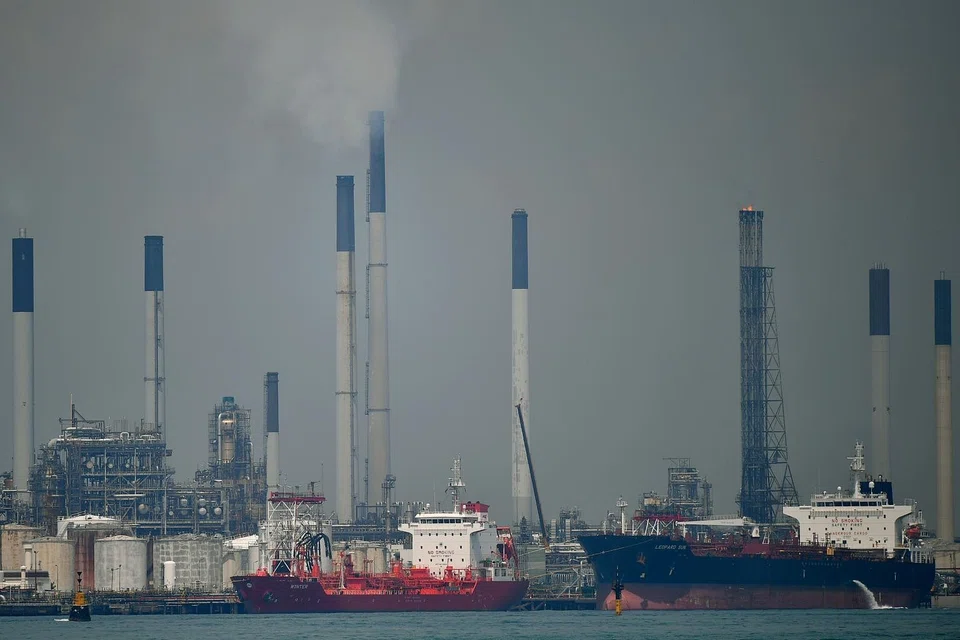
THE collapse in oil prices and the Covid-19 outbreak are exposing questionable practices in the Singapore oil trading industry that could exact a heavy toll on borrowing costs as banks get burnt.
The most high-profile case so far is oil trading giant Hin Leong, which was found to have hidden about US$800 million in losses. Another oil trader ZenRock Commodities has been accused by its creditors for transactions that have been alleged as "dishonest".
But even prior to Covid-19 and the recent oil shock, such incidents are not unheard of. Ex-senior staff from Coastal Oil were recently charged in court with allegedly cheating banks back in 2017-2018.
Banks with operations in Singapore have been burnt by these malpractices, with Singapore a big commodities trading hub.
And given their similar exposure to oil-related companies, the three local banks have also taken provisions to bump up against credit losses, having been exposed to a few names with allegedly dodgy practices. Analysts have said more oil-related provisions may need to be taken in the second quarter.
Observers told The Business Times that while irregular practices are not new to the industry, the pandemic has brought more of them to light.
Ong Sim Ho, managing director of the corporate and finance practice at Drew and Napier, said: "A major price drop is the best forensic detective when it comes to fraud in commodities trading, because everything falls apart. It flushes out malpractices as you cannot hide your losses anymore."
US benchmark West Texas Intermediate fell into negative territory for the first time in April as demand fell drastically due to Covid-19, but has since recovered to US$35-40 per barrel. But oil prices remain volatile on the back of continued pandemic concerns and geopolitics.
Mr Ong said such practices - brought to the fore recently - are not prevalent or systemic within the oil and gas industry. Even so, there will "always be some fraudulent cases".
Indeed, OCBC's chief executive Samuel Tsien told reporters back in May during its first-quarter results briefing that irregular activities in the commodity trading sector are "isolated cases", and not a norm.
George Lee, chief operating officer of trade finance fintech CCRManager, said that Covid-19 "merely amplified or accelerated" the exposure of the cases seen so far.
"As the pandemic drags on, I do expect more such weaknesses to turn up, but I also do not see any major changes that will lead me to believe that this type of cases are going to disappear after the pandemic is over."
Trade finance comes with a long value chain with many different parties across multiple legal jurisdictions.
As banks usually do not finance the entire trade from end-to-end for all parties, there will "inevitably be a blind spot for the fraudster to exploit", said Mr Lee.
There are different types of documents used, but all these fraudulent cases took advantage of information gaps, he added.
Mr Ong said that among the cases of fraud seen in the industry, the falsification of trades by bogus contracts or inflation of the contract are the most common.
Because speed lies at the heart of international trade financing, it is not always practical to authenticate all contracts, he said.
"Thus, banks rely heavily on customers' due diligence at the time the trade facilities were granted. At draw down, it is fair to say banks do not by default doubt or second-guess contracts with a credible counterparty."
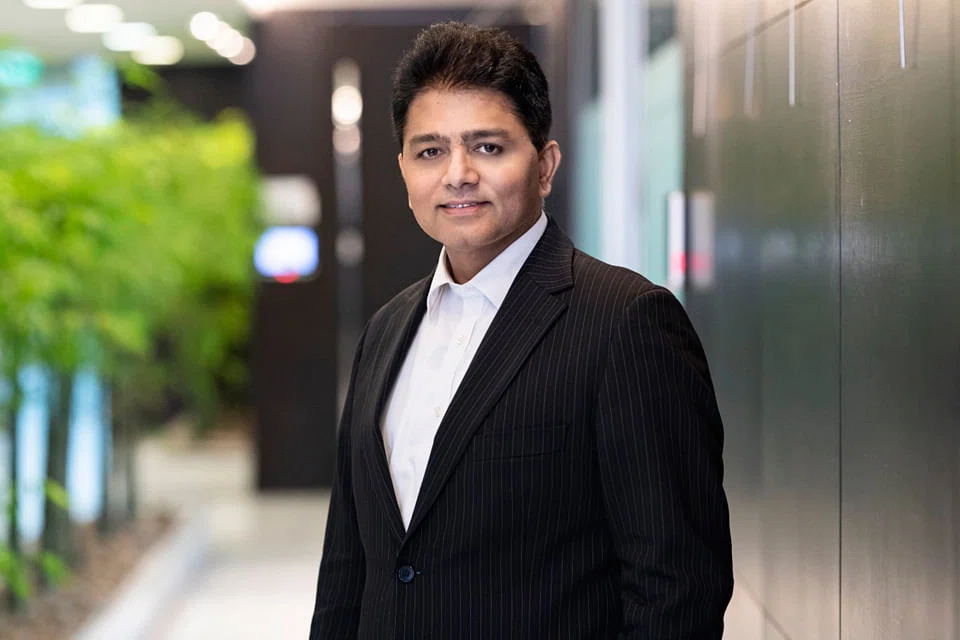
Sanjeev Gupta, Asia Pacific oil-and-gas leader at EY, said the "massive size, scale and complexity" of the industry make it difficult for lenders to track such activities or spot irregularities. This is especially in situations when underlying companies are operating as per covenant guidelines and settling debt obligations in a timely manner, he said.
Even so, he added that the recent irregularities seen "arguably point at the existence of a certain void in the robustness of underlying risk management and compliance functions", both among lenders and traders.
Lenders and other players are trying to mitigate the risks associated with trade finance through technology, although the jury is out on whether these digital solutions will be able to take off.
One is the blockchain-based open industry platform known as Contour, which digitalises global trade processes such as the creation, exchange, approval and issuance of letters of credit (LCs). It increases the accuracy of LCs issued, with real-time tracking of transactions on the platform along with a full audit trail for greater transparency. It is expected to fully launch by the end of this year.
Mr Lee of CCRManager, however, is more sceptical, despite the progress. "In my view, the issue is not one of technology - it's players not wanting to collaborate or paying lip service to the notion of collaboration. There is no common registry or bureau unlike in the consumer banking space.
"As long as these blindspots exist, we will continue to see similar cases."
Martin Smith, head of markets analysis at research firm East & Partners Asia, concurred that centralised oversight of trade finance deals and regulatory oversight can help to clean up irregularities in the commodity trading sector.
Meanwhile, Enterprise Singapore and the Monetary Authority of Singapore are reviewing the disclosure and lending practices in trading companies and their financing banks, following the recent cases, according to a Parliamentary reply this month. They will also consider if additional measures are needed to increase transparency and trust in the industry.
According to Mr Smith, banks will likely - and finally - prioritise "long overdue" digital processes to alleviate supply chain issues.
"Extremely 'lumpy' trade financing demand will push banks to increase oversight of KYC (know-your-customer) processes and client identification, prioritise key sector verticals and keep pace with rising competition at a time when trade flows are restricted and under pressure," he said.
Even with potential changes in the pipeline, more failures are still expected to arise out of aggressive trading or poor risk management, which will inevitably affect trade finance in the oil and gas industry, said EY's Mr Gupta.
"If more such cases emerge, the cost of borrowing will likely go up, weightage on credit ratings and financials will increase, reliability of corporate guarantees will be impacted, and smaller players are likely to be under more pressure," he said.
With that, existing loans will come under scrutiny along with pressure on banks to further improve their risk management framework by looking into necessary mechanisms to detect such irregularities, he added.
Similarly, Mr Lee observed that banks are reducing their exposure across the board to trade-based lending, or ramping up collateral requirements significantly, "penalising the large majority of businesses that are honest".
"This should be of particular concern for economies like Singapore that have a significant dependence upon trade," he said.
"I do believe very strongly, however, that in the process of cleaning up, we do not throw out the baby with the bathwater. We must ensure the majority of businesses that are honest, and particularly SMEs, are not deprived of financing support."