Open-minded, thoughtful approach the way to regulating fintech, says economist

Annabeth Leow
Singapore
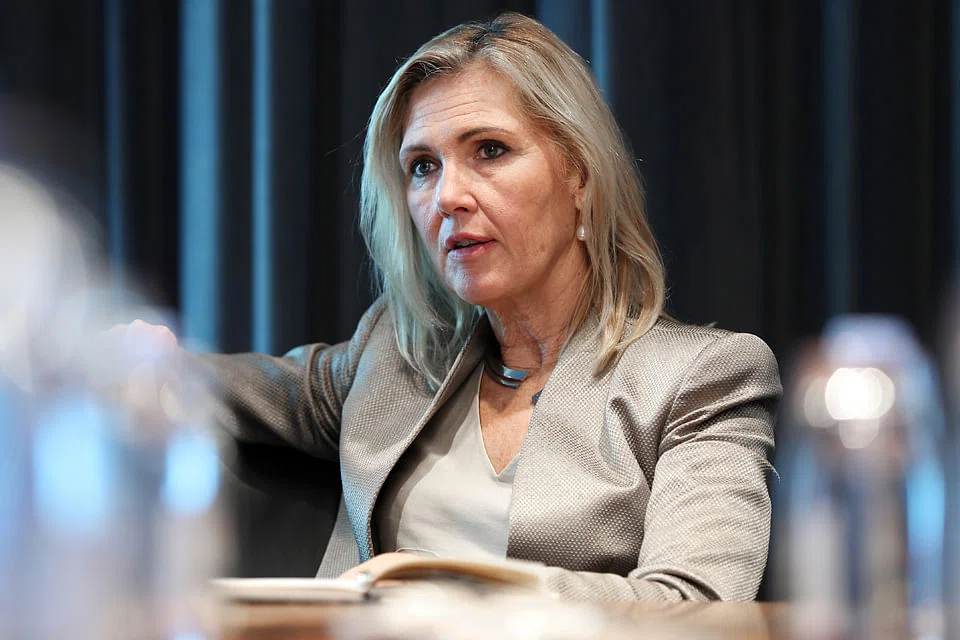
SINGAPORE is taking an open-minded but thoughtful approach to regulating financial technology, economist Beatrice Weder di Mauro has told The Business Times.
Calling for regulators to look past the veneer of new technologies and base decisions instead on how instruments operate, she suggested that the authorities move quickly and decisively as the ground shifts.
"Singapore and Switzerland are the two countries where regulators have taken a very open-minded approach, but also a very thoughtful approach, on fintech. And, in some ways, this has put them at the forefront of the regulatory debate," she told BT.
She told a panel organised by UBS last Thursday that some central banks, such as the Monetary Authority of Singapore, "have been very open-minded about fintech and providing (regulatory) sandboxes".
As an example of what forward-thinking regulators can get right, she argued that "one shouldn't regulate by institutions or by what they look like, but really what they are doing".
An issuer of a "stablecoin" pegged to assets like fiat currencies could be treated like a bank, for example.
"When you think about a bank deposit, you could think that it is like a stablecoin... Turning it around, you may think that certain types of stablecoins are, in a way, like bank accounts," she said.
Dr Weder di Mauro, a Swiss-Italian fellow-in-residence at business school Insead's Emerging Markets Institute in Singapore, praised regulators in Switzerland for putting this function-based principle into practice with Facebook's planned cryptocurrency, Libra, which launched recently in the Swiss banking hub of Geneva.
Regulators there "really had to think hard about what to do in terms of regulating stablecoins... very early on", she said.
Citing the recent Group of Seven (G7) report that highlighted the risks behind Libra, she said: "Regulators will play a crucial role in the speed of adoption and disruption, and they are showing it right now."
A G7 working group said in a report earlier this month that private entities should not operate global stablecoins like Libra without first tackling "legal, regulatory and oversight challenges and risks", including financial stability issues, such as credit risk or maturity and liquidity mismatch.
Adding to this, Dr Weder di Mauro, president of Europe's Centre for Economic Policy Research, told BT: "What the world economy will look like in the future is decided in politics, these days; not so much in the technology space."
To be sure, fintech has its societal benefits too. Dr Weder di Mauro pointed to how financial intermediaries and mobile wallets help under-served or unbanked populations, which is "of course very much welfare-improving and regulators shouldn't stand in the way of that".
But "there is going to be, also, further disruption, because of technology". An unregulated fintech could affect financial stability, she warned, although "that only happens at scale".
"There are a number of issues, which is why a number of the more timid regulators basically just say, no," she said. "If you are too timid, then you will not allow innovation.
"I think it's a balancing act."