

Robo-advisers diverge on regulatory risk in China tech exposure
Some retail robo-advisers leaning towards Asian equities and Reits amid Beijing's clampdown on big tech, run-up in US counters
Singapore
QUESTIONS are mounting over lofty stock valuations in the US and China's antitrust squeeze on its tech behemoths, and retail robo-advisers have responded in different ways to rejig their tech exposure in 2021.
Still, this comes as global vaccine rollouts and hopes of economic recovery this year have pushed most robo-advisers to broadly favour equities over fixed income, with a keen preference for Asian assets.
Singapore-headquartered fintech StashAway - which cracked US$1 billion in assets under management (AUM) in 2021 - told The Business Times it has reoptimised its portfolios to shift allocation from US tech stocks to more exposure to innovations out of China since mid-May last year.
This strategy aimed to preemptively manage the risk of any US-dollar depreciation due to monetary stimulus, while finding avenues to stay invested in tech, said Freddy Lim, StashAway co-founder and chief investment officer.
He noted that although China's recent clampdown on big tech companies came as a surprise, its effect "barely dented" the value of the firm's investments in China innovations.
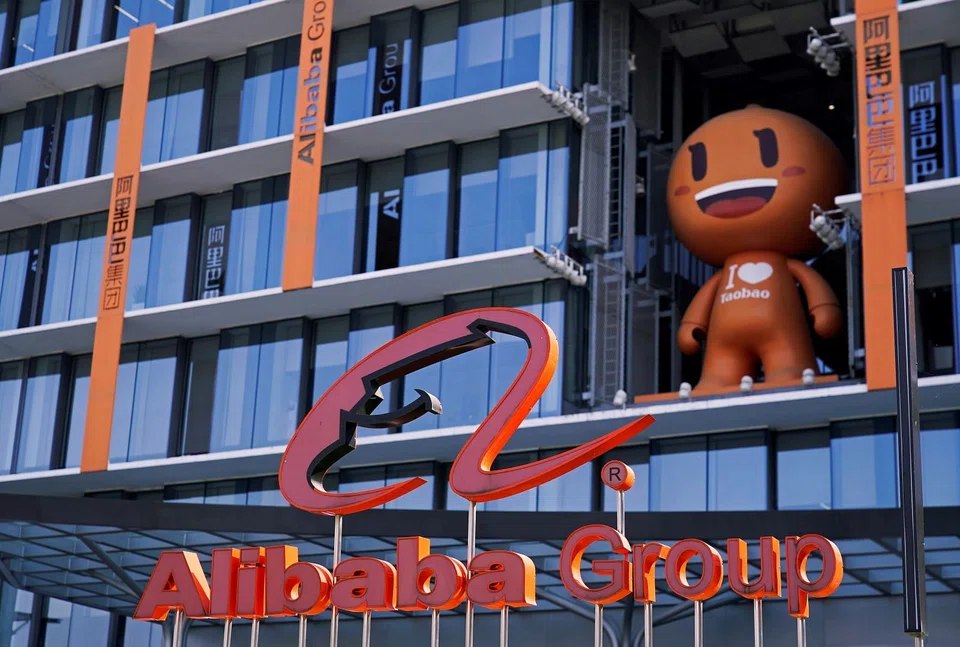
Last December, the Chinese government launched an antitrust probe against e-commerce giant Alibaba for allegations of monopolistic practices, and ordered its parent company, Ant Group, to scale back operations.
StashAway had invested in KWEB (KraneShares China Innovations ETF) which, at one point, had close to 10 per cent of its funds in Alibaba. Although Alibaba's share price tumbled 20 per cent between Sept 30, 2020 and Jan 13, 2021, the KWEB had gained 18.4 per cent.
"The power of diversification was clearly at play here," said Mr Lim.
Still, he cautioned that the ramp up in antitrust measures against big tech firms could further raise the likelihood for sector rotation in 2021, where "pandemic winners" such as big tech may fall short of their 2020 performance.
Conversely, some "beaten-down sectors" in the equity markets could start seeing a reversal in fortune, such as real estate investment trusts (Reits) in the Asia-Pacific region.
Over at OCBC, two of its tech-heavy portfolios offered on the RoboInvest platform recently divested from Alibaba.
Alibaba used to be a top constituent in OCBC's thematic "Cloud Computing" portfolio and "Asia Tech" portfolio launched last August and November respectively.
But the stock did not pass the latest quarterly screening process, said Chiranjeet Singh, head of products at WeInvest, a fintech behind OCBC's RoboInvest platform.
"There is a certain political tug of war as far as Alibaba is concerned. Because of that momentum in the stock and other uncertainties, Alibaba did not pass the (screening) and was removed from the portfolios," he said.
US payments giant PayPal was among new stocks added to OCBC's tech-focused portfolios in the latest round of rebalancing.
Fresh data from the bank showed that the "Cloud Computing" portfolio was the top portfolio by investment growth in the last six months. The "US Tech Leaders" portfolio - which counts Microsoft, Visa and Mastercard as top constituents - is currently ranked first by overall AUM.
RoboInvest offers 34 portfolios, of which seven are tech-focused. Total investments on the platform have averaged about S$20 million monthly.
"Tech is a very wide field. With more developments happening every day, the number of stocks... the whole space is expanding. We're trying to give (investors) more exposure to the whole tech sector," said Mr Singh.
At DBS, more than a third of equities exposure in unit trust portfolios is in tech enablers, innovators or platform businesses. These portfolios are offered on the bank's robo-advisory platform, digiPortfolio.
Christophe Marciano, DBS head of discretionary portfolio management, told BT the bank prefers funds such as the Capital Group New Economy Fund, which is invested globally with a large focus on themes aligned with the bank's strategic views.
While it does not take specific positions in tech stocks for its ETF portfolios, DBS said long-term structural trends remain supportive for the tech sector despite "near-term regulatory pressures".
Other robo-advisers, however, appear to be more cautious on tech investments for now. Local fintech Syfe has trimmed its exposure to tech stocks - in favour of global market cap-weighted ETFs - in its Equity100 portfolio.
This comes as the "growth factor" - as represented by the Invesco QQQ ETF tracking the Nasdaq 100 - has experienced a significant run-up over the past six months, said Richard Yeh, head of portfolio construction and risk management at Syfe.
"This factor-style drift made it necessary for QQQ's portfolio weight to be trimmed back. Our analysis (also) indicated that slightly reducing the 'growth' factor going forward might lead to better returns," he noted.
UOB, currently does not offer US or China tech stocks on its robo-advisory platform, UOBAM Invest.
As Covid-19 vaccine distribution progresses, most firms told BT they are bullish on Asian equities on expectations of a speedy economic recovery in the region.
DBS's global ETF portfolio is overweight on equities over fixed income - especially Asian equities - while its Asia ETF portfolio saw increased exposure to Singapore equities as there is "room for the market to play catch up" given its cyclical nature, said Mr Marciano. Exposure to Reits was also bumped up.
The bank has seen strong demand for digiPortfolio, with AUM growing by almost 2.5 times in the past year.
Meanwhile, UOBAM Invest recently divested its holdings in US growth stocks due to their relatively high valuations compared to historical prices. Depending on risk profiles, reallocation was made to global or Asia ex-Japan equities, said Dharmo Soejanto, chief investment strategist at UOBAM Invest.
Syfe's Mr Yeh told BT the firm's flagship global portfolio had a higher share of bonds during volatile periods last year. But allocation to equities has since increased for better returns as markets stabilise.
As an example, a moderate-risk global portfolio with 17 per cent downside risk holds around 45 per cent equities, 45 per cent bonds and 10 per cent gold.
But while the share of equities in the global portfolio is significantly higher than in H1 2020, it is still below the long-term average of above 60 per cent, said Mr Yeh.
OCBC head of wealth advisory Kelvin Goh told BT the bank expects vaccine dissemination to "normalise" by the third quarter of 2021.
"With that in mind, China is probably the economy that we expect to do well this year (as well as) the US, on the assumption that they keep vaccines going and stimulus plans are up to mark," he said.
Endowus chief investment officer Samuel Rhee reckoned that the promise of a successful vaccine is unlikely to make a "dramatic" impact, partly also as vaccine hopes have already been priced into the market.
"Stock markets are affected by underlying factors that include the economy and geopolitics. However, the primary driver is the ability to generate earnings and returns by the listed companies," he told BT.
TRENDING NOW

Mooted COE changes will solve category issues, but higher premiums likely: observers

Grab CEO’s wife Chloe Tong on life with Anthony Tan and finding her purpose

Once staunchly pro-China, Malaysian Chinese businesses are now distancing themselves from Beijing

Cliff Tan has 7 million followers and a 4-month waitlist. Why won’t he expand his business?

