

Robo-advisers hold steady as Covid-19 presents first big test
Singapore
THE big swings in global financial markets due to the virus fallout present the first big test for robo-advisers in Singapore - young digital upstarts that only penetrated the local wealth scene some five years ago.
They look to have made the grade, based on disclosures according to checks by The Business Times, even as to be clear, the periods for performance evaluations vary. Analysts have also flagged the long-term challenges of robo-advisers' low-cost model.
Most robo-advisers here told BT that their offered portfolios - generally built through a passive management approach - have largely outperformed their benchmarks of choice. Net inflows - investments minus redemptions - are also still growing for now, with some firms seeing more interest from first-time investors.
"Until now, robo-advisers have done stress testing of their investment models based on historical data. This is the first real opportunity for them to prove that they can provide superior risk-adjusted returns during market downturns," said Vijay Yadav, associate professor of finance at ESSEC Business School.
In an e-mail to customers seen by BT on April 25, digital wealth platform StashAway's co-founder and chief Michele Ferrario noted that 10 out of StashAway's 12 portfolios of varying risk levels had outperformed their respective benchmarks over the past six months. The firm's second-highest risk portfolio had outperformed the most - by 5.6 per cent - while its lowest risk portfolio had underperformed by 3.4 per cent.
To add, all portfolios remained within their StashAway Risk Index (SRI) targets. The SRI indicates the maximum percent loss a portfolio could experience in a year, with 99 per cent confidence. For example, if an investor holds a S$50,000 Singapore-dollar portfolio with a 14 per cent SRI, there's a 99 per cent chance that he will not lose more than 14 per cent (or S$7,000) in a year, Mr Ferrario explained.
Meanwhile, StashAway's peer Syfe said that from Feb 24 to March 23, Syfe's 15 per cent downside risk portfolio - its most popular portfolio in terms of assets under management (AUM) - slipped about 10 per cent, while its benchmark, the Morningstar Moderate Index, fell 21 per cent. The firm's automated risk-managed investment (ARI) algorithm had pulled back on some of the allocation to equities while upping the share of bonds from 18 per cent to 75 per cent.
AutoWealth's Balanced portfolio - comprising 40 per cent government bonds and 60 per cent stocks - fell 10.8 per cent from Feb 19 to April 6, while its benchmark MSCI All-Country World Index fell 22.6 per cent.
When asked about year-to-date returns on Endowus' portfolios, its chief Gregory Van did not provide any numbers, but told BT that its portfolios have "achieved their goals".
"Performance has been in line with the market, where equities fell more but bounced back fast. Fixed income was less volatile and has been a good diversifier," said Mr Van.
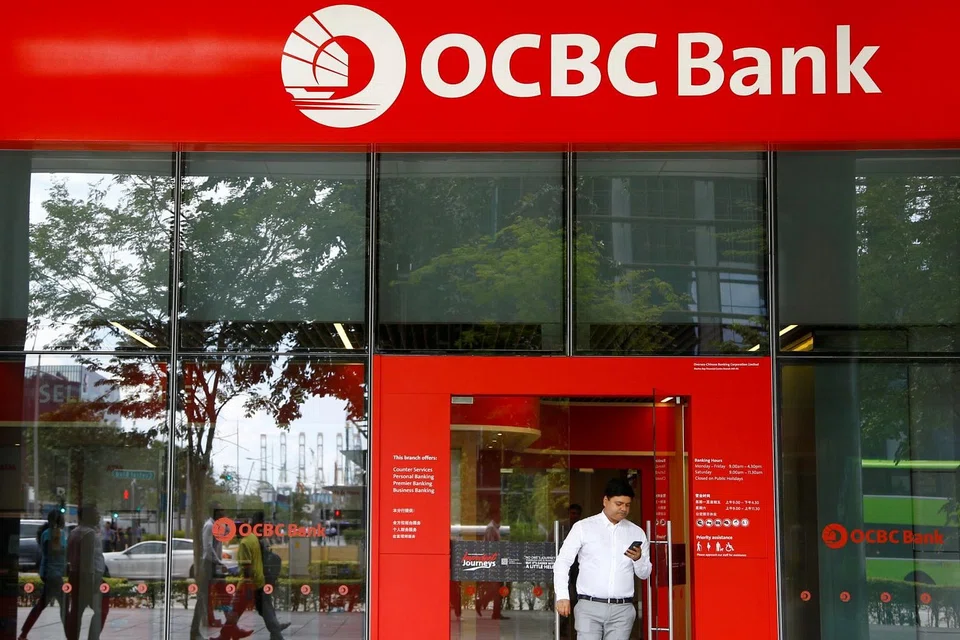
OCBC did not provide year-to-date figures for the performance of its robo-advisory platform RoboInvest, but said close to 75 per cent of the 28 portfolios offered via RoboInvest achieved annualised returns that have beaten benchmarks.
Kristal.AI as well did not disclose specific figures, but its founder and chief Asheesh Chanda told BT that overall, investors who had lost 20 per cent initially are now "almost flat or down around 5 per cent".
New investors on board
Robo-advisers have also attracted new investors amid this period of market volatility.
OCBC's RoboInvest's Q1 investment flows were 3.5 times higher than in the year-ago period, with first-time investors contributing more than 35 per cent of new investments.
Aditya Gupta, OCBC head of digital business for Singapore and Malaysia, further said a third of existing customers saw current market conditions as a "significant opportunity".
"(They) have made repeat investments and expanded their portfolios with additional investments of S$15,000 on average," said Mr Gupta.
While DBS did not disclose numbers specific to its robo-advisory platform digiPortfolio, the bank's head of consumer banking Jeremy Soo told BT that, in the personal investing space, Q1 was a record quarter for the bank in terms of onboarding new-to-trading customers.
"There will always be a group of customers who have set aside some money to take advantage of the (current market situation)," added Evy Wee, DBS head of financial planning and personal investing.
Consequently, the asset base of most robo-advisers here has grown with rising investor interest.
Endowus' net inflows grew through February and March, with the number of clients completing their first investment with the firm growing by over 50 per cent, said Mr Van. There has been no "major liquidation" in recent months.
StashAway's net deposits grew 47 per cent in the first three months of 2020 from a year ago. This includes flows into StashAway Simple - a cash management portfolio with zero management fees - though the firm said the bulk of new money went into investment portfolios.
StashAway's Mr Ferrario noted that some clients have hit pause on their investment plans, or in some cases, liquidated their portfolios, "as we do expect in any market crash". But those who withdrew their StashAway funds in recent months only make up about 3 per cent of the firm's client base of more than 100,000, he added.
StashAway saw three types of investors retreating from markets: younger clients with little investment experience; clients who did not set up an emergency fund and needed funds urgently to meet short-term obligations in this period; and high net worth clients who had invested in leveraged investments elsewhere, faced margin calls and had "little choice" but to liquidate their StashAway funds urgently.
Mr Ferrario said the firm's data-driven asset allocations had kept drawdowns in control. "The majority of our clients have continued to stick to their investment plans. Many of our high net worth and ultra-high net worth clients have been telling us that they see this as an opportunity to get into the market," he noted.
Other robo-advisers BT spoke to, namely Kristal.AI and AutoWealth, also reported sustained investor activity in recent months.
AutoWealth chief investment officer Ow Tai Zhi said the firm's Q1 aggregate outflows was less than 5 per cent of its AUM in Q4 2019.
Similar to StashAway, Mr Ow said several AutoWealth clients had withdrawn money to raise funds for margin calls of their own personal stock trading accounts. That said, the firm's Q1 AUM growth was still more than 30 per cent higher than in Q4 2019.
Its rival Syfe also registered record growth - in terms of number of clients and assets under management (AUM) - in February and March.
While some fluctuation in investments is "natural" in the current crisis, the firm has not seen an increase in withdrawals compared with pre-virus months, said Syfe founder and chief Dhruv Arora. Mr Arora further told BT that Syfe's ARI technology had "significantly" helped reduce the drawdown of its portfolios.
"After the S&P 500 posted its worst one-day percentage drop since the 2008 financial crisis on March 9, the risk-based rebalancing we conducted helped cushion the impact of that drop on portfolio values," he said.
But while robo-advisers are generally reporting stronger investor activity overall, some firms have seen greater liquidation of assets from more inexperienced retail investors in recent months, compared with accredited investors.
StashAway's Mr Ferrario told BT that the firm sees a clear correlation with age, that is, younger clients with little investment experience are more likely to withdraw and try to time the market. "We have been in an 11-year bull market and these clients have not experienced a market crash like this," he said.
Kristal.AI's Mr Chanda said the firm's AUM growth from retail clients stood at 5 per cent in the last two months, compared with a 25 to 30 per cent AUM growth from accredited investors over the same period. Taken together, overall AUM was up about 10 per cent to some US$130 million.
Kristal.AI has some 16,000 users, of which 80 per cent are retail investors. The remaining 20 per cent are accredited investors who contribute around 80 per cent of the firm's overall AUM. "In the last two months, we have been putting most of our energy on accredited investors. We're going where the growth is taking us," said Mr Chanda.
For robo-advisers in Singapore, the minimum investment sum typically ranges from S$1,000 to S$10,000, though some firms do not impose a minimum on selected portfolios.
Thin profit margins
More broadly, industry observers also hold mixed views on robo-advisers' ability to sustain themselves through this period, given the nascent low-cost business model they operate. Despite seeing inflows, many have yet to turn a profit.
KPMG partner Allwyn Barreto told BT the downward trend in asset value across the board has a direct impact on advisory revenues. "We will likely also see impact on investor confidence coupled with the flight to cash, which could see a reduction in investment activity," he noted.
Over a longer horizon, analysts cautioned that subdued market performance could pose rising challenges for robo-advisers as investors grow increasingly impatient.
"If the pain in the markets is longer than expected, it would especially lead to more pressures on (these firms) as investors may wish to withdraw their investments and focus on maintaining cash reserves," said Janani Sankaran, principal consultant for business and financial services at consultancy Frost & Sullivan.
After shedding about 30 per cent in a little over a month, the S&P 500 has since rebounded roughly 25 per cent, though market-watchers have urged investors to be selective. Over in Singapore, the Straits Times Index has fallen about 20 per cent since the start of the year.
Ms Sankaran cited a possibility of greater consolidation in the industry, as well as a reassessment of the business model of "extremely low" management fees.
StashAway's management fees range from 0.2-0.8 per cent, while Kristal.AI's services are free for up to US$50,000. This is compared with an actively-managed fund that usually charges around 2-4 per cent in fees.
Kristal.AI's Mr Chanda told BT that its retail clients invest about US$3,000 on average.
With ongoing uncertainty over the direction of the markets, ESSEC's Prof Yadav told BT that investors may become more sensitive to fees in a downturn, which may force robo-advisers to reduce their already-low fees and put further pressure on earnings.
Robo-advisory services managed by banks or other big companies are more likely to survive because of their ability to "absorb big losses", Prof Yadav noted.
KPMG's Mr Barreto added: "Most businesses that have a low cash position, a lack of depth of customers and who do not have an ownership structure with deep financial capacity will be most vulnerable."
There have been casualties and exits in this nascent space already. Robo-adviser Smartly ceased operations in March after fewer than three years in business due to intense competition, while its peer Bento Invest was acquired by Grab in February.
Certain players have also taken to nimbly diversify their offerings and beef up non-price competition.
Endowus recently offered investors a new CPF Investment Scheme (CPFIS) fund managed by global fund manager Vanguard. Investors can, for the first time, invest their CPFIS monies into the Infinity Global Stock Index Fund.
Working with the Singapore Exchange, Syfe also just launched a real estate investment trust (Reit) portfolio, allowing investors access to SGX's iEdge S-Reit 20 Index.
"The low-fee structure means that the firms need high levels of AUM to break even. The firms that survive will emerge stronger after the crisis," said ESSEC's Prof Yadav.
Still, some bright spots remain in the digital wealth scene. KPMG's Mr Barreto said some business and operating model design advantages sit with some robo-advisers in the market, given their digital capabilities.
Many office workers are adapting more to technology now due to work-from-home arrangements forced by the virus outbreak, which may enhance their trust in technology, Prof Yadav added.
And as more are forced to embrace greater digital communication, robo-advisers have put more effort into engaging clients remotely, particularly those who are green to investing. All the firms BT spoke to reported significant spikes in investor enquiries in Q1, and said they have been taking added measures to communicate with their clients. These include weekly webinars, more frequent e-mail blasts and live chats.
"Understanding who is behind these companies and how they are structured will be important, not only to the success of these companies, but also for clients to make wealth decisions that require an exceptional amount of trust," said Endowus' Mr Van.
TRENDING NOW

World’s largest offshore wind platform by Seatrium consortium on track to be completed by 2028

Is stamp collecting enjoying an analogue revival or are its best days over?

GovTech retrenches another 38 staff in second round of layoffs
MBS adjusted property Ebitda falls 20.6% in Q3 with fewer high-roller visits, weaker hold

