Sea's digital banking move offers edge over Grab-led bid: report
Singapore
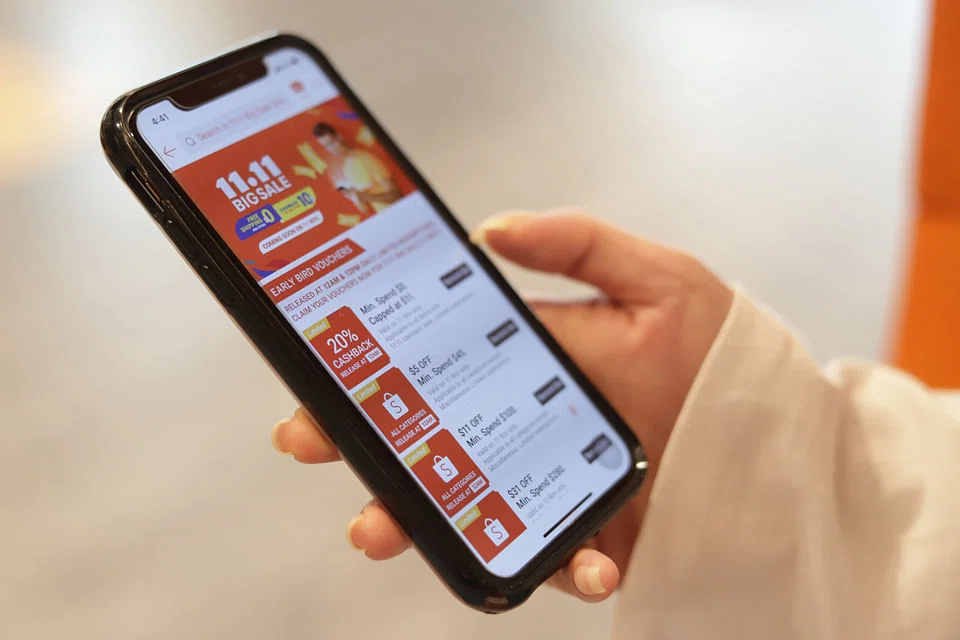
GIVEN the snug fit between e-commerce and digital banking, shopping platform Shopee's parent Sea Ltd may offer an edge over the Grab-Singtel consortium, with a fresh S&P report seeing these two bids as frontrunners for the two new digital full bank licences in Singapore.
"Digital banking battles will play out in South-east Asia's shopping cart," the report said.
The argument comes as e-commerce sales in Asean is due to nearly double to about US$80 billion in 2022, from just over US$40 billion in 2019, data from S&P Global Market Intelligence showed.
Shopee alone accounted for nearly a quarter of the aggregate gross merchandise value in Singapore, Malaysia, Thailand, Indonesia, the Philippines and Vietnam last year.
Shopee and Alibaba-backed Lazada were also among the leading marketplaces in each of the six largest South-east Asian economies in the third quarter of 2019, according to app usage and Web visits S&P cited from Iprice Group.
S&P said that of the six publicly reported bids for full bank licences - with the last of the seven applicants still silent on its bid - applications made by Sea and the Grab-Singtel consortium appear to "most comfortably" meet expectations of regulators.
These expectations include having the digital full banks setting aside a staggering S$1.5 billion in capital likely by about the fifth year of operations. The Monetary Authority of Singapore will also look at applicants' ability to offer financial services to underbanked segments in Singapore, as well as to use Singapore as a beachhead to expand into Asean.
While Sea is going at its digital banking bid alone, S&P has noted that Sea is valued at about US$20 billion. It has also shown willingness to absorb losses on the e-commerce business. Its third-quarter results for the three months ended Sept 30, 2019, showed a 30 per cent rise in sales and marketing expenses for its e-commerce business to US$199 million from a year ago. Its e-commerce business continues to see an adjusted operating loss, though Sea has upped its full-year revenue guidance for e-commerce.
Grab and Singtel boast of a large scale in finances and network, too.
Both Sea and the Grab-led consortium could serve their current network of customers in Singapore and, later, in Asean. Both Sea and Grab operate in the six largest economies in Asean and serve underbanked segments in this young region - Grab working with gig workers, and Sea commanding an e-commerce merchant base comprising small and medium-sized enterprises.
But Sea's e-commerce business presents the company with greater lending opportunities, as online shopping transaction values tend to be bigger than ride fares, S&P said.
The average gross merchandise value per order accepted on Sea's Shopee platform across South-east Asia was US$14.31 in the third quarter of 2019. In comparison, the average transaction size on Grab's competitor Go-Jek tends to be about US$4.50, said S&P.
With a bank licence, Sea could issue cards without the support of a financial institution, and offer online point-of-sale financing plans for large-ticket purchases, driving down the frequency at which customers abandon sales at the point of checkout. Meanwhile, the troves of seller data on Shopee's e-commerce marketplace could drive its credit underwriting engine to finance merchants constrained by working capital, S&P said.
S&P added that both Shopee and Lazada can tap on greater banking needs in other large South-east Asian markets, where cash-based payment options are prevalent. Both offer cash-on-delivery options in Thailand, Indonesia, Vietnam and the Philippines, a risk mitigation service for merchants there given in part the longer cash conversion cycles.
Lazada's backer Alibaba is applying for a digital wholesale bank licence in Singapore via its affiliate Ant Financial. But Lazada on its own could feel "less compelled" to set up banks in this region, as it has built a large number of partnerships.
This is thanks in part to its access to Ant Financial's growing number of fintechs that allow digital payments, including TrueMoney in Thailand, Indonesia's DANA, EMonkey in Vietnam and GCash in the Philippines. Ant Financial also backs Indonesia's peer-to-peer lender Akulaku Inc.
If Ant Financial wins a digital wholesale banking licence here, Lazada can continue to lean on it to collect deposits from and make loans to small businesses, S&P said.
This means Lazada could deepen its fintech ties with Ant Financial-backed companies, leaving Sea driven to secure bank licences in other countries, said S&P. Malaysia is already gearing up to offer digital banking licences for new players to challenge incumbents.