SINGA issues will deepen liquidity in local bond market
They will widen institutional investor base, develop industry expertise, and help the market mature
Singapore
THE sum of S$90 billion in Significant Infrastructure Government Loan Act (SINGA) bonds - including green infrastructure bonds - though a drop in the ocean of the global bond market, will go a long way to deepen Singapore's bond market and institutional investor base, as well as develop much-needed expertise among banks and ratings agencies.
This will help Singapore to cement its status as a green and infrastructure financing hub, market watchers say.
Edmund Leong, head of group investment banking at United Overseas Bank, said the leadership shown by the government will serve as a strong standard for green bond issuances by the private sector as more corporates step up their sustainability efforts.
Down the road, this will help to boost the issuance volume, tenor extension and instrument types available to investors.
"Given their premium credit quality as they are from a sovereign issuer, the green bonds issued under SINGA will also help to set a credit benchmark and along with it, build a yield curve for the development of the green bond market in Asean," he said.
He, like many others, expects warm welcome and demand from bond market participants and the investor community.
Infrastructure projects in recent years have been financed using government revenues and current reserves, or expensed from the government's annual budget, although the government did use to borrow to finance its development expenditure in the 1970s and 1980s - for instance, to build the republic's first MRT lines and Changi Airport terminals.
Timothy Ang, bond analyst at Phillip Securities Research, expects demand for these bonds to come from investors with longer-term SGD liabilities, such as pension funds (eg CPF) and insurers.
Sharad Somani, head of infrastructure, advisory at KPMG Singapore, also does not rule out high net worth individuals and retail investors seeking long-term returns with a good credit quality. It would be akin to investing in real estate investment trusts or infrastructure business trusts, he said.
Existing Singapore Government Securities (SGS) bonds are priced at 1.062 per cent for 10 years, 1.373 per cent for 15 years, and 1.457 per cent for 20 years. Applying a spread, Mr Ang estimates that a 20-year government guaranteed infrastructure bond could be priced at around the 1.65 per cent.
Mr Leong observed that in the last couple of years, high demand for long-dated bonds issued by statutory boards have enabled these issuers to tap the market in benchmark sizes of between S$500 million to S$1.5 billion per issuance. Issuance tenors have also been stretched to the range of 30 to 40 years.
Abundant liquidity from both institutional and retail investors will thus likely create steady market demand for green infrastructure bonds issued under SINGA, as long as issuances are timed such that the market can digest each issuance, he added.
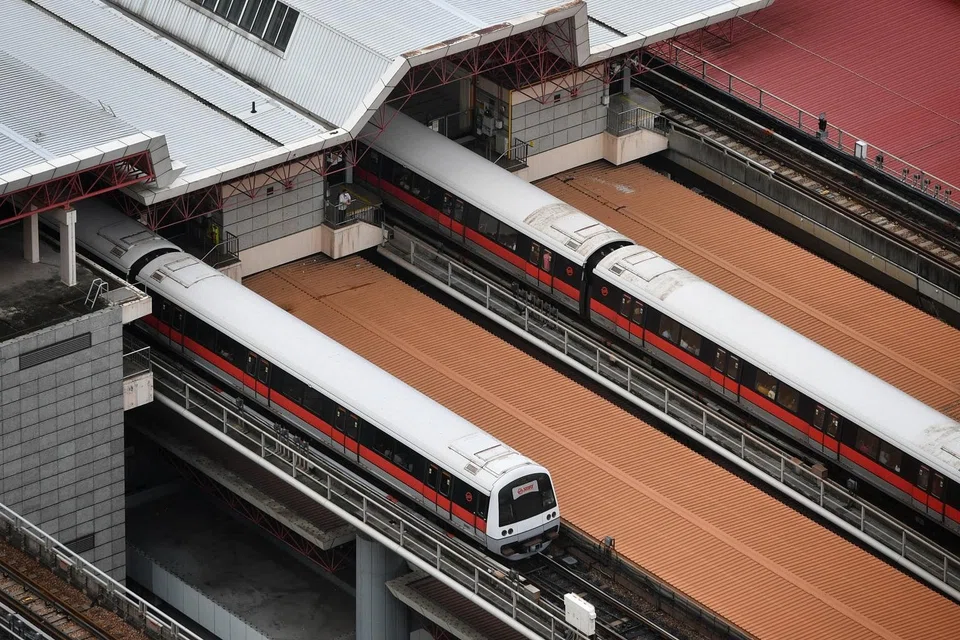
Proceeds of these infrastructure bonds will go towards funding significant Singapore projects such as MRT lines (eg Cross Island Line, Jurong Region Line) and coastal and flood protection projects.
This comes at a time when the government needs to be prudent and save its reserves for critical packages that support businesses and citizens impacted by the pandemic.
Mr Somani said this approach was adopted partly to ease the strain on the government's reserves, and partly to shift to a more equitable way of paying for long-term infrastructure projects across generations, as well as to capitalise on the low interest rate environment.
Of the S$90 billion to S$100 billion bonds issued in Singapore per year, about one fifth is issued by the government and related entities.
He believes that this first step will enable the market to more efficiently price in the differentials between different classes of bonds, which ultimately helps the market to mature.