

Singapore digital banks face hard slog but incumbents can't sit pretty either
New entrants unlikely to pose a significant threat but can still put pressure on existing banks' pricing and margins, analysts say
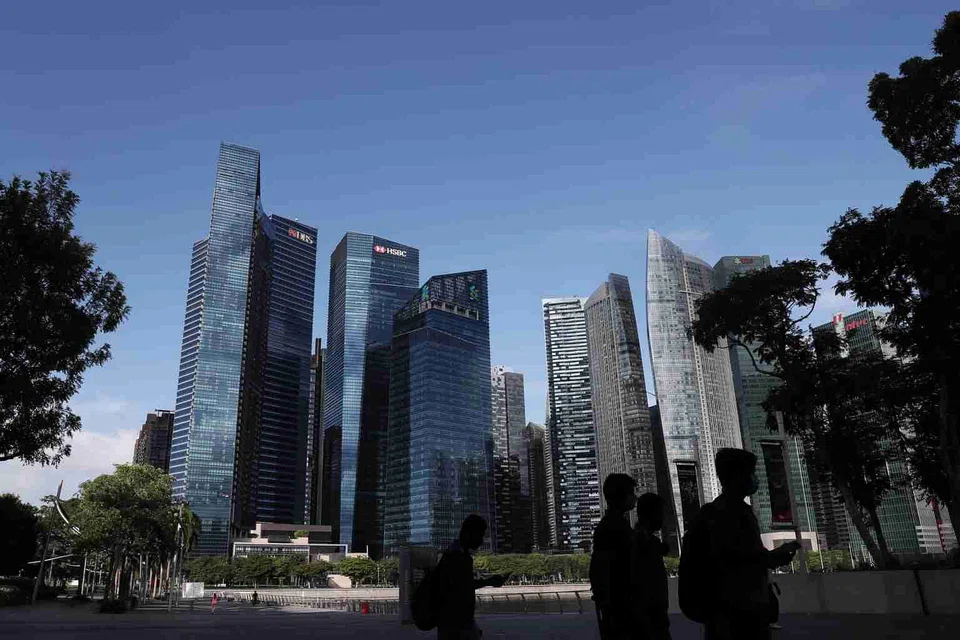
Singapore
SINGAPORE'S first digital banks will need to focus on building trust and managing acquisition costs to succeed in the long run, analysts say.
But although they are unlikely to pose a significant threat to the digitally-advanced incumbents in the near term, they could still put pressure on existing banks' pricing and margins, they added.
In a note, Citi analyst Robert Kong wrote: "The general view of the three local Singapore banks is that it could be challenging for a new digital bank entrant to do well in Singapore with limited size of the underserved segment, strict regulatory requirements, and with the incumbent banks confident in their own digital offerings.
"The real upside for the new digital banks may be the potentially far larger under-served populations in Asean."
Singapore is one of the most well-banked countries in the world, where 98 per cent of adults have access to banking services, according to the World Bank. In comparison, about half of Indonesia's population remains unbanked.
With large, youthful populations and high smartphone penetration, Asean presents an attractive opportunity for digital banks, and is likely the main target customer base, said analysts.
That said, digital banks across the world have seen mixed results so far. South Korea's Kakao Bank is one of the few exceptions in Asia, garnering 12.5 million customers and becoming profitable in less than three years after launch.
In Singapore, four digital bank licences were awarded to much fanfare in December this year, from a pool of 14 eligible applicants.
The two digital full-bank licences were nabbed by consumer Internet company Sea and a Grab-Singtel consortium, while the two digital wholesale bank licences were secured by China's Ant Group and a Greenland Financial-led consortium. These digital banks will likely focus on serving millennials, gig workers, SMEs and micro enterprises, among others.
Despite the buzz surrounding the new challengers, Eugene Tarzimanov, vice-president - senior credit officer, Financial Institutions Group at Moody's, said they pose a limited threat to DBS, OCBC and UOB. "However, competition will heat up for the smaller foreign-owned Singaporean banks that have modest domestic operations, and thus face the greatest disruption risk from digital bank entrants," he said.
Thilan Wickramasinghe, analyst at Maybank Kim Eng, estimated that the digital banks could garner 1.2 per cent of the Singapore loan market share within three years. "We do not expect deposit price competition, but there may be some customer leakage for incumbents as the digital banks ramp up cross-promotions leveraging synergies of their existing platforms," he said.
UBS analysts Aakash Rawat and Navin Killa highlighted the Monetary Authority of Singapore's (MAS) emphasis on the "path to profitability" for digital banks, which is aimed at avoiding predatory pricing and minimising risk of future financial dislocations. "Despite this requirement, the new entrants have a clear cost advantage which can allow them to be very competitive on pricing both for lending and deposits," they wrote in a report.
"Our calculations suggest margin pressure for incumbents is inevitable. Tightening costs structurally through branch closures might be the only way to tackle this headwind."
In the same vein, Citi's Mr Kong flagged that incumbent banks should not ignore the threat of revenue disruption risks, particularly for capital-light products such as wealth management and payments. "Some digital banks may also convert their cost efficiencies into pricing advantage for deposits," he said. "The competitive threats from new digital bank players can put pressure on pricing and margins, and hence ROEs (return-on-equity) for the incumbent banks."
While observers believe that the disruption to incumbents will remain low in the next three to five years, this could change in the future.
Key factors include the incumbent banks' ongoing technological investments and whether they optimise costs, said the UBS analysts.
"For the new entrants, keeping a lid on customer acquisition costs in the ramping up phase and building customer trust will be key," they added.
Paul Ng, Financial Services lead, South-east Asia, Accenture said that one of the core challenges for digital banks will be in gaining consumer trust.
"Covid-19 has made the need for a trust-based relationship more urgent for digibanks, as consumers tend to turn to trusted financial services brands at a time of uncertainty," he told The Business Times.
Similarly, Tom Mouhsian, principal analyst at Forrester, noted that in the near term, traditional banks will still have a "strong advantage" built up by decades of reputation and customer trust.
If the new digital banks lose the trust of customers, there will be nothing stopping customers from walking away and going back to the old tried and tested brands despite any earlier shortcomings, he said.
"In the new digital banking age in Singapore, customers will be even more empowered, more ready to voice their feedback, and more powerful with their wallets," he said.
As these digital banks fight it out with incumbents, the one certainty is that consumers stand to gain.
Digital banks will expand the choices and elevate the overall banking experience by bringing competitive and innovative digital propositions to the table, with hyper-relevant and personalised banking offerings, noted Accenture's Mr Ng.
"For instance, we expect to see new offerings, including novel forms of investment, savings, lending, and payments that will empower customers to take greater control of their finances," he said.
"We also expect the speed of innovation of new digital banks to boost efficiency and healthy competition in the industry, just as they have spurred the same across the Asia-Pacific and Europe."
Even in "overbanked" markets like Hong Kong, digital banks have continued to make "significant headway" amid the challenges of a relatively small, heavily banked market, and slow consumer adoption of mobile payments, he said.
"Though they (Singapore digital banks) may face a year or two of slower customer acquisition, we can expect to see a steep acceleration in growth in the coming years, driven by innovation in product offerings and customer experience," said Mr Ng.
However, the longer-term success of digital banks will depend on their ability to scale and use Asia as a testbed and launch pad for digital-only offerings serving the rest of the region and beyond, he added.
TRENDING NOW

8 public officers referred to police over property buys near unannounced MRT stations: Chan Chun Sing

DBS tops trades in smaller board lots on debut of revised SGX framework

Grab CEO’s wife Chloe Tong on life with Anthony Tan and finding her purpose

Retrenched PMETs who return on lower pay see median 25% wage cut

