

Singapore moves to take cross-border payments into the future
SINGAPORE is taking big steps to modernise the cross-border payments scene through a string of recent partnerships, in a bid to ease long-standing payment pains.
It comes with a world first in cross-border payments for consumers. Singapore and Thailand have linked both countries' real-time retail payment rails, to make cross-border money transfers faster and cheaper.
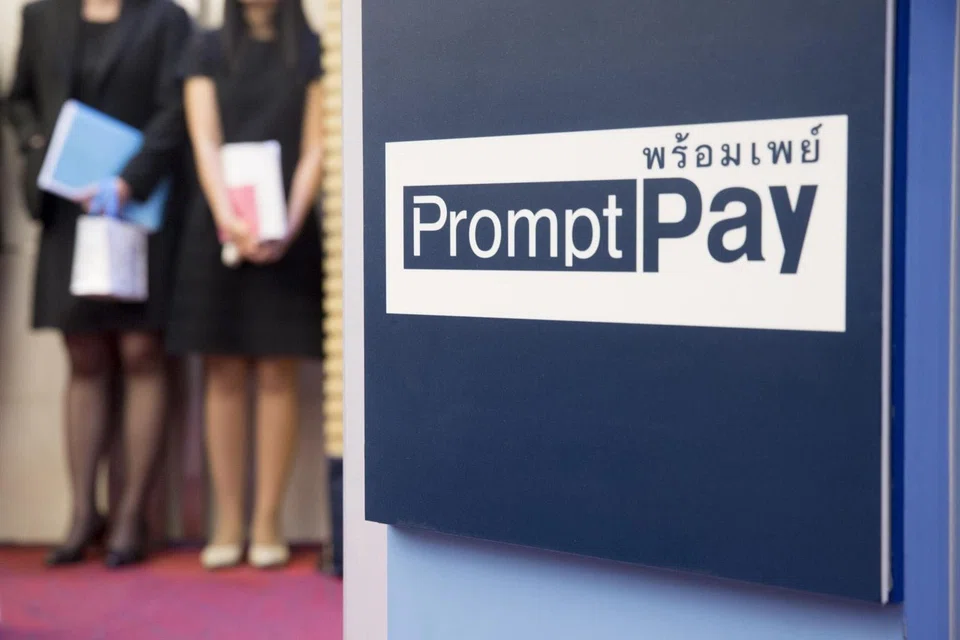
The linkage of Singapore's PayNow and Thailand's PromptPay is the first instant cross-border payments infrastructure to be set up globally, tackling key pain points such as high fees and long transaction times as with typical international remittances.
For a start, customers of participating banks in Singapore and Thailand will be able to transfer funds of up to S$1,000 (or 25,000 baht) daily within a matter of minutes, using just their mobile phone numbers, said the Monetary Authority of Singapore (MAS) and the Bank of Thailand (BOT) in a joint statement.
The participating banks are DBS, OCBC and UOB, and four banks in Thailand (Bangkok Bank, Kasikorn Bank, Krung Thai Bank and Siam Commercial).
MAS and BOT will progressively scale the network to include more participants and extend the transfer limits to facilitate business transactions.
The new PayNow-PromptPay linkage aims to halve remittance costs. Currently, about 6.5 per cent of remittances goes to fees and charges. MAS and BOT said the participating banks have committed to benchmark their fees against the market.
"The fees will be affordably priced and transparently displayed to senders prior to confirming their transfers. Senders will also be able to view the applicable foreign exchange charges prior to sending their funds, with these rates benchmarked closely to prevailing market rates," said the regulators.
The transfers will also be completed under five minutes - an improvement from the average of one to two working days needed by most cross-border remittance solutions.
The experience will be similar to how domestic PayNow and PromptPay transfers are made today, in which senders can use their mobile banking or payment applications to initiate fund transfers instantly and securely, said MAS and BOT.
In a statement on Thursday, MAS managing director Ravi Menon noted that the new PayNow-PromptPay linkage is "only the beginning", with broader ambitions to expand the network across Asean.
"MAS's shared objective with BOT is to work with our Asean counterparts to expand this bilateral linkage into a network of linked retail payment systems across Asean. With the rise of the digital economy, we want to empower individuals and businesses in the region with simple, swift and secure cross-border payments through just a few clicks on their mobile phones," said Mr Menon.
Sethaput Suthiwartnarueput, governor of BOT, added: "Looking forward, the BOT will continue to promote innovation in cross-border payments and infrastructure to strengthen financial integration for the sustained well-being of the country and the Asean region."
Wee Ee Cheong, the Association of Banks in Singapore's chairman, and also deputy chairman and chief executive officer (CEO) of UOB, said: "This initiative is also an important step to connecting payment systems across Asean at scale in the future, enabling more bank customers to send money to their friends and families and to pay for goods and services quickly, simply and safely across borders."
Lawrence Chan, chairman of Banking Computer Services and Nets' group CEO, noted: "As the operator of PayNow and Fast, we are extremely proud to be part of this trailblazing effort to connect communities, essentially a world first to enable banks' retail customers to perform cross-border fund transfers using mobile numbers."
The launch comes just a day after DBS, JPMorgan and Temasek announced plans to set up an open industry platform to facilitate better flows for payments, trade and foreign exchange settlement across banks.
This will be done through a new tech company, Partior. The platform uses blockchain technology to facilitate flows primarily between Singapore-based banks in both US dollars and Singapore dollars. Pilot trials are expected to start in the second half of 2021.
Partior aims to disrupt the traditional cross-border payments model that has resulted in issues including multiple validations on payment details by banks. This has meant costly and inefficient processes for transactions and their reconciliations.
To add, Partior's platform will be designed to complement ongoing central bank digital currencies (CBDC) initiatives and use cases.
This comes amid strong rising interest in CBDCs, and how they can speed up cross-border payments.
Singapore had in 2019 worked on Project Ubin, a five-year project that looked at models for cross-border payments using blockchain and CBDCs. MAS had partnered the Bank of Canada, and more broadly, with the financial industry to consider the benefits of such models.
A blog post from MAS last week pointed to a new project after Project Ubin, known as Project Dunbar.
It said MAS is contributing its learnings and resources from Project Ubin, and partnering the BIS Innovation Hub and the central banking community on Project Dunbar to design, develop and test new multi-CBDC models for cross-border settlement.
The BIS Innovation Hub refers to an innovation centre set up by the Bank for International Settlements. One such hub was set up in Singapore in 2019.
TRENDING NOW

Grab CEO’s wife Chloe Tong on life with Anthony Tan and finding her purpose

He built the Vingroup empire. Now South-east Asia’s richest man is handing some key roles to his sons

US says China to buy 10 million tonnes of coal in 2027 and 2028

Tokyo reverses baby bust with AI matchmaking and generous subsidies

