

Singapore pushes financial inclusion as it cracks puzzle on 'open banking'
Consumers will be better equipped with information; consequence is heightened competition in the sector
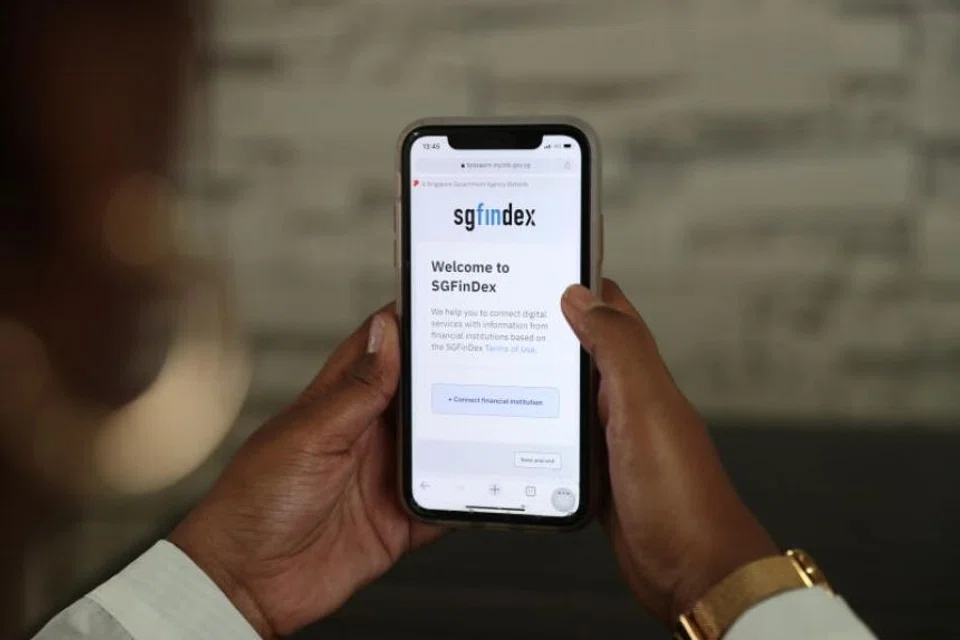
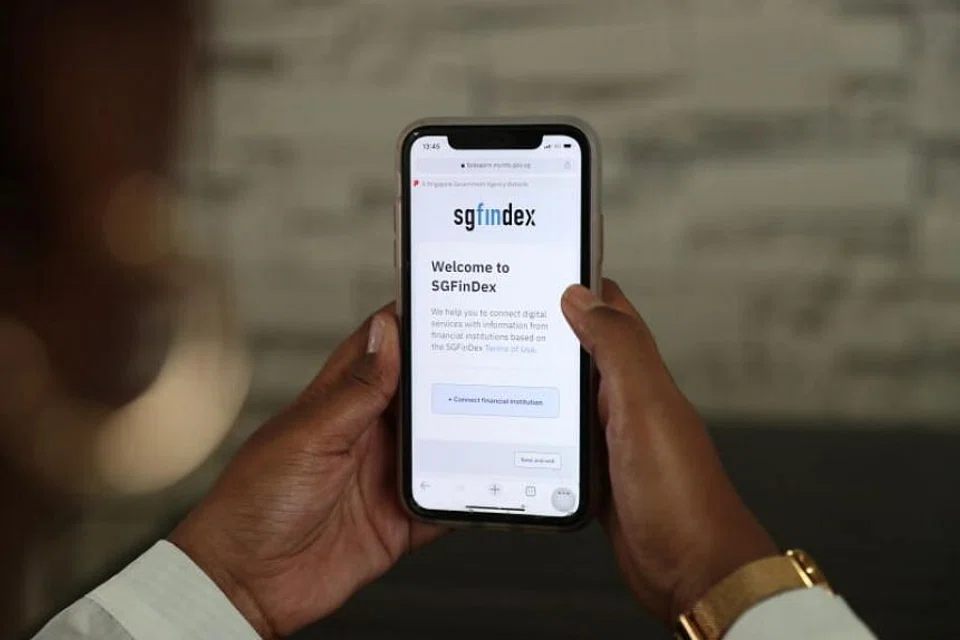
SINGAPORE has cracked a world's first again with a goal in mind: to return more decision-making power to every citizen on what they should do with their finances.
The Republic has launched the world's first system that allows its citizens to consolidate their financial information across major banks and relevant government agencies.
With Singapore Financial Data Exchange (SGFinDex), Singaporeans can use their SingPass to retrieve their personal financial information - such as deposits, credit cards, loans and investments - from the participating seven banks; and other information such as HDB loans and CPF balances from government agencies.
There are a few principles defined in this groundbreaking development.
The first is that it establishes the rules of engagement in this data-driven era of banking. Personal financial information belongs to the customers, and there should be some way for them to figure out how much assets and liabilities they have, without fearing that their own data would be compromised.
For this reason, the system not only requires explicit consent from the individual each time he or she wants that consolidated view, it also does not store any data.
Consent is set to expire after one year, and customers can further revoke consent. All data transmitted through SGFinDex is encrypted, and can be read only on the financial planning applications receiving the data.
Having this precious holistic view is important for financial planning. Not all Singaporeans have access to a personal banker who can consolidate finances for them. The one-stop aggregation of a customer's own information should not be a matter of privilege. It should be democratised.
Indeed, as Ravi Menon, managing director of the Monetary Authority of Singapore (MAS), told The Business Times: "What we're saying is that personal financial information belongs to the customer, the customer can give consent to bring his own information together, and ask a regulated service provider to provide advice."
Permanent residents and foreigners with a SingPass can also use SGFinDex, so the service is inclusive in this regard as well.
The consequence, naturally, is heightened competition in the banking industry. Banks have talked up their digital capabilities for some time now. This will now be tested by the greater transparency unlocked by SGFinDex.
The empowerment of individuals here is a principle that says the information asymmetry between financial providers and customers is long due to be narrowed.
For example, there remain instances where commoditised banking services such as mortgages are mis-sold by commission-hungry bankers. Even with comparison sites out there, there are information gaps.
Now, banks should feel forced to lay out their best offers in a transparent way. Each one should assume that the competition is doing the same.
Consumers will be better equipped with information; and banks that openly, clearly, provide sound financial advice backed up by data should scoop up market share from other incumbents.
Meanwhile, the two digital full banks announced last Friday - the bank backed by Grab and Singtel, and the other wholly backed by Sea - will burst onto the scene from early 2022. Both will be hungry for market share in the retail space as well.
Another principle established here is that from now, each individual must take greater responsibility for his or her finances. In an interview with BT, MAS' Mr Menon noted that today, there are various fitness-related apps that monitor a user's activities through the day, right down to water intake.
"But we don't have something like that to track our financial health. We need something that is intuitive, that keeps track of our financial well-being, and prompts us to do the right thing."
Singaporeans need a seamless, consolidated view of their assets and liabilities, in part so they can plan for their sunset years. Singaporeans' life expectancy in 2019 was at 83.6 years.
And this approach can go some way to bring even those on the lower-rungs of the income ladder to be active in planning their finances.
Mr Menon noted that in many cases, those who are financially excluded in the low-income strata may have failed to set aside enough savings, and become ensnared in a vicious circle of debt. "Daily nudges done in a delightful, engaging way can help to shape behaviour," he said.
There are also hopes that digital banks will raise the competition, by nudging better behaviour in an intuitive way for their users.
And the journey is not complete: insurers and the Central Depository for stock holdings are expected to come on board later. The pressure now on them to move more decidedly into the digital era is justified, and overdue.
Singapore's latest development is inspired by the concept of "open banking" in Europe. But while Europe has talked about it, little has come out of it. What Singapore did was to give credence to the idea by running with it.
It did so by having a common gateway for application programming interfaces, which form the building blocks of the infrastructure bringing this service together. Essentially, it built the pipes and the communication tools for bits and bytes of data to "talk".
And with this crucial bit of engineering and imagination, Singapore has created its next global talking point - at a time when deep, true innovation is de rigueur in a digitalised world.
READ MORE:
TRENDING NOW

Fed hike throws Singapore banks a margin lifeline; UOB most likely to feel impact

He built the Vingroup empire. Now South-east Asia’s richest man is handing some key roles to his sons

Real-estate veteran Desmond Sim quits from CEO roles at Realion, ETC

Chagee, Mixue and Luckin won the market. Sustaining their edge is the harder part

