

StanChart aims to double its consumer client base by 2025, says top executive
Singapore
STANDARD Chartered (StanChart) aims to double its global mass banking and affluent clients by 2025, with the growth powered in part by the burgeoning wealth in Asia, said a top executive from the bank.
This means a total of 20 million consumer clients - about 16 million mass banking clients and four million affluent customers - in four years' time, with the bank viewing the retail piece as just as critical as serving the high net worth.
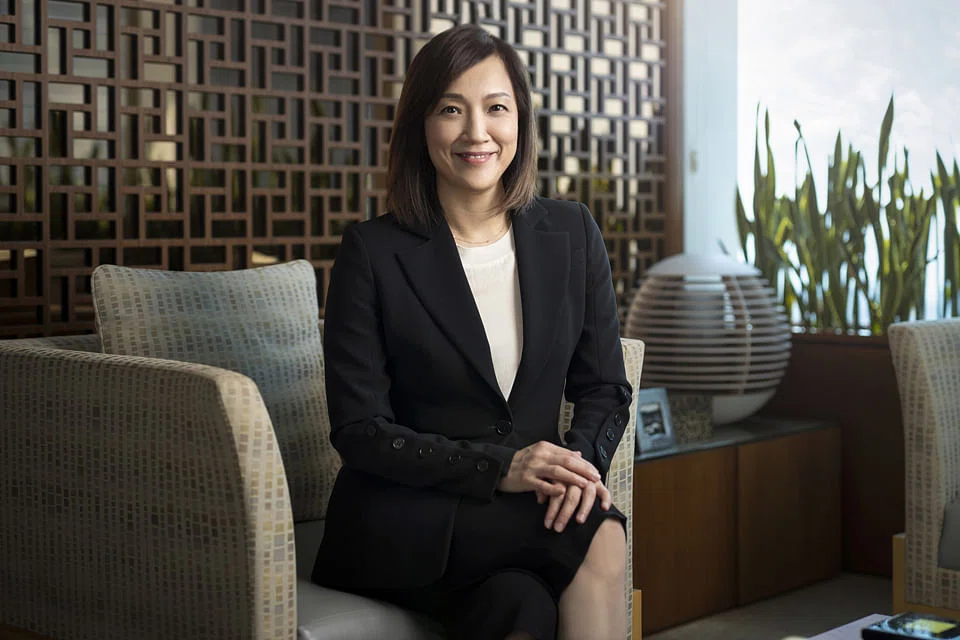
"Most banks are really focused on the upper end (of the wealth continuum)," said Judy Hsu, in her first media interview as group CEO of consumer, private and business banking (CPBB) at StanChart. "The mass affluent clients are still quite underserved, in terms of personalisation and wealth advice."
At StanChart Singapore, those with assets under management (AUM) of at least S$200,000 are considered affluent, while private banking clients have AUM of S$5 million and above.
The bank's continued focus on the full spectrum of banking services that cater to both the mass market and the ultra-rich may set it apart from other international banks, which struggle to compete with local banks for retail customers due to the lack of scale and high costs of acquisition.
A case in point is Citi, which recently pulled out of 13 retail markets - including several in Asia.
Ms Hsu, who spent her early years in banking at Citi, said that StanChart is evaluating the assets that are up for sale and that Citi has a "great franchise". She added that StanChart is also on the lookout for "great talent" in the consumer banking space.
StanChart is not giving up its retail piece on hopes that the clients stick with the bank throughout their wealth journey. Two-thirds of the bank's two million affluent customers migrated from the mass market segment, according to Ms Hsu.
The affluent will continue to be a "big growth engine" for the bank, she added. In the last 12 months alone, the bank added more than 400,000 new affluent clients in the midst of a global pandemic. In 2020, AUM grew 7 per cent, with the pace seen to be picking up this year.
To target this pool of digitally savvy individuals who are fast scaling the wealth ladder, the bank is boosting the use of data analytics and artificial intelligence, noted Ms Hsu.
Covid-19 brought on the need for physical safe distancing, and forced quicker tech adoption. With that, the bank has invested heavily in digitalisation. For example, clients can now reach their relationship managers through the bank's mobile app. Today, some 85 per cent of the bank's wealth transactions are done digitally.
StanChart's new ambitions for its consumer and wealth business follows Ms Hsu's appointment to her role at the start of the year, as part of a slew of structural changes in the bank. Prior to that, the StanChart veteran was the regional chief executive for Asean and South Asia.
StanChart is also working through plans for its digital bank in Singapore, said Ms Hsu, with more details likely later this year. Market talk has been floating for more than a year that StanChart has tied up with NTUC Enterprise to launch a digital bank. In response, Ms Hsu would only say that the bank is actively exploring working with potential partners.
"We are really excited for the establishment of a digital bank as something that we are working on, and of course, it's important that you launch a digital bank with a strong partner or ecosystem that you are able to build together with potential partners."
The bank holds enhanced "significantly rooted foreign bank" privileges here. This allows it to secure an additional full bank licence to set up a unit to operate new or alternative business models such as a digital bank.
If StanChart goes ahead to set up a digital bank in Singapore as it did in Hong Kong, it would join the four other digital banks that were granted licences by the regulator.
Given the seismic changes in the working environment, StanChart will offer permanent hybrid working for its staff in Singapore, in line with what many other banks are already doing. With more flexibility for staff, the question is whether the bank will still need so much office space, which is still being discussed, said Ms Hsu.
Earlier media reports had cited sources as saying that StanChart is considering reducing the number of floors it leases in Marina Bay Financial Tower. It would join many other banks doing the same around the world such as DBS and Citi.
But Ms Hsu said that the bank's vision for the future of work goes beyond Zoom and working from home.
The bank is adapting to change by moving to an agile way of working, similarly to how fintechs work.
"If we don't do that, I think we are going to fall behind on the client experience piece," she said. "We have trust, we have the legacy, we have the licence - but it's not enough for us to be successful in five years' time."






