

StanChart's Judy Hsu to head new global business unit
The bank is also making a slew of changes in its organisation structure along with her appointment
Singapore
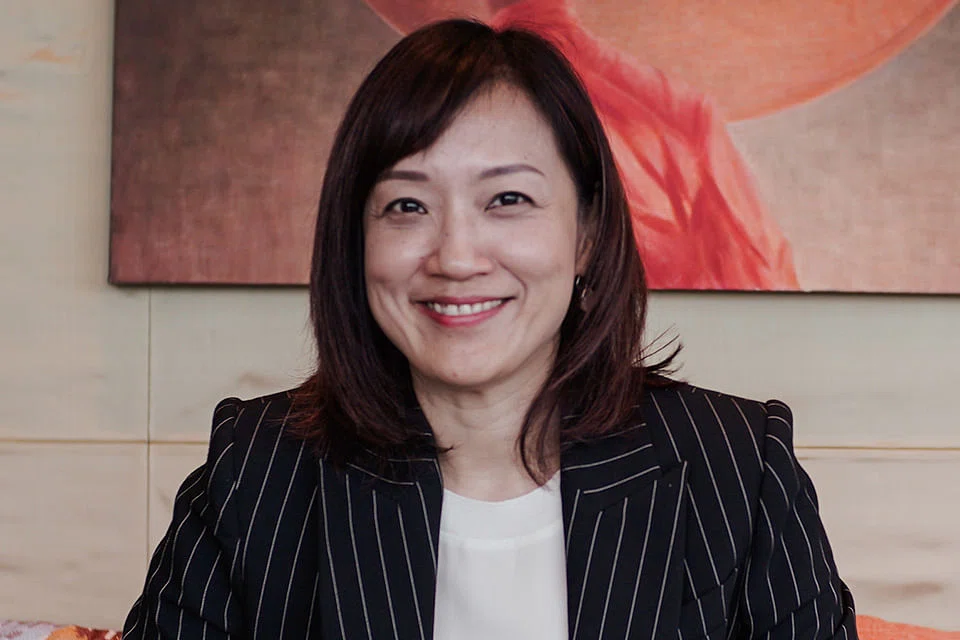
STANDARD Chartered veteran Judy Hsu will be moved to a global role from Jan 1, 2021. She will take charge of a new consumer, private and business banking (CPBB) business under a slew of changes in the bank's organisation structure.
The CPBB business is a combination of the group's individual clients and related products, which includes retail banking, private banking and wealth management.
Ms Hsu, currently the regional chief executive for Asean and South Asia, will be responsible for growing the affluent client base, for whom StanChart manages assets worth over US$200 billion. She will also develop the group's mass-market digital banking solutions and deliver further efficiencies, said the bank in a statement.
She will continue to be based in Singapore in her new role. With her appointment, the two global business CEOs overseeing the bank's business lines will be based in Singapore. Simon Cooper, now the chief executive for Corporate, Commercial & Institutional Banking (CCIB), is already based here.
Ms Hsu will hand over her Asean and South Asia portfolio, which will be subsumed under a new Asia regional chief executive role led by the Hong Kong-based Ben Hung. He is now regional chief executive for Greater China and North Asia and also the chief executive for Retail Banking and Wealth Management.
The bank said that this will enable the group to better leverage its international network to facilitate increasing trade and investment flows across Asia, while continuing to pursue opportunities in China's Greater Bay Area, and to capitalise on the wealth and business opportunities Asean presents.
Tracy Clarke, regional chief executive for Europe and the Americas and chief executive, Private Bank, will retire at the end of this year to focus on her external board roles. The group's business in the region mostly enables the region's corporate and institutional clients to utilise its network through Asia, Africa and the Middle East.
Torry Berntsen, now the chief executive for the Americas, will helm Europe and the Americas. He will report to Mr Cooper, who will have overall oversight of the region.
Bill Winters, group chief executive of StanChart, said that these changes will strengthen the bank's business with individual clients, "supporting growth in all aspects of this profitable and differentiated business".
"Separately, the increased focus on connecting our Asian business will enable us to better serve our corporate and institutional clients as they develop their businesses across these dynamic markets," he said.
"These changes will lead to expansion of the scope and responsibilities of several senior roles below the group's management team, improving management bench-strength and accelerating our pursuit of a more diverse, performance-orientated and innovative culture."
Management changes below Ms Hsu, Mr Hung and Mr Cooper will be announced later, said the bank.
The group will still report its results according to the current structure, with four segments and four regions for the remainder of this year.
On these changes, a bank spokesperson told The Business Times: "Singapore remains a strategically important market for the group - our business, operations, technology, and SC Ventures teams are led from there - and we're fully committed to further investments. Over the years as we have expanded our presence in Singapore, we have also invested in upskilling our people's capabilities and skills as well as grown our workforce."
"Singapore is an Asean hub to enterprises and multinational corporations across our global network and is strategically positioned as a global business hub and gateway to Asean. We will continue to accelerate focus on cross-border and flow business needs of internationally oriented clients by leveraging the strength of our network and across the high-growth trade corridors."
TRENDING NOW

DBS, OCBC, UOB rout lops billions off STI as inflation, rate concerns spook investors

Grab CEO’s wife Chloe Tong on life with Anthony Tan and finding her purpose

OCBC sheds S$8 billion in value as shares close nearly 6% down; analysts cautious on banks

Deal between tycoon friends sparks scrutiny of Philippine power sector

