

Succession plans at financial firms part of new accountability guidelines from MAS
Singapore
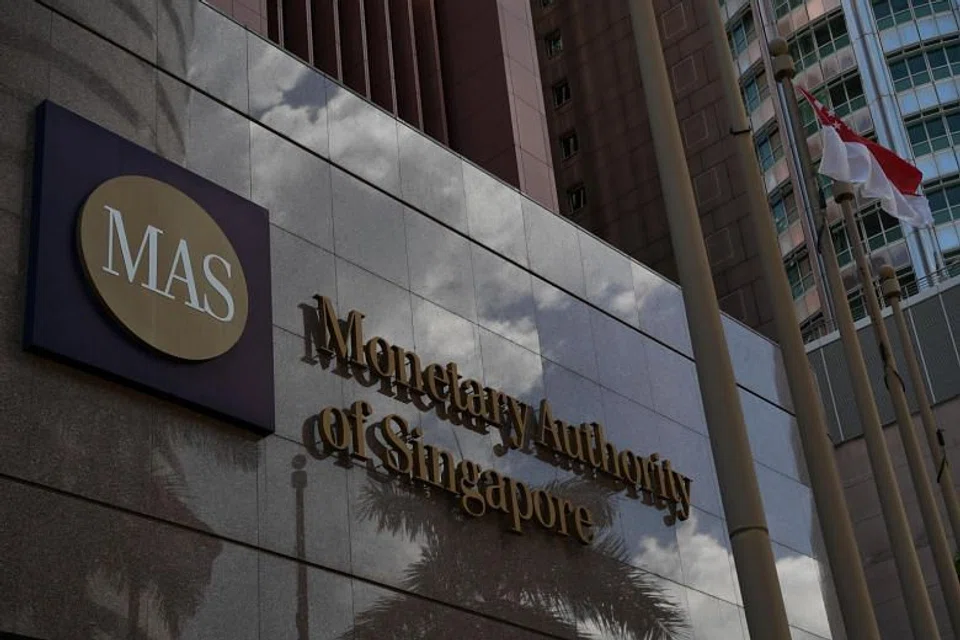
FRESH guidelines from the Singapore regulator on the financial industry state that most financial institutions should have a succession plan that is "regularly reviewed and updated".
Such a plan must identify potential candidates in the pipeline, and set out appropriate handover policies and procedures to smoothen transitions in the senior management team, showed the guidelines on individual accountability and conduct (IAC) set out by the Monetary Authority of Singapore (MAS) on Thursday.
These IAC guidelines are about two years in the making, and will apply in full to all financial institutions unless they are exempted or if the financial firms have fewer than 50 in headcount.
In ensuring sound corporate culture and conduct in the financial industry, MAS said it is looking to shape ethical business practices, as well as prudent risk-taking behaviour and robust risk management. The IAC guidelines supplement the existing regulatory framework.
In a 2018 consultation paper on the guidelines, some from the financial industry had "queried on the rationale for and necessity of the guidance on succession planning".
MAS's response in 2019 was that effective succession planning is "critical to organisational stability" over time.
"It entails putting in place processes to retain and attract the right talent, by considering means to get the right people with the desired values and cultural fit, skillsets, capabilities and experience to fill important roles," MAS said in response to the industry feedback. Such plans foster "well-planned and executed" leadership transitions, minimising potential disruptions to operations while keeping internal controls effective.
But MAS said the time horizon for succession planning will depend on each financial institution's business.
The 23-page set of IAC guidelines comes alongside international "accountability regimes" in financial centres that include the United Kingdom, Hong Kong, and Australia.
The IAC guidelines in Singapore will apply to payment services firms, despite feedback from four respondents seeking to exempt licensed payment services firms because accountability regimes in other jurisdictions do not apply to them.
MAS rejected this idea, saying that the expected standard of good governance should be applied in that sector as well.
The guidelines in Singapore rest on five accountability and conduct outcomes. Senior managers responsible for managing and conducting the financial institutions' core functions should be "clearly identified", the guidelines said.
Senior managers should be appropriate for their roles, and are to be held responsible for the actions of their employees and the conduct of the business under their purview. Senior managers' performance should be tracked by a "clear and transparent" management structure as well as reporting relationships, too.
Against that backdrop, the latest guidelines outlined the decision-making authority of Singapore-based senior managers for foreign financial institutions as well. Some industry players gave feedback in 2018 that decisions on strategic matters may be taken at the regional or head office levels, while local management has delegated authority.
MAS responded in 2019 that if individuals sitting outside of Singapore are directly responsible for the local operations, such overseas-based senior managers should be held responsible in meeting these guidelines.
"It is not appropriate for financial institutions to designate individuals based overseas as senior managers if the relevant decision-making authority has in substance been vested locally," it said. "Likewise, financial institutions should not designate individuals based in Singapore as senior managers if the decisions driving the financial institutions' day-to-day business are effectively taken overseas."
Some also asked if senior managers who are already subjected to accountability regimes in other jurisdictions - such as the UK - could be exempted from the IAC guidelines.
MAS rejected this exemption feedback, saying that the IAC guidelines apply specifically to a financial institution's operations in Singapore.
To comply with the IAC guidelines, foreign financial institutions may use frameworks instituted at the regional or head office, MAS said, but added that the specification of senior managers' responsibilities should "reflect their roles in relation to the Singapore operations".
MAS warned that it will follow up with financial institutions that use outsourcing purely to game the guidelines.
It said it may redefine the scope of the 50-headcount threshold if many financial firms are found to be "deliberately circumventing" the need to apply the specific guidance this way. Financial firms also remain responsible for outsourced activities.
Grace Chong, a lawyer at Simmons & Simmons JWS, said MAS's enforcement agenda is "increasingly focused" on the responsibility and accountability of senior management at financial institutions, as seen by the enforcement actions in the 1MDB-related investigations.
In a media statement, UOB's group chief risk officer Chan Kok Seong said the bank sees strong governance as crucial to organisational success.
"Financial institutions are responsible for protecting the interest of customers and preserving the integrity of the markets that we operate in," he added. "Such responsibilities must be clearly understood and communicated across the organisation, starting with the senior management."
TRENDING NOW

DBS, OCBC, UOB rout lops billions off STI as inflation, rate concerns spook investors

Grab CEO’s wife Chloe Tong on life with Anthony Tan and finding her purpose

OCBC sheds S$8 billion in value as shares close nearly 6% down; analysts cautious on banks

Deal between tycoon friends sparks scrutiny of Philippine power sector

