

Surprise partnerships can create new niche banking services
But diverse groups could find it tricky to provide digital banking services as an entity
Singapore
SINGAPORE'S latest contenders for a digital banking licence may have included several names that are left-of-field to banking, but diverse partnerships are needed to offer niche, untapped services in heavily-banked Singapore, said analysts.
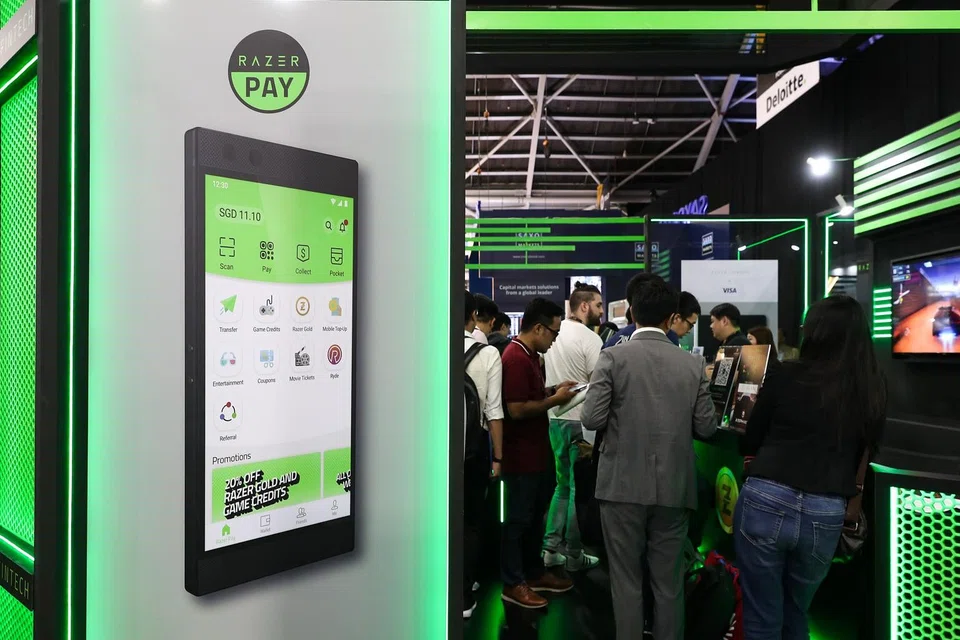
This comes as a consortium that includes Razer Fintech and a private vehicle of the founders of supermarket chain Sheng Siong Group on Thursday said it has applied for a digital full bank licence.
On Monday this week, Grab Holdings and Singtel announced their joint application for the licence. A digital full bank licence permits the taking of deposits from retail customers. As at the end of Thursday, these were the two consortiums that had made their applications public.
Osim founder Ron Sim's private vehicle V3 Group is also believed to have joined the race for a digital full bank licence; this consortium includes property heavyweight Far East Organization and stored-value card operator EZ-Link.
More of such diverse partnerships could be unveiled in the coming weeks, Varun Mittal, global emerging markets fintech leader at EY, told BT. "In Singapore, banking penetration is not a problem. If you need a bank account, you can easily create one. Bank branches are everywhere. The new digital bank consortiums have to be diverse. They can't only offer one type of service; they need to be relevant to consumers and add value to their daily lives with more personalised products."
Besides staple banking services, Singapore's new digital banks will likely venture into fields such as transport, food and beverage, entertainment and travel, he said. This would account for the need for varied partners in the proposed consortiums.
Amid stringent digital bank requirements by the Monetary Authority of Singapore (MAS), teaming up is also a strategic way for interested players to show their "strong financial footing" and "augment their existing capabilities" to roll out innovative digital banking-related services, said Richard Wong, vice-president of consultancy Frost & Sullivan.
MAS will issue up to two digital full bank licences and up to three wholesale licences this year. The first category requires capital of S$1.5 billion, and the second, S$100 million.
In its guidelines, MAS said the new digital banks must show a "path to profitability" based on a five-year financial projection. The applicant group must also include at least one entity with a track record in the technology or e-commerce field.
Consortiums can help players to diversify, reduce their exposure and still "gain a little something at the end of it", DBS analyst Lim Rui Wen said.
In the 60-40 proposed partnership between Grab and Singtel, Frost & Sullivan's Mr Wong said both firms are complementary in terms of their experience in digital financial services and sound underlying digital infrastructure; each also has a big digital user base the other partner can tap.
That said, there remains a gap in their abilities to roll out financial services as a combined digital entity, given that their existing offerings are "only a small subset of what a digital bank can actually provide", he said.
Razer's decision to team up with Sheng Siong's founders as partners came as a surprise to Mr Wong, who reckons that the proposed consortium is "an equity play" by Sheng Siong's Lim brothers; for Razer, it is a way of diversifying risk by "getting a strong equity partner". He noted that their combined experience in financial services is also limited.
Razer's proposed consortium also includes insurer FWD, Internet company LinkSure Global, tech venture fund Insignia Ventures Partners, and vehicle wholesale marketplace Carro.
These different specialisations should "make sense when put together", but the integration into a digital bank could be challenging, said CGS-CIMB analyst Andrea Choong, noting Razer's experience in the digital payments space, and Sheng Siong brothers' business acumen.
While household names such as Sheng Siong and Singtel may seem like misfits in the banking industry, analysts say these familiar faces accord the crucial element of trust to the fresh-faced consortiums.
Last September, a CGS-CIMB survey using Singtel and Grab found trust in Grab lacking among retail customers when it comes to choosing a bank. Government-linked companies (GLCs) commanded higher trust levels than commercial entities, with consumers correspondingly being more willing to use GLCs as depository institutions.
Ms Choong said: "In this regard, Singtel was the more trusted brand, given its parentage. Bringing the two together would bridge the fintech trust gap." Mr Mittal agreed, noting that new-to-banking fintechs need these "old partners" to build a sustainable digital bank: "While (digital) capabilities are important, what's most important is trust; the ability to give consumers the confidence that the bank is a long-term player and can keep their money safe. When you need a good doctor, you don't look at number of degrees he has; you ask friends and family for recommendations. It's the same concept."
READ MORE:
TRENDING NOW
32 companies, 6 individuals bag accolades at Singapore Corporate Awards 2026

He built the Vingroup empire. Now South-east Asia’s richest man is handing some key roles to his sons

URA to review guidelines on floor space to give developers more design flexibility: Chee Hong Tat
Chagee, Mixue and Luckin won the market. Sustaining their edge is the harder part

