
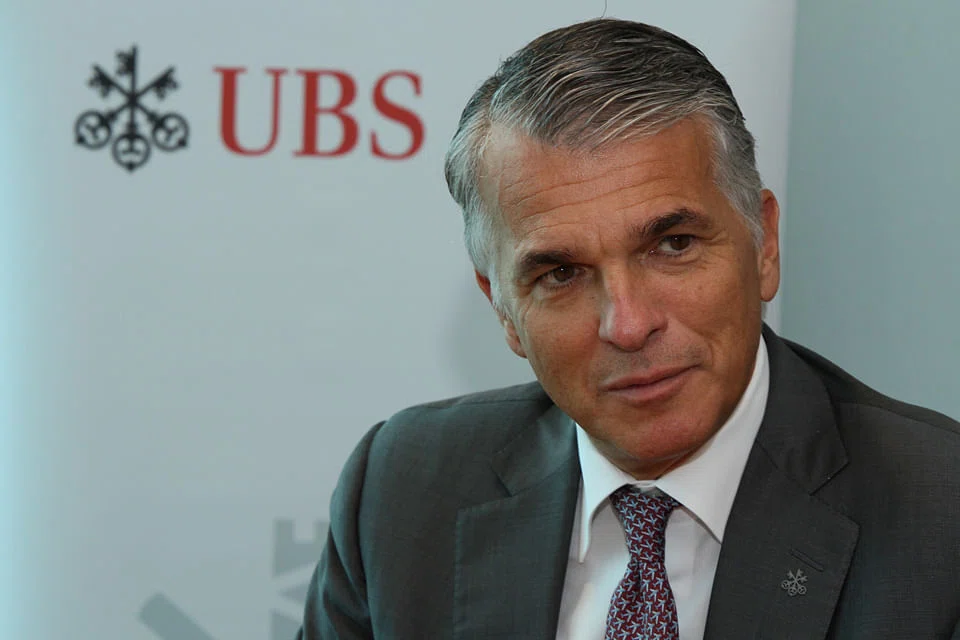
UBS's Ermotti says reviving payouts best part of reign as CEO
Zurich
WHEN Sergio Ermotti took over as chief executive officer at UBS Group nine years ago, the Swiss bank was under siege.
UBS was repairing a reputation tarnished by massive losses in the financial crisis that had forced it to take a government bailout, and reeling from a trading scandal that cost US$2.3 billion and drove out Mr Ermotti's predecessor.
Mr Ermotti, who hands the job over to former ING Group CEO Ralph Hamers on Nov 1, led a pivot from volatile investment banking to wealth management, turning UBS into a world leader that oversees US$2.5 trillion in assets.
Still, he leaves his successor with plenty to do. A potential US$5 billion fine hangs over the bank for allegedly helping French clients evade taxes, costs are higher than many peers and rivals have been poaching entire teams of wealth managers. UBS also has to navigate its return to paying dividends after a de facto ban on payouts for Europe's banks.
In April, Mr Ermotti becomes chairman of Swiss Re, one of Europe's largest insurance and reinsurance companies. The following are his departing words in an interview, edited for clarity and length.
Navigate Asia in
a new global order
Get the insights delivered to your inbox.
Do you enjoy taking risks?
I enjoyed it when I was younger, probably more than today. I always felt that the vast majority were thought through and calculated. From time to time you need to let your stomach drive the risk decision a little bit more, but the vast majority were driven by risk assessment, and most importantly risk and reward assessment.
How do you want your era to be remembered?
I stabilised the bank, further put the bank into a new path of strategic clarity, and it now has capital strength, solidity and operational resilience. I reinforced the culture. I hope I will be remembered for those things.
The detractors would say you should have cut costs harder, deeper and more aggressively. What's your response?
I never say that we are perfect in costs. We are reducing costs every year by around US$500 million and that gets reinvested in technology and new initiatives. When you are running a US$24 billion cost base, you always have to find some things to cut costs on.
Our cost-income ratio is structurally higher than some of our peers but we also have the highest return on risk-weighted assets in the industry by far. The people who focus on the cost-income ratio seem to forget that. This trade-off allows us to have an efficiency curve, a combined ratio between the way we utilise our capital and a cost income ratio that makes total sense for shareholders.
What was your best day on the job?
In 2015, when we closed the journey of the restructuring. We were able to start to give back a significant amount of capital to shareholders; that was a good feeling. But also a few weeks ago, when I learned that 86 per cent of my colleagues feel very proud about working for UBS.
With Covid-19 raging around the world, can banks really pay substantial bonuses?
This year we are going to need to put performance and other soft factors into the equation and the most important issue is that we also pay fairly and competitively.
Did UBS miss an opportunity to appoint a female CEO?
No. I think it would have been a missed opportunity if women were not considered in the selection process. Our goal is to have at least 30-35 per cent females on our board of directors and on our executive board and 30 per cent across the firm from director level up to group executive. Right now we are at around 25 per cent. The good news is everyone in the industry is focused on it; the bad news is that it makes hiring talented women competitive.
What advice would you give when it comes to negotiating deals?
In negotiating any transactions, you need to put the client interest first. Not only is it the right thing to do, but it is the best way to create a sustainable relationship and reputation in the market that will lead to more transactions. In some cases, it means also saying no, or advising against doing it. It is important to be able to say no. BLOOMBERG
Decoding Asia newsletter: your guide to navigating Asia in a new global order. Sign up here to get Decoding Asia newsletter. Delivered to your inbox. Free.
Share with us your feedback on BT's products and services

