

VCC regime could still change to swing in the favour of single family offices
Industry watchers think the benefits from relaxing the requirements binding VCCs will outweigh the risks
Singapore
A REVIEW of the potential changes to the variable capital company or VCC framework is still underway, even as the spectre of the Archegos blowup continues to hang over the financial industry and raise questions on regulatory oversight.
The changes would have implications for single family offices (SFOs), which numbered about 400 in Singapore as at last year. The figure is set to rise amid Singapore's attractiveness as a wealth and fund management hub.
Industry watchers believe that, with safeguards in place, the benefits from relaxing the requirements binding VCCs will outweigh the risks.
In response to queries by The Business Times, the Monetary Authority of Singapore (MAS) said that it is still studying the possibility of widening the scope of asset managers that can use VCC structures, but with adequate safeguards in place "to minimise the risk of abuse of the VCC structure for illicit and fraudulent purposes".
The issue has drawn keen interest from SFOs and other asset managers that are not regulated by the MAS, such as real estate fund managers that invest solely in immovable properties.
The VCC regime, launched in Singapore in January 2020, is designed to attract the assets of fund managers and family offices. It does so by offering certain tax exemptions, and flexibility in how the fund distributes capital. Among other perks, VCCs are not obliged to make financial statements public.
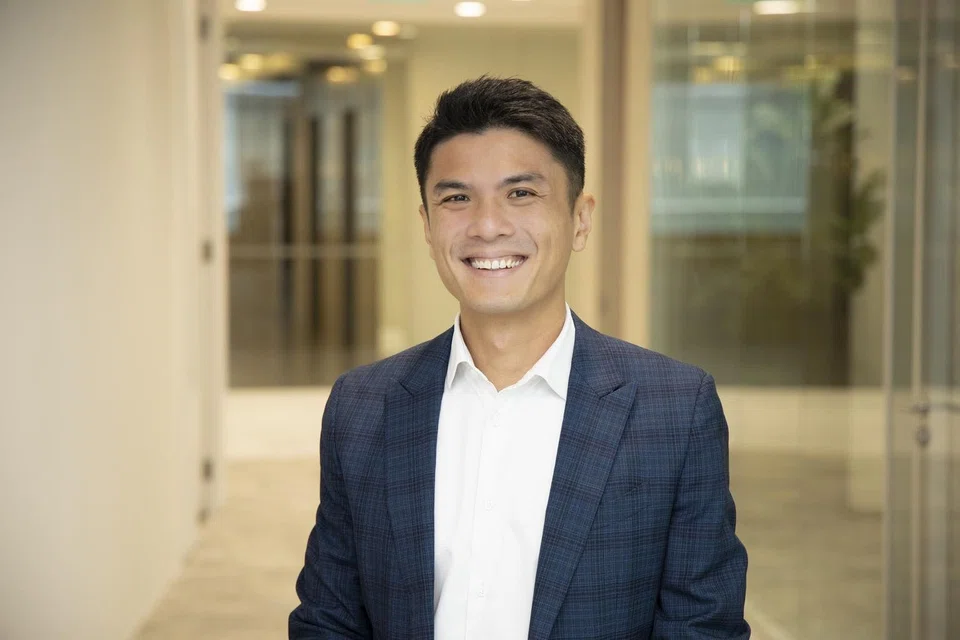
Jaydee Lin, managing partner of Raffles Family Office said that the regime offers "flexibility, liquidity, ease of asset consolidation, autonomy and privacy".
By using VCC structures, SFOs can enjoy greater leeway in how they centralise assets, compose funds and minimise tax exposure, which helps them create more bespoke solutions to address the growth and preservation of wealth of the families they represent, he said.
But for now, the regime is available only to MAS-licensed or registered managers - which excludes most SFOs.
The proposal to relax VCC requirements has been in the works since December 2020, and industry players think the rules are likely to be amended so that SFOs, managed by licensed exempt managers, can be set up under such a regime.
Lee Woon Shiu, regional head of family office, wealth planning and insurance solutions at DBS Private Bank, said this opens up "a wide spectrum of optionalities" for SFOs. They can structure their assets in diverse ways, ranging from open-ended fund structures, close-ended funds, umbrella funds as well as master funds.
For families with specific requirements in enhancing asset ring-fencing benefits of family members, the VCC may provide "an attractive and flexible proposition" that could be customised to address the needs of ultra-high-net-worth families, he noted.
Even as Singapore seeks to attract the wealthy to park their funds here, family offices are now facing more scrutiny by regulators around the world on the back of scandals such as the Archegos episode, which could potentially weigh on the MAS' decision.
Earlier this year, Archegos Capital Management, set up as a so-called SFO by investor Bill Hwang, defaulted on margin calls, resulting in billions in losses by banks. US-based Archegos had used financial derivatives to accumulate massive leveraged stakes without having to disclose them to banks and regulators.
With family offices being able to hide behind a veil of secrecy, there is also the possibility that the funds channelled could be illicit.
Armin Choksey, who leads PwC's Asia-Pacific Asset and Wealth Management Research Institute based in Singapore, said: "The fact that (single) family offices in Singapore are currently neither regulated nor licensed means that regulators will have to first carefully consider potential issues like custody and anti-money laundering (AML)."
Lee Wong, head of family services for Asia at Swiss private bank Lombard Odier, noted that the robustness of the AML control framework "remains a key concern". She noted that SFOs are generally thinly staffed and are unlikely to have the resources or experience to properly implement measures to combat AML and the financing of terrorism.
The MAS may thus adopt a similar approach to that applied to private trust companies in terms of their AML obligations, and require an SFO acting as a fund manager of a VCC to appoint an MAS-licensed institution to administer its AML obligations, she said.
But DBS' Mr Lee said family offices will invariably enhance their risk management and control measures, as the banks and family institutions they work with may also require a "deep-dive" into the assets held by these family offices.
David Lee, a professor of finance at the Singapore University of Social Sciences, said that "as long as the scheme does not cause a systematic risk" to the financial system, the financial and tax incentives will continue to make Singapore the preferred choice for family offices.
Even as regulators continue to mull over the VCC regime, industry watchers say that Singapore's draw for family offices will continue.
Jason Nelms, partner at law firm Morrison & Foerster said the VCC enhances Singapore's attractiveness to the market, but is only one of many reasons family offices are choosing Singapore. "Even if it did not exist, Singapore would still be viewed as a prime destination for a family office's Asia operations," he said.
Likewise, Raffles Family Office's Mr Lin believes that the VCC structure has "certainly been helpful and well-received", but it is just one of the many tools that multi-family offices deploy as part of their broader offering for wealth growth and preservation.
This comes on the back of significant policy and regulatory efforts to promote the sector, which have been encouraging and putting the market on a path towards cementing its role as a global wealth-management hub, he said.
"We have no doubt that Singapore's family office sector has a promising future, and we see positive signs confirming this view on a daily basis," he said.
READ MORE:
TRENDING NOW

Could stablecoins be the future of money?

Once staunchly pro-China, Malaysian Chinese businesses are now distancing themselves from Beijing

Vietnam’s data-centre investment rush faces reality check on power and site constraints
‘My grandfather’s legacy’: Sherman Kwek lays out three-year plan for CDL to drive returns

