

Wells Fargo to cut dividend as top rivals maintain payouts
 Add BT as a preferred source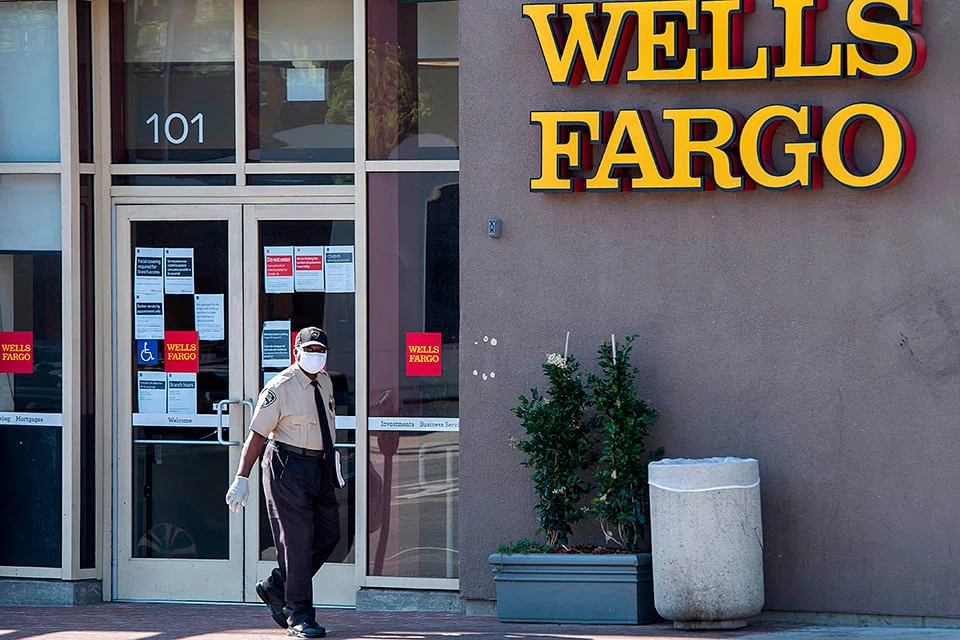
WELLS Fargo & Co plans to cut its dividend, breaking with all of the biggest Wall Street banks, after the Federal Reserve last week set new restrictions on the payouts.
"There remains great uncertainty in the path of the economic recovery; and though it's difficult to accurately predict the ultimate impact on our credit portfolio, our economic assumptions have changed significantly since last quarter," chief executive officer Charlie Scharf said on Monday in a statement.
JPMorgan Chase & Co, Bank of America Corp, Citigroup Inc, Goldman Sachs Group Inc and Morgan Stanley left their third-quarter payouts unchanged, according to statements from those banks.
A reduction by Wells Fargo was widely expected after the Fed said it would restrict payouts using a formula based on earnings, which have plunged at the San Francisco-based bank in recent quarters partly on legal costs tied to multiple scandals.
The bank has spent almost four years struggling to emerge from the missteps, which began with the 2016 revelation that employees opened millions of potentially fake accounts to meet sales targets.
Wells Fargo said it would announce on July 14 how far the current 51 US cent payout would drop. It is expected to decline to 20 US cents, according to an analysis by Bloomberg's Dividend Forecast team.
Shares of Wells Fargo fell almost 1 per cent to US$25.45 in extended trading in New York at 5.29pm. They are down 52 per cent this year.
In releasing the results of its annual stress test on the industry last week, the Fed capped dividends at the largest 33 banks at current levels.
The central bank said that it might conduct another exam using a harsher economic scenario later this year, limiting firms' ability to gauge prospects for dividends for the rest of the year.
The Fed added a new "sensitivity analysis" to its review that sought to capture how well firms are prepared to handle financial pressure caused by the Covid-19 pandemic.
Those results were released only in aggregate form, showing how all the banks being tested would fare under more severe scenarios.
Policymakers considered three potential scenarios: a quick V-shaped recovery; a slower U-shaped bounce-back; and a worst-case W-shaped scenario, which assumes a second wave of coronavirus containment measures.
In that review, industry capital levels are expected to slump 4.3 percentage points.
The Fed has also told companies that they cannot resume buybacks, which were suspended in March to preserve capital as the pandemic was spreading.
While the industry fared well in the central bank's annual review, the new limits were meant to restrict the distribution of capital at a time when the economic recovery looks uncertain.
Goldman Sachs was among the worst hit in the stress test's hypothetical economic scenario, leading some analysts to predict it might have to shrink its balance sheet in the third quarter to continue paying dividends at the current level.
The firm said on Monday it was confident it could bring its capital level up to the central bank's new requirement.
Goldman Sachs said it has already brought its common equity tier 1 ratio to 13 per cent in the second quarter, up from 12.3 per cent in the previous three months.
Under the new stress capital buffer set by the Fed, it has to be 13.7 per cent by the end of the third quarter.
Capital One Financial Corp, another lender that some analysts predicted would lower its dividend, did not mention the payout in a statement on Monday on the stress tests.
Credit Suisse Group AG analyst Moshe Orenbuch said that probably meant the firm could continue paying at the current level. BLOOMBERG
Decoding Asia newsletter: your guide to navigating Asia in a new global order. Sign up here to get Decoding Asia newsletter. Delivered to your inbox. Free.
Share with us your feedback on BT's products and services
TRENDING NOW

Asia-Pacific aviation: is up really the only way?
Singapore Airlines faces some bleak choices as it lays trapped in Air India’s money pit

Car rental firm RentLah sues former director, dealer Skyway over alleged 95-vehicle fraud
MSCI drops S-E Asian heavyweights Sembcorp, GoTo and Ayala Land from global benchmarks

