Anatomy of a lie: Unpacking deceit in the startup world
Of BS, "pre-truths", gaps and loopholes in the tech ecosystem



It is late 2016 when Tony*, a venture capitalist (VC), gets a meeting request from a fintech investor he's never heard of. Over coffee, the investor and his wife subtly flaunt their wealth and offer to back Tony's business. They name-drop connections ostensibly cultivated over private dinners - Singapore's president, the Prime Minister, large real estate developers who are apparently also familial relations.
This network will help make their upcoming blockchain fund a success, the investor later tells Tony, while hinting at links to state investors Temasek and GIC. "I thought he was just a guy who exaggerates a bit," Tony recounts to The Business Times (BT). But he began hearing accounts of young startup founders who never got money the investor promised. "That's what got me concerned."
Tony dodged a bullet. Meanwhile the investor, Joe Cho Seunghyun, became a poster boy for Singapore fintech. His private investment group Marvelstone launched the "world's largest fintech hub" Lattice80, started a female-focused roboadviser, and dabbled in artificial intelligence and cryptocurrency.
Then in mid-2019, BT reported that investors were suing Cho in South Korea. And Lattice80, despite much hype, could not pay rent and showed almost no business activity globally.
Cho was sentenced to 10 years' jail for fraud and other crimes in August, but damages of over 10 billion won (S$11.4 million) owed to investors have not been recovered.
As disgraced Theranos founder Elizabeth Holmes stands trial in the United States for deceiving the public about the company's blood-testing technology, Singapore is itself coming to terms with scandals that blemish its squeaky clean image.
Though highly regarded as a transparent and corruption-free place for business, the city-state has seen some high-profile cases in recent times.
Businessman Ng Yu Zhi allegedly executed one of the largest Ponzi schemes in Singapore's history after raising at least S$1 billion for fake nickel trades. Bellagraph Nova (BN Group), which launched a sensational bid for football club Newcastle United, saw its web of lies unravel following a doctored image of its leaders with former US president Barack Obama.
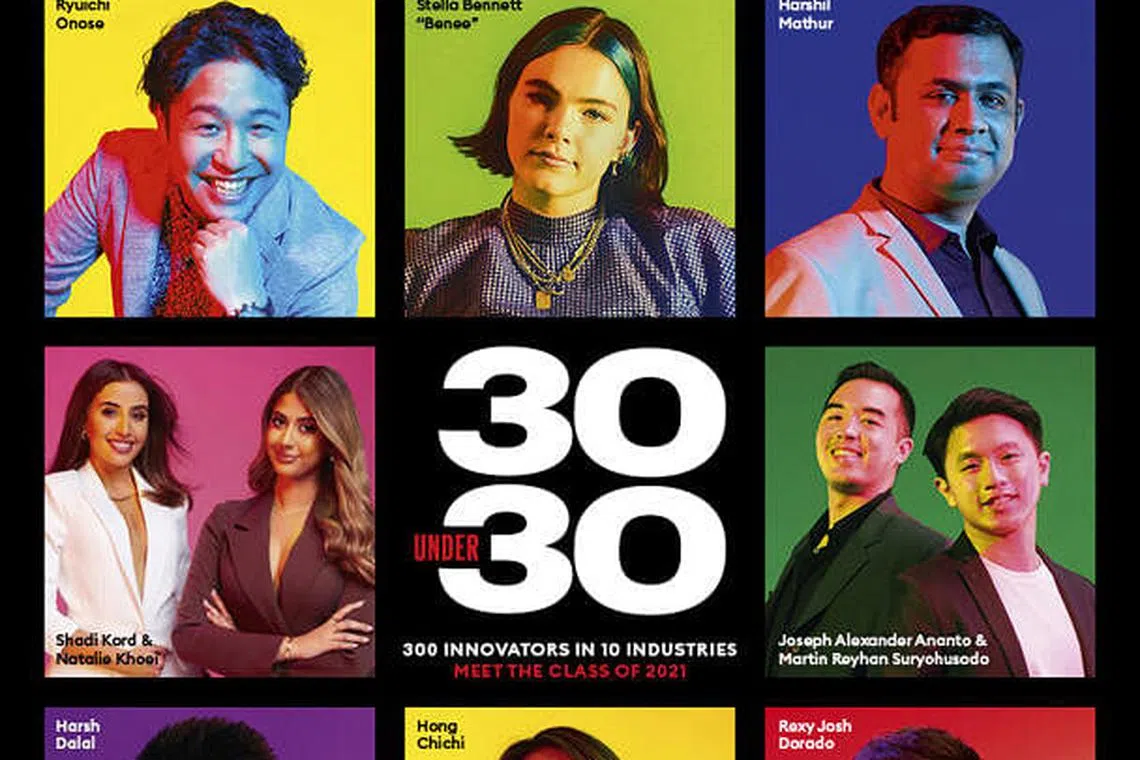
Then there's honestbee, whose founder claimed lineage to Sun Yat-sen, and teenage "entrepreneur" Harsh Dalal, who made the Forbes 30 under 30 list for a startup that might not have existed at all.
The BS meter
Singapore's startup ecosystem by and large is very principled and grounded, going by accounts of several current and former investors and startup employees.
Still, many say they have encountered their fair share of dishonesty and even fraud. The examples are diverse - from inflation of revenue to embezzlement and bribery attempts, to overstretching the truth about the potential of the company's tech.
A clear pattern in these cases is that they often involve a large dose of what many call "bullshitting".
One of Singapore's pioneer accelerators, JFDI, is familiar with the concept. Back when it was still accepting applicants, some were asked to indicate which startup books had influenced them. On JFDI's list were classics like The Lean Startup by Eric Ries, and What Every Entrepreneur Should Know by Alan Smithee.
The catch was that so-called Alan Smithee's book was among fake books on the list. JFDI co-founder Hugh Mason often had to hold in his laughter as some people, having chosen those fake books, were pressed about the choice and forced to spin a long tale about how inspiring they were.
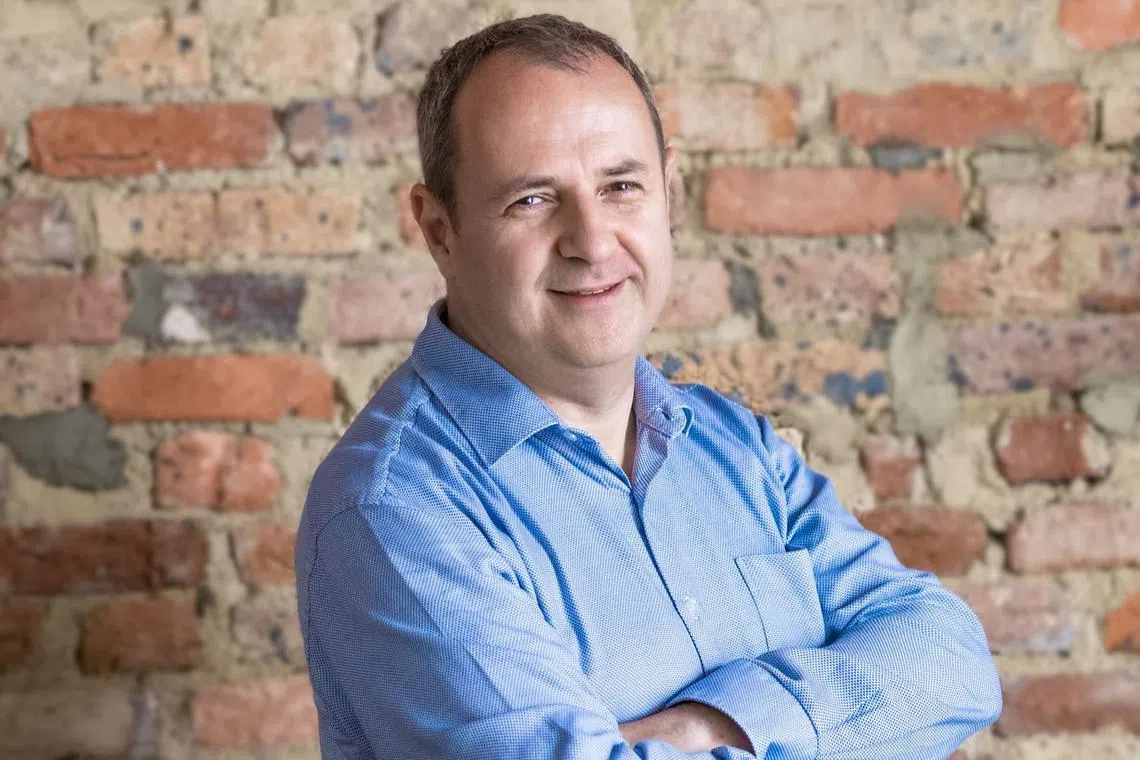
"We found at least 20 per cent of the applicants to JFDI were lying massively. So much so that we built special traps into the application process that they would fall into," Mason says.
An article in The Conversation, authored by three faculty members of Simon Fraser University, describes "bullshit" as a means to hide that which is unsupported by evidence or logic. It often takes the form of cliches, platitudes or business jargon.
Take, for instance, this excerpt from a press release last year: "The Bellagraph Nova Group since its inception, has taken the world by storm, making strategic chess moves that even the greatest Grandmasters will be proud of.
"One such brave move was the decision of the (founding) trio to embark on their landmark merger in the midst of the global pandemic crisis. The audacity to even fathom such a strategic thought by itself, is already no mean feat and the ability to pull it off was nothing short of a miracle move."
Such bombastic language was recently the subject of research by Nomura. By analysing the earnings calls of Russell 1000 large-cap companies, it found that companies whose officers used the most complex language averaged lower returns than those that used the simplest language. One explanation was that convoluted speakers had more to hide.
"Bullshitting" works a little differently in the startup world. In his essay Are Founders Allowed to Lie?, ex-Social Capital associate Alex Danco notes that VC-backed founders are uniquely allowed to "pre-tell" the truth. Most importantly, they must genuinely do so in an effort to bootstrap the future into existence.
Pre-truths can take many forms: viewership figures, the reassurance that "the tech is scaling nicely", or logos of enterprise customers on websites (despite some contracts having a questionable status).
Such reality-bending is becoming a hallmark of tech ecosystems, where select individuals are expected to conjure new worlds from scratch. Belief in the founder is everything for a successful business, but it can backfire when irrationality sets in. Small lies told in pursuit of a genuine dream can become big lies.
Danco writes: "VCs don't just give founders money, advice, and introductions. They give founders something powerful, and almost mystical: they bestow on founders a type of blessing. 'You are the founder. You stand apart. Now go make the future real.'"
Startup ego-system
So when does "bullshitting" go too far? Silicon Valley's Ozy Media was up till recently a promising company led by a charismatic and relentless founder. Then, on Sep 26, The New York Times ran a story about how Ozy's chief operating officer impersonated a YouTube executive, with the intention of misleading prospective investor Goldman Sachs about viewership. Ozy's future is now in question.
In some ways, Ozy succeeded in its deception for so long because Silicon Valley fed into the company's glitzy narrative.
It's an almost symbiotic relationship - society and the media embraces a founder or investor's story, the adrenaline and hubris set in, more stories and promises roll off the tongue, and the hype continues.
Tech in Asia's editor-in-chief Terence Lee, while reflecting on the news outlet's expose of the young Harsh Dalal, wrote that the "saga isn't just about Dalal, though. It touches on broader themes like the pursuit of fame".
This hunger for public validation can turn obsessive. "The danger (to them) is not in being caught. The bigger danger is when they start noticing that journalists are not answering their call, or people are not talking about them. And they just end up being a has-been," says Jacob Puthenparambil, chief executive officer of public relations agency Redhill.
"The biggest mistake you can make is to believe your own propaganda."

Hubris isn't the driving force of all epic failures. In a pressure cooker ecosystem where a lot of money is attracted to those perceived to lead the pack, founders are sometimes forced into maintaining a certain image or becoming somebody they are not.
The digital age - and the pandemic - complicates this. At a time where opportunities to project oneself through face-to-face networking are scarce, people tend to overcompensate online.
Platforms such as LinkedIn allow people to carefully curate how they want to be presented. But having a picture-perfect profile also comes with the pressure of constantly having to conform to it, says communication and technology professor Lim Sun Sun from the Singapore University of Technology and Design.
She explains: "The theory of context collapse is that we have multiple social contexts that we operate in. Suppose here I am with my child and I'm in my mummy mode; I'm not in my professor mode. Then suddenly I go to the store and I see my students. And they're amazed to see me in my mummy mode, speaking in a kiddy way to my child, and they don't realise that that's another side of me.
"So that's when the context collapse occurs, where people from different spheres of your different social networks suddenly see a different side of you. Then you have that challenge of smoothing out the dissonance between the different spheres. I think for people who are very much in the public eye, the challenge is that one image overwhelms them all."
Gaps and loopholes
Building a web of lies often involves more than just a founder or investor. Wirecard whistleblower Pav Gill likens it to a gang initiation - once a person is forced to do something unethical for the company, they're trapped.
"Everybody was turned on everybody," he says of his Wirecard days.
He distinctly remembers a conversation while on a plane to Bangkok with Edo Kurniawan, the finance executive suspected of cooking Wirecard's books.
Gill had gotten close enough to Kurniawan to ask what he planned to do if he got in trouble and the company turned on him. "He's like, 'No, they can't because I have all the evidence against them. So if I go down, I'll make sure everyone goes down'."
Could employee dishonesty even be contagious? Professors Stephen Dimmock and William Gerken published research in 2018 that revealed the insidious peer effects in misconduct by financial advisers.
They found that financial advisers are 37 per cent more likely to commit misconduct if they encounter a new co-worker with a history of doing so. (Misconduct was defined as customer complaints for which the financial adviser either paid a settlement of at least US$10,000 or lost an arbitration decision.)
Gill believes whistleblowing structures need to be strengthened so that more fraudulent practices can come to light. As it is, most fraud investigations involve senior management who could bury the inquiry, as was what happened with Wirecard.
Singapore and South-east Asia's tech ecosystem now has massive amounts of liquidity fuelling exuberance. At the same time, it's a much more mature industry compared to a decade ago. Networks are more established, first-time founders have ways of seeking help, and there are more ways to sniff out "bullshitters".
Even the online community has become the new vigilantes. Red flags in both the Harsh Dalal and BN Group narratives were very quickly surfaced by users of Reddit and Instagram.
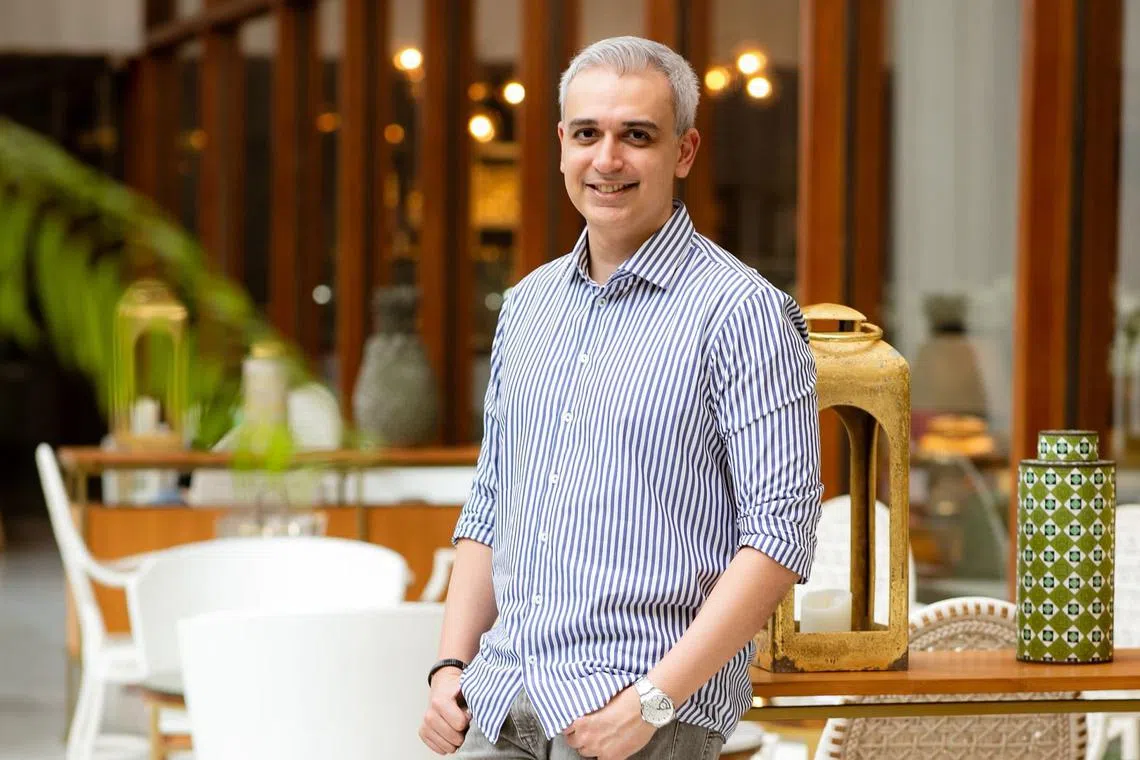
Still, it is tough to resolve behavioural finance biases as misinformation and emotions are prevalent in VC and private equity circles, says TRIVE's managing partner Christopher Quek.
"Information is less transparent than in traditional financial markets. The high risks, high returns have an allure to both investors and startup founders," says Quek, who has come across cases of startups getting cheated by brand-name investors during his decade of mentoring founders.
With the potential for outsized returns, investors are likely to keep pumping money into startup funds even if more cases of dishonesty surface. Some might even overlook these cases, seeing as just one or two successful startups are able to generate enough returns to cover the entire fund.
That said, the boom in investment opportunities is driving developments in the due diligence space. Companies like expert network Sealed are springing up to help investors make more informed decisions.
Singapore-based Reality Detector aims to sniff out deception by detecting physiological cues using computer vision, and eventually integrating other sensors and artificial intelligence features to build a machine learning algorithm that helps detect inauthenticity.
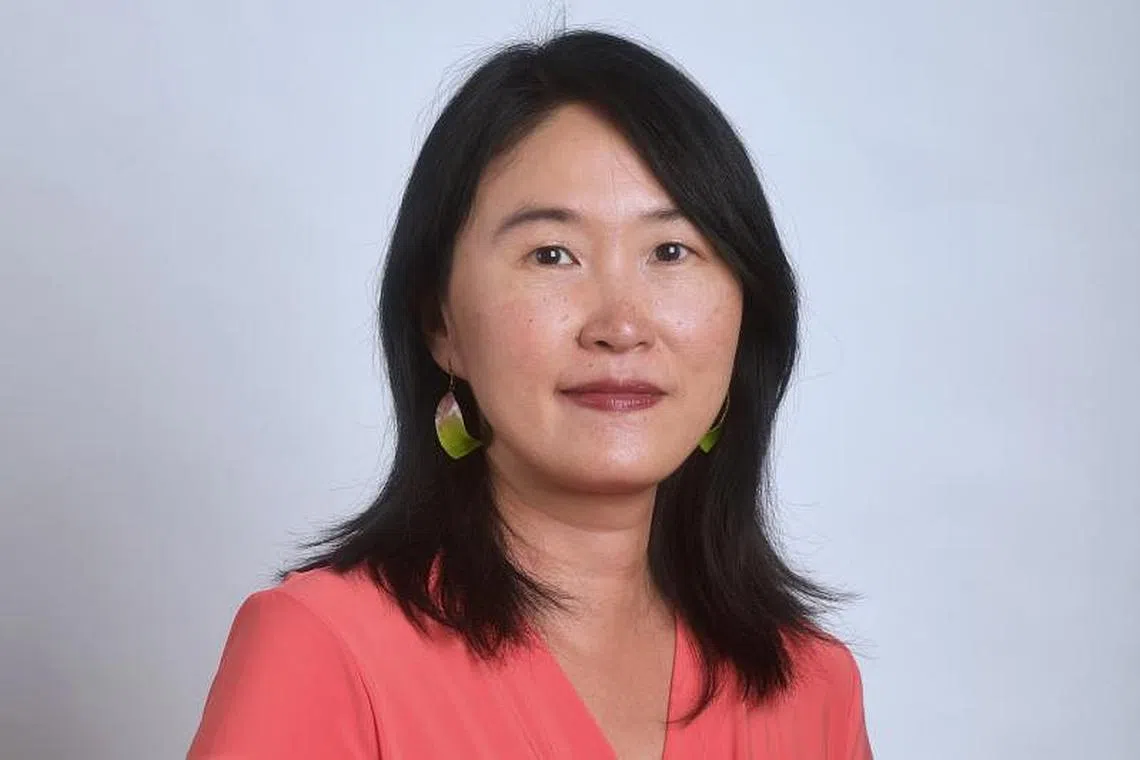
The young Tim Draper-backed startup was founded by Dennis Ye, who faced cases of dishonesty and fraud while doing due diligence in the venture space and public sector.
When Ye pitches to investors, he shows them an interview of Elizabeth Holmes featured in HBO's documentary The Inventor.
"What do you dream for?" an off-screen interviewer asks.
"That less people have to say goodbye too soon to the people they love," Holmes says.
Reality Detector's computer vision detects an almost imperceptible shrug - a deception cue. It conjures up a 3D facial mesh, detects a chin raise, and magnifies the colour contrast on Holmes' face to determine that her heart rate has quickened.
Such cues, with a confidence interval, are meant to augment decision-making and help users determine which areas to probe further in, Ye explains.
"Can you tell us a secret?" Holmes' interviewer asks.
An intake of breath is detected.
"I don't have many secrets," she says.
*Name has been changed to protect identity.
READ MORE:
- Fintech founder Joe Cho jailed 10 years in South Korea for fraud; sentence under appeal
- DoctorxDentist may have redirected patient leads to favour own clients
- Mirae Asset Daewoo awarded US$5.1m claim against ex-honestbee CEO Joel Sng
- Nervous investors want out as Lohs' Bellagraph controversy raises questions
- Grab, Sea and more: How Singapore forged a startup ecosystem from scratch