Can Singapore's fertility business deliver further growth?
Amid calls for social egg-freezing and employee benefits, industry players are hoping to inject more potency into Singapore's fertility market.


AS the pandemic puts parenthood aspirations on hold, first-time mothers get older, and more Singaporeans stay single, the fertility treatment sector has entered uncharted waters. To stave off stagnation, industry players are calling for regulatory changes, more education and corporate participation in supporting couples with difficulties conceiving.
Infertility is defined as the inability to get pregnant after 12 months of unprotected sex. About 15 per cent of couples in Singapore are unable to conceive within a year of trying for a baby, according to KK Women's and Children's Hospital (KKH) data.
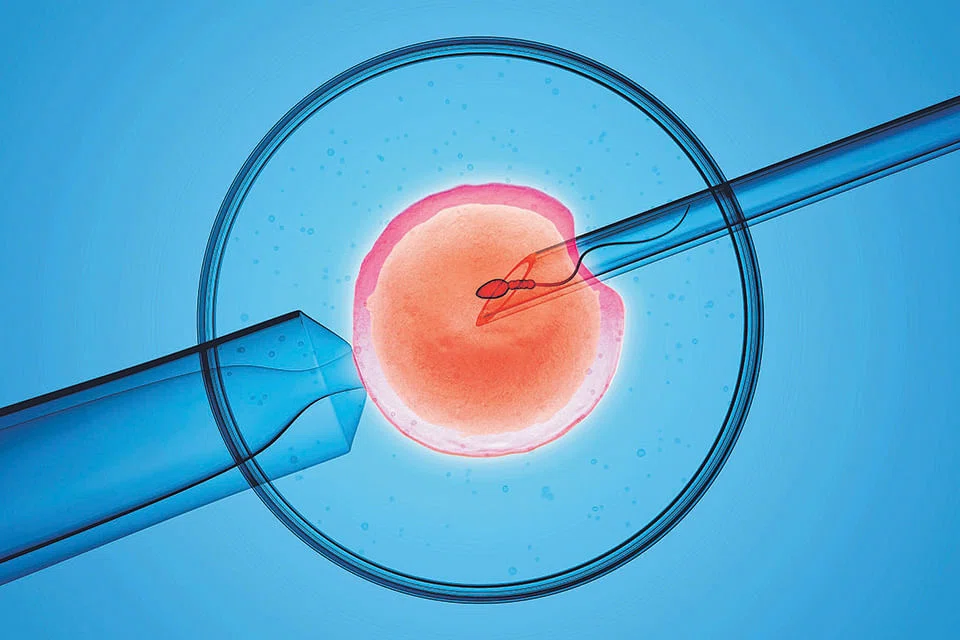
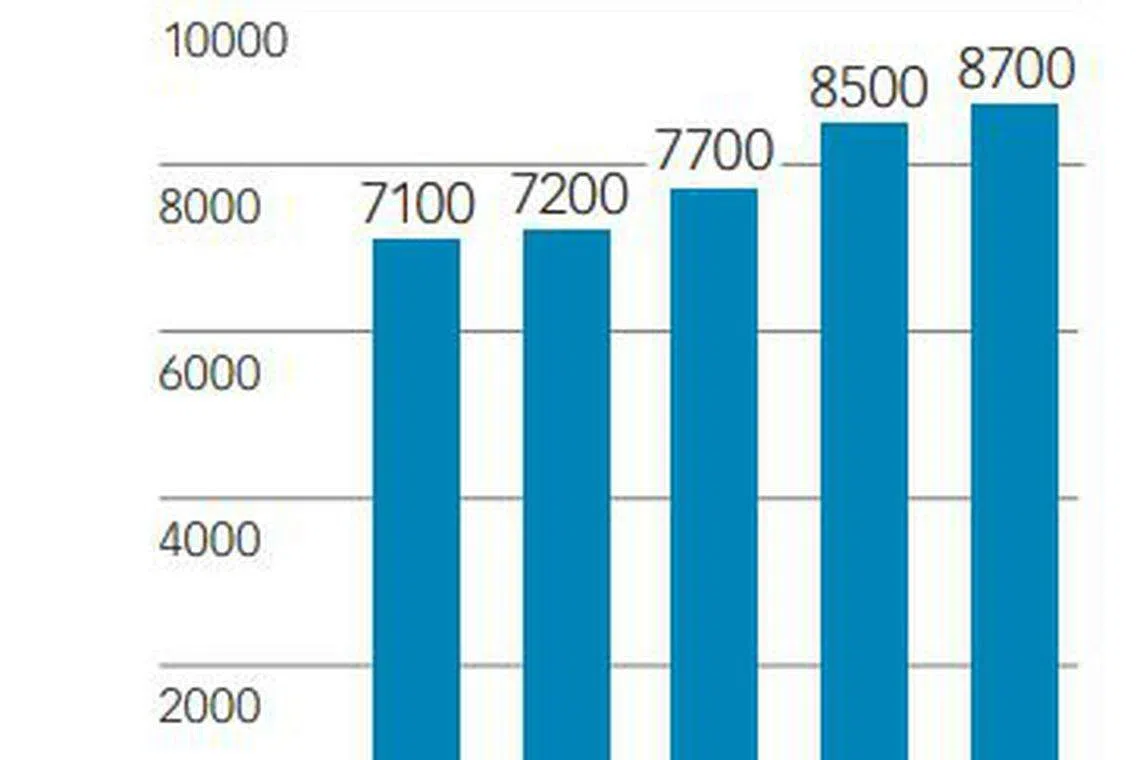
Before the Covid-19 outbreak impacted the market, the fertility business had been growing steadily. In 2019, women in Singapore underwent a total of about 8,700 cycles of assisted reproduction treatment (ART), which includes in-vitro fertilisation (IVF). That is up 22.5 per cent from 7,100 cycles in 2015.
Data on the number of ART cycles done in 2020 is not yet available.
Meanwhile, the nation's 2020 census found that the proportion of singles grew across all age groups in the past decade, with the sharpest increase among younger individuals aged 25-34. At the same time, those who marry are having fewer babies. The average number of children born per resident woman aged 40-49 who had ever been married fell to 1.76 last year, from 2.02 in 2010.
The Republic, like all developed countries, is "seeing more couples with fertility issues, likely due to couples marrying later and delaying childbearing decisions", notes Jessie Phoon, director and senior consultant at the KKIVF Centre at KKH.
Median ages for first-time grooms and brides were 30.4 and 28.8 respectively in 2020, older than 2010's 30.0 and 27.7, DOS data showed.
"Fertility is heavily dependent on a woman's age. By age 30, women's fertility starts to decline, and after age 35, it decreases even further because the number and quality of eggs are reduced. By age 40, the chance of getting pregnant in any monthly cycle is around 5 per cent," Dr Phoon says.
Men's fertility generally starts to reduce at around 40-45 years old, when sperm quality decreases, she adds.
Serene Lim, obstetrics and gynaecology (O&G) consultant at Singapore General Hospital (SGH), points out that demand for fertility services could also increase as couples become more educated and there is less stigma surrounding IVF.
Stephen Chew, head and senior consultant at the division of reproductive endocrinology and infertility of the National University Hospital's (NUH) O&G department, anticipates that the recent increase in financial support from the government will encourage more couples with difficulties conceiving to seek help earlier.
The government enhanced the ART co-funding scheme from Jan 1, 2020. It lifted the age limit of 45 years for women to undergo IVF and removed the cap on the number of ART cycles, among other things.
Virtus Fertility Centre's acting medical director Roland Chieng foresees robust demand continuing this year as people travel less and place more emphasis on family life.
In contrast, Seng Shay Way, O&G specialist and consultant at Raffles Fertility Centre, expects a dip in demand in the short run, as couples may put off plans to have children due to the economic uncertainty and health risks amid the pandemic.
Given this, egg-freezing may increasingly be considered by women who are delaying marriage and motherhood or are not yet ready to seek fertility treatments, he adds.
Fertility preservation
However, only women with medical grounds are permitted to freeze their eggs in Singapore, which means those who wish to opt for social egg-freezing must head overseas.
The ban not only makes fertility preservation significantly less accessible to individuals, but also presents a missed business opportunity for providers, as the growing demand will be diverted abroad, observers say.
Of late, calls for social egg-freezing to be allowed here have gained traction, especially with the pandemic-related travel curbs resulting in more pent-up demand from individuals unable to seek treatment overseas.
Specialists tell The Business Times that prior to the Covid-19 outbreak, it was common for Singapore-based patients to leave the country to freeze their eggs for non-medical reasons, in markets such as Malaysia, Thailand and Taiwan.
Dr Seng from Raffles Fertility Centre typically encountered about 10 such patients a year. "Social egg-freezing is an option that will support better fertility outcomes, especially for older women," he says.
However, before embarking on social egg-freezing, it is important that patients understand the pros and cons as well as the existing regulations in each country, Dr Seng adds.
The Singapore government has said it is carefully reviewing whether social egg-freezing should be legalised, while taking into account the medical, ethical and social concerns.
Dr Seng believes that if the ban were lifted, Singapore would be well-equipped to provide social egg-freezing services due to the rigorous regulations and world-class healthcare system here.
For providers with an overseas presence, the silver lining is that they might capture demand from Singapore-based patients for egg-freezing, surrogacy and other procedures.
Singapore Medical Group has a joint venture in Australia under the City Fertility Centre (CFC) brand with South Korea's CHA Medical Group, in addition to its clinics in Singapore.
"We've had many individual requests, and have sent patients to the likes of Australia, South Korea and the US for fertility services," says Beng Teck Liang, CEO of Singapore Medical Group.
Certain countries permit a broad variety of services, ranging from surrogacy and social egg-freezing to sperm and egg donation, and even sex selection.
"The entire spectrum is available overseas. Some markets are a lot more open and flexible, and people can easily go where they feel most comfortable," he says.
Against that backdrop, Singapore is "significantly disadvantaged", with fewer options available for people who want to have children, he adds. "I'm a strong advocate for social egg-freezing, and I think Singapore's ageing population and wealth levels are crying out for it," Dr Beng says.
He notes "clear" demand for social egg-freezing in Australia, where demographics are similar to Singapore's and CFC has launched a service, dubbed "Chill", for the procedure.
CFC also has a Rainbow Fertility programme catering to the lesbian, gay, bisexual, transgender, and questioning or queer (LGBTQ) community in Australia, with services including IVF, surrogacy, donor insemination and egg donation. Singapore Medical Group has likewise received enquiries on such services.
Virtus Health, similarly, runs a clinic in Singapore as well as provides fertility services in Australia, Ireland, Denmark, and the United Kingdom. However, it does not record the number of Singaporean women using its egg-freezing services abroad.
Workplace support
What could boost demand for fertility services in Singapore is if employers provide benefits and perks such as leave days for treatments.
In the United States, tech giants began offering fertility benefits several years ago to woo talent, especially women and LGBTQ staff. PayPal, Google, Microsoft and Salesforce cover the cost of a few IVF cycles plus pre-implantation genetic screening (PGS), while Apple and Facebook help to pay for staff's social egg-freezing. Other benefits may include reimbursing surrogacy and adoption fees.
In Australia, large corporates are already showing growing interest in supporting their employees' fertility needs, says Dr Beng.
"Many multinational corporations are operating in Singapore, so if services like social egg-freezing are permitted, these employers can easily extend their fertility benefits to their Singapore-based workers," he adds.
Raffles Fertility Centre's Dr Seng also suggests allowing more cutting-edge IVF technologies such as PGS, which is said to improve the success rate for an IVF pregnancy.
Meanwhile, Dr Lim from SGH recommends educating more people about the effect of age on fertility, and encouraging couples to seek advice from a doctor if they have tried for six to 12 months without success.
"Some come only after many years of trying. By then, the woman might be close to 40 years old, and the success of fertility treatment at that age is very low," she says.
At NUH, Dr Chew has noticed more women aged 30 and above seeking fertility treatments. A third of the patients at the NUH Clinic for Human Reproduction are 30-35 years old, while the majority are above 35 years old.
Public awareness of age-related fertility decline and the limitations of treatments is generally low, surveys have shown. "This may lead to couples not optimising their fertility potential to achieve their family aspirations," says Yu Su Ling, senior consultant at SGH's O&G department.
FertStart, a trial by SGH and KKH, thus aims to study the effect of fertility health screening and awareness tools on young Singaporean married couples' knowledge, attitudes and practices around childbearing, Assoc Prof Yu notes. FertStart commenced in January 2021 and is expected to be completed in September 2025.
Five-figure price tag
The hefty cost of fertility procedures often deters couples. Besides, many are unaware of the government's co-funding scheme or the option of using Medisave.
Patients can withdraw from their Medisave accounts to pay for ART or intra-uterine insemination (IUI) at both private and public hospitals, up to a lifetime withdrawal limit of S$15,000.
At private hospitals, the estimated cost for one full cycle of IVF typically ranges from S$15,000 to S$20,000, inclusive of consultation fees, cycle management, investigation tests, fertility medication, and egg retrieval and embryo transfer.
The eventual cost will depend on the patient's medical profile, the medication and procedures, the number of cycles required, and other factors.
About one to two IVF cycles are usually done before a successful live birth delivery is achieved.
IVF treatments generally tend to be more affordable at public hospitals. On top of that, eligible couples can receive up to 75 per cent in co-funding from the government for ART or IUI done at public hospitals.
At KKIVF Centre, a patient eligible for co-funding will likely pay between S$12,000 and S$16,000 per IVF cycle.
Singapore Medical Group's Dr Beng hopes the co-funding scheme for IVF can be extended to private hospitals, for patients to choose from a wider range of providers.
Agreeing, Virtus' Dr Chieng notes that if subsidies are offered at private centres, "it will be very helpful to our local patients".
Lingering caution
The Covid-19 outbreak led to a plunge in enquiries and treatments last year for some providers, as the global health crisis disrupted prospective parents' plans and clinic appointments were postponed.
NUH's Dr Chew notes that as IVF is classified as an elective service, most appointments were deferred from around February to June 2020.
Dr Seng says some women were also concerned about their and the infant's health during a pandemic, while others were worried about prenatal care becoming less accessible due to pandemic-related restrictions.
Moreover, the economic uncertainty led to couples shelving plans to start a family, given the costs of fertility treatments and raising children.
"IVF demand in Singapore is still quite consistent, though it has fallen a bit from the peaks of better times, pre-Covid-19," says Dr Beng. "Patients appear to be a little more cautious because of the economic uncertainty."
Why seek fertility treatment?
Infertility affects at least one in eight couples at some point in their lives, and can often be treated, according to the KKIVF Centre.
Common reasons for couples turning to fertility services include the inability to conceive naturally after years of trying, the ages of one or both partners, as well as work and travel commitments.
The following reproductive problems are often managed by centres in Singapore, KKIVF Centre's Dr Phoon and SGH's Dr Lim separately tell BT.
Couples:
- Genetic problems
- Recurrent pregnancy loss
- Sexual dysfunction
- Unexplained infertility
Women:
- Ovulatory dysfunction
- Polycystic ovary syndrome (PCOS)
- Ovarian cysts
- Blocked fallopian tubes
- Endometriosis
- Fibroids
- Previous tubal ligation/sterilisation
- Uterine abnormalities
Men:
- Low sperm count
- Absence of sperms (azoospermia)
- Previous vasectomy
- Sperm storage prior to cancer treatment
- Sperm storage for other reasons
READ MORE: Singapore egg-freezing ban forces women to head overseas