

Femtech: More than periods and pregnancy
A fresh crop of entrepreneurs are pushing for broader and bolder solutions for women's health and wellness in South-east Asia. Investors are paying attention.





TO believe that "femtech" is just about menstrual or fertility-tracking apps is passe.
A growing number of tech entrepreneurs seek to address other health and wellness issues that women have long faced - be it hormone health, menopause or even the hush-hush topic of sexual pleasure.
In Singapore, femtech is still a nascent vertical, compared to other hot sectors such as fintech. But the field is gaining momentum.
Data compiled by Japanese femtech company Fermata showed that there are about 40 femtech startups in South-east Asia as of March this year. Many of these are young ventures that only popped up in the last year, under pandemic conditions.
"What happened in Japan is that femtech started to be not just used for tech products, but became a movement. I'm hoping that something similar will happen in Singapore and South-east Asia," says Amina Sugimoto, chief executive of Fermata.
Investor interest in this space has been historically weak. Suchismita Das, a transformational health analyst at Frost & Sullivan, puts it bluntly: femtech has been the "step-child" of digital health. "Women's health is still usually misunderstood as just reproductive health, and in most cases, the care ends at that phase," she says.
A report by Frost & Sullivan said funding into femtech companies at most amounted to just
6.6 per cent of the capital that went into US digital health companies, based on yearly data since 2013 (see chart).
"In some parts of South-east Asia, the femtech sector is the underdog of healthtech that has long been underfunded and overlooked. This is largely due to the lack of familiarity by venture capitalists and angel investors who might think femtech is limited to reproductive health only," agrees Satya Ramamurthy, head of infrastructure, government and healthcare at KPMG Singapore.
But the tide is shifting. Puja Bharwani, vice-president for marketing and public relations at venture firm Antler, sees more investors getting curious about the femtech space.
"I think there is a huge opportunity, considering women's health is still stigmatised in many parts of South-east Asia. There is a lot of scope for hyper-local femtech companies to start here and still a lot of work to be done," she says.
Yan Li, professor of digital transformation at ESSEC Business School Asia-Pacific, echoes this: "There are huge differences and big gaps between the South-east Asian and the Western femtech markets. When entrepreneurs develop femtech products or services in South-east Asia, they need to consider its dominant characteristic of the population so as to better address the underserved women."
The Business Times looks at three key segments where femtech startups are vying to make a difference: building digital health solutions for chronic conditions affecting women, making sexual health services more accessible and advocating sexual pleasure.
Startups innovate solutions for PCOS, menopause
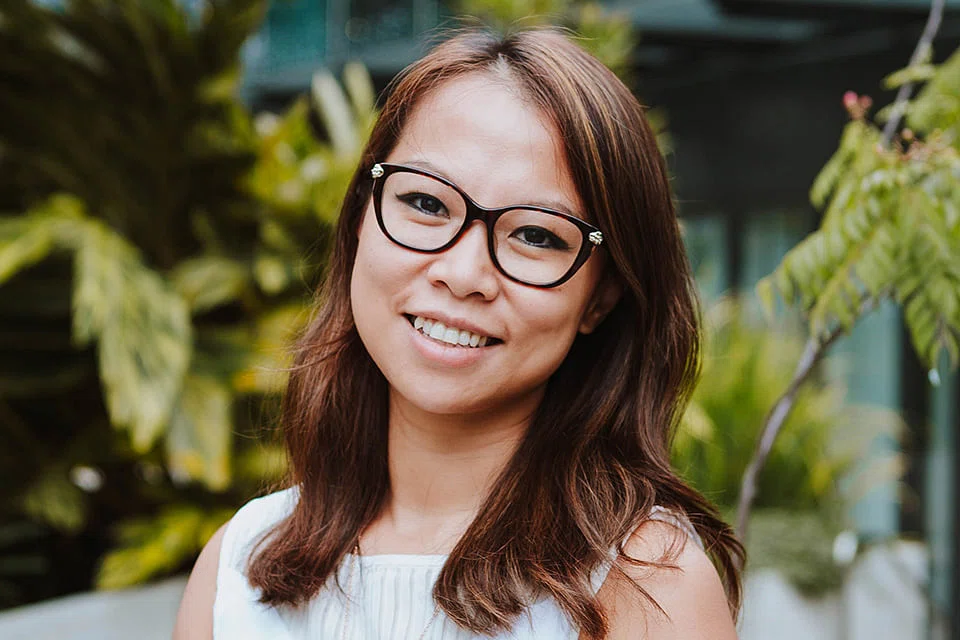
Maria Wang-Faulkner is often struck by what sufferers of polycystic ovary syndrome (PCOS) tell her: they feel alone. This is even as PCOS is a common condition globally, with one study estimating that it affects up to 18 per cent of women of reproductive age.
Not only is the condition the most common cause of female infertility, but also can lead to facial hair, acne, excessive weight and a higher risk of diabetes, notes Ms Wang-Faulkner. Even for women not planning to have children, PCOS can disrupt everyday life and take a mental toll.
"Some tell us that they feel like PCOS attacks what it means to be female. And it can take an average of three years just to get a diagnosis. The needs are underserved . . . The default solution is to medicate, but that alone is not sustainable," she says.
Mabel Nguyen describes a similar phenomenon, but with regards to what might be "the most neglected area of women's health": menopause. Despite marking a crucial life change, menopause and its preceding stage, perimenopause, are still poorly understood.
"An appalling 75 per cent of those who seek care for their menopausal symptoms never get treated at the moment. Misdiagnosis and ineffective treatment are extremely common," says Dr Nguyen, citing a US study among over 4,000 women.
Both Ms Wang-Faulkner and Dr Nguyen are entrepreneurs working on solutions for these chronic conditions. Their respective startups, Fig Health and EloCare, started only last year in Singapore, amid the challenging pandemic environment. But they have bold ambitions.
Ms Wang-Faulkner, a former global business development lead at Google, founded Fig Health last October to support women with PCOS and other conditions caused by hormonal imbalance.
The startup has developed a programme, delivered through an app, that provides users guided lifestyle changes to manage their PCOS, optional lab testing to monitor their progress and support from health experts as well as other women tackling PCOS.
Fig Health has bagged pre-seed funding from Antler, 500 Startups and angel investors.
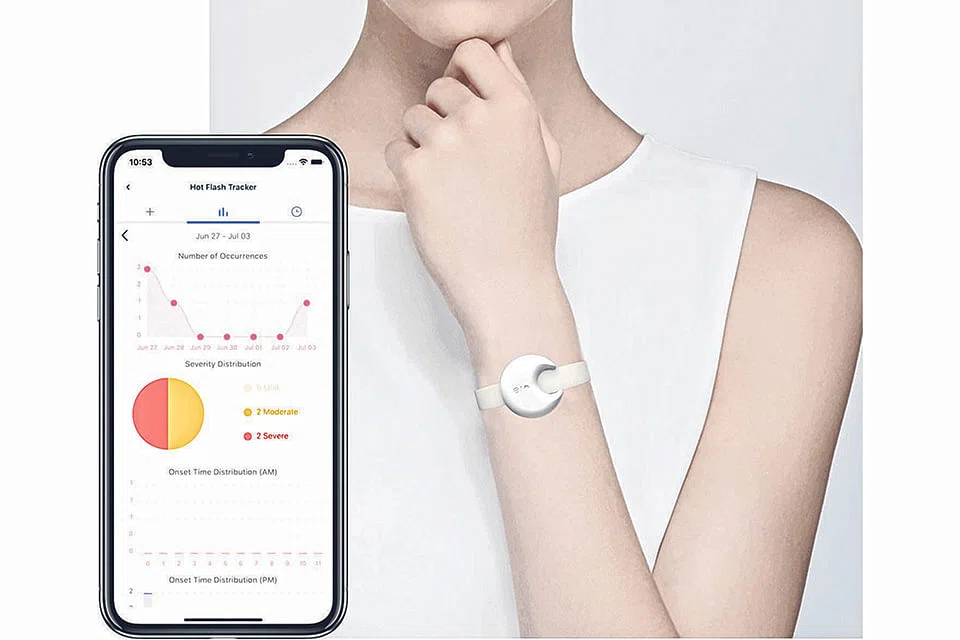
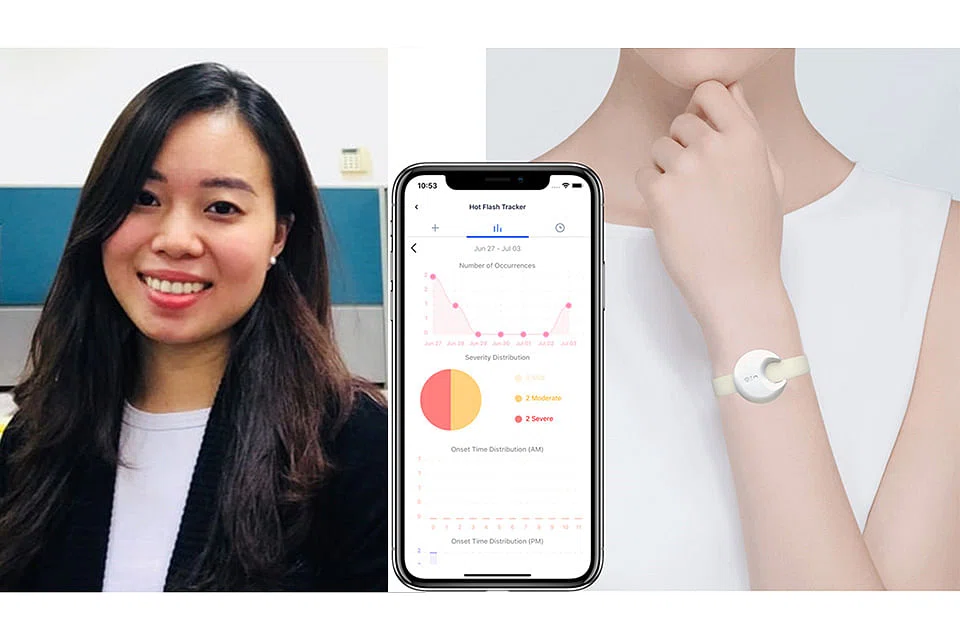
Meanwhile, EloCare is developing wearable technology and a mobile app to help women and clinicians track their menopausal issues - such as hot flushes, increased heart rate and sweating - so that medical interventions can be better-designed (see picture above).
"We became interested in this area as we realised how life-disrupting menopause can be," says Dr Nguyen, who has a PhD in biomedical engineering and was a researcher at the National University of Singapore.
"Moreover, women play important roles in family, workforce and society; neglecting the burden of menopause costs us much more than we realise."
Startups such as Fig Health and EloCare are still few and far between in South-east Asia, but such ventures are likely to gain more attention. Femtech holds the potential as a specialised segment strategy for private capital investors, says Sol Magaz, EY-Parthenon partner for life sciences and healthcare at Ernst & Young.
"There will also be the development of more apps and products due to an increase in research and funding towards general women's health, a rise in preventative medicine and holistic health and advancements in healthtech, allowing for more personalisation," she says.
Zubin Daruwalla, health industries leader at PwC Singapore, echoes this sentiment. "Here in Asia, we are only just starting to see gender diversity and inclusion come to the fore, with issues such as female sexual wellness and fertility starting to shed their 'sensitive' labels."
He believes that femtech startups looking at medtech hardware in particular have potential, as they "not only have a substantial return on investment but also make a very large impact, clinically and economically".
Choice and affordability key priorities of sexual health startups
Another aspect of femtech that went under the radar previously is sexual health needs - especially testing for sexually transmitted infections (STIs), as well as birth control. The latter segment is especially touchy in conservative societies.
But the pandemic has spurred a fresh wave of startups in the business of bringing STI testing and birth control straight to consumers - with app-based online consultations and door delivery of test kits and medication.
One entrepreneur in this space, Liu Xi, witnessed this change first-hand. Last year, she moved to Singapore from Silicon Valley, where she had worked at Amazon and Adobe. Bitten by the startup bug, she had an idea for a business: an online platform that would provide home-based tests and consultations for sexual health, especially for women.
But when Ms Liu spoke to investors about her idea in early 2020, reactions were lukewarm. "I remember talking to so many investors, but I heard so many voices saying that if there is a need, there would already be services available; we wouldn't have to wait for you to do this," she recalls.
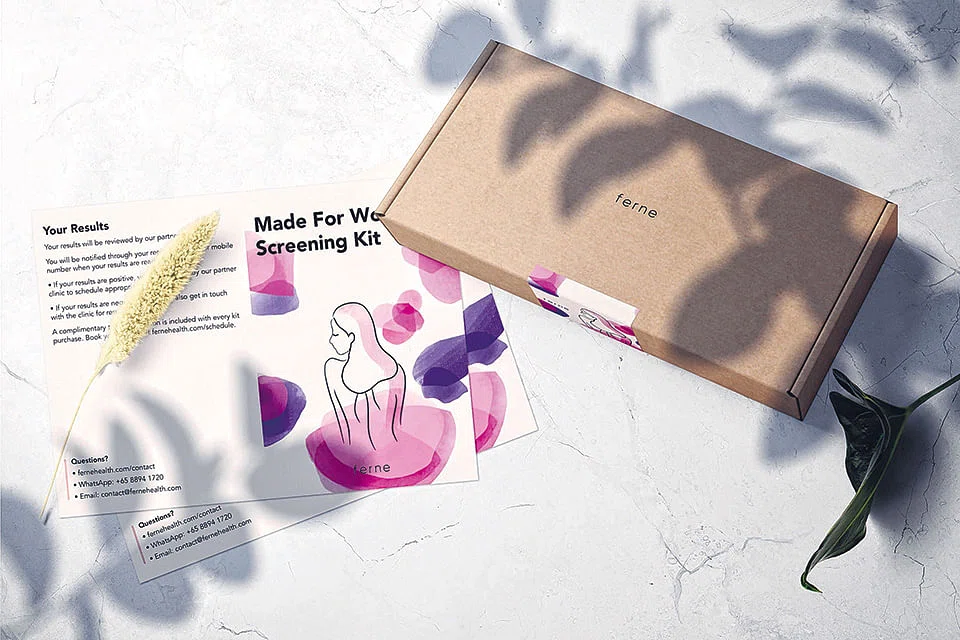
Nevertheless, she plunged ahead with her idea, working through the pandemic to launch Ferne Health in September. In the process, she began to notice a change: other online platforms providing women with sexual health services started to pop up - such as Ease Healthcare and Dear Doc. Investors became curious.
"Right after the 'circuit breaker', there were so many more services in this space. It just felt so exciting. And all of a sudden, the tone became: 'Oh, why are you trying to build this?' It made things so much easier for me to explain that there is a market; we started talking about women's self-awareness of their needs. It became a very different story," she says.
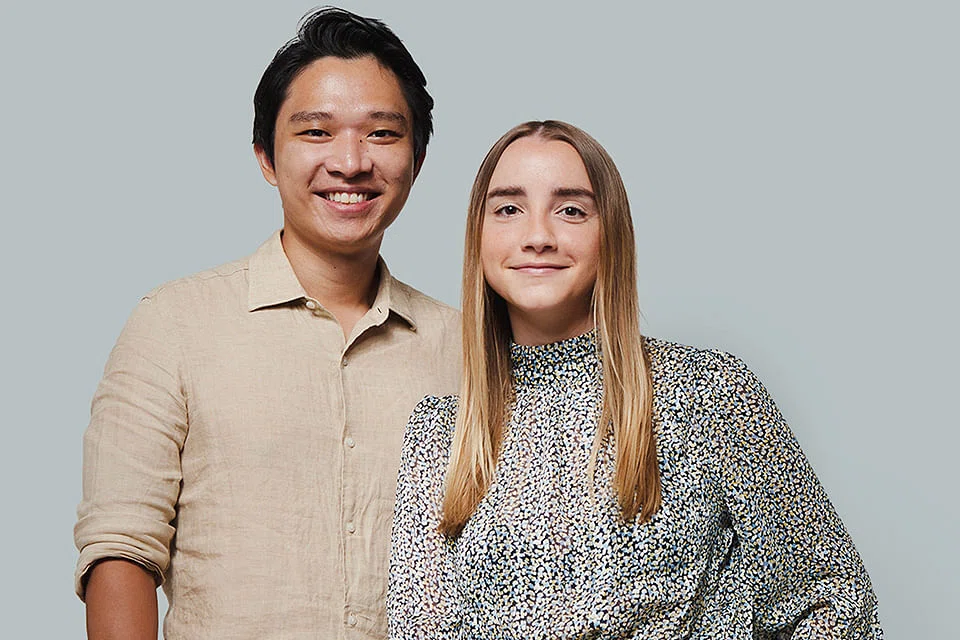
Like Ms Liu, the founders behind Ease Healthcare - Rio Hoe and Guadalupe Lazaro - were motivated by their own experiences, such as having to spend hours queuing up at clinics just to get a birth control refill.
With Ease Healthcare's platform, users can have birth control, emergency contraception and STI test kits delivered straight to their homes. The platform also offers sexual health teleconsultations.
There are "significant barriers to accessing sexual and reproductive health services in Singapore and in Asia that exist due to prevailing cultural norms and an existing infrastructure which still relies on face-to-face consultations at clinics", says Mr Hoe. "As a result, people often do not get the help they need due to the stigma, time and cost involved."
Dear Doc founder Shruti Dwivedi has heard similar feedback from users of her platform. Some of them faced unsolicited advice from doctors about their sexual life choices when they seek a birth control prescription.
Ms Dwivedi, who previously worked in the women's health division of pharmaceuticals giant Bayer, realised that many young women are not aware of the options when it comes to choosing the type of birth control. They are also limited to whatever supplies the clinic chooses to hold.
"One of the most common questions we get is which is the right type of birth control for me - and that's a good question," she says. "If you go online, you can see all the different options available, and different countries have different options. But the information is not contextualised; you don't know whether they're talking about the Singapore or US market."
Dear Doc seeks to address this problem by offering birth control consultations on its online platform, as well sexual health counselling. The company's key priorities are to be "affordable and judgement-free", says Ms Dwivedi.
The emergence of startups in this space comes as people are also becoming more open about their sexual wellness, reckons Nicole Lim, creator of the podcast Something Private, which discusses female health and wellness in South-east Asia.
She believes that the next key thing to watch will be how these startups mature and differentiate themselves. "It's still a very new space; I think they are still trying to figure out the legalities, regulation, the funding portion . . . also what their endgame is, whether they are bought up by a bigger company or consolidate," she says.
It's my pleasure: Sex toy startups bust taboos around industry
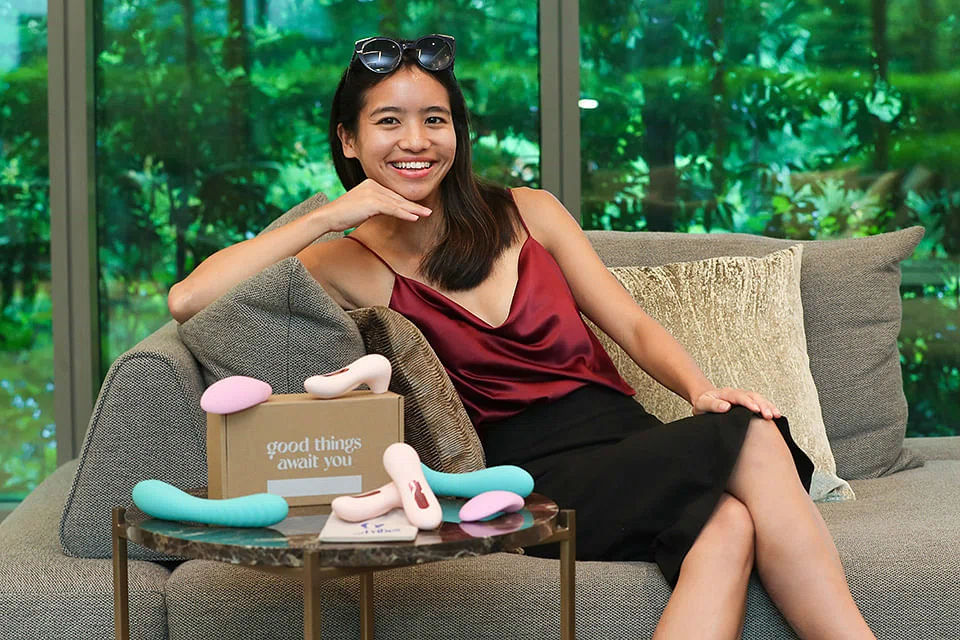
While sex toys are often joked about in hushed tones, sexual wellbeing, especially for women, is a legitimate issue, says entrepreneur Meryl Lim. There is plenty of shame and stigma attached to the issue, especially in South-east Asia.
Last year, she and three other male co-founders started Good Vibes, a self-funded e-commerce platform selling sex toys for women.
Ms Lim, a former executive at The Kraft Heinz Company, stumbled upon the idea for the business during a casual conversation with friends. While brainstorming names for a travel Instagram account, they joked that the phrase "good vibes only" sounds like the name of a sex toy company.
That throwaway comment led her to seriously consider what the actual business prospects are like for sex toys. "I realised I've never actually had conversations about sex toys with local female friends, and it just seemed like an interesting opportunity to explore," she says.
Ms Lim left her job in March last year with intentions to travel abroad for a while, but the pandemic worsened. She then delved deeper into the business idea. A survey of about 100 women showed promising results: many were curious about sex toys. But the fear of making a purchase was strong.
Confident about the business idea, Ms Lim went ahead to launch Good Vibes. Consumer demand has been strong, she says. More than just being a retailer, Good Vibes is also shaping up to play an educational role.
"I get a lot of questions like 'will this toy affect my relationship with my partner', or 'will I be addicted to it?' We try to put out more content on our blog and Instagram to break the myths," she says.
It was a similar sentiment that also prompted Liu Jingjin to set up ZaZaZu, a startup that aims to be the "TripAdvisor of sexual wellness". Kickstarted in July last year, ZaZaZu offers a membership service for women that curates products and services centred on sexual wellbeing.
These include "pleasure boxes" with sex toys and other wellness items, as well as workshops and webinars with relationship experts.
"This generation is very vocal about well-being and this space is very undiscovered in Asia," says Ms Liu. "When I pitched this idea, there were some doubts, they said don't underestimate the conservatism in Singapore. There are also a lot of restrictions on advertising on social media. But I think everyone saw the opportunity."
ZaZaZu is now raising a seed round, after it previously secured US$135,000 in pre-seed funding from angel investors.
The major hurdle for businesses such as Good Vibes and ZaZaZu lies in how they are associated with the vice industry, rather than being seen as legitimate wellness ventures. But Ms Liu reckons that is all about gradually building up consumer trust.
"The long-term goal is definitely to create a safe space to explore the intimacy journey, by Asian women, for Asian women - where the education gap is sealed and we can openly discuss sexual wellness," she says.
TRENDING NOW

Once staunchly pro-China, Malaysian Chinese businesses are now distancing themselves from Beijing

Looking beyond looming CEO succession, should UOB potentially pursue a transformative merger?

Could stablecoins be the future of money?

Grab CEO’s wife Chloe Tong on life with Anthony Tan and finding her purpose

