

Is it time to talk about inflation in Singapore?
Economists weigh in on the forces driving prices in Singapore now, and whether they will speed up or ease off



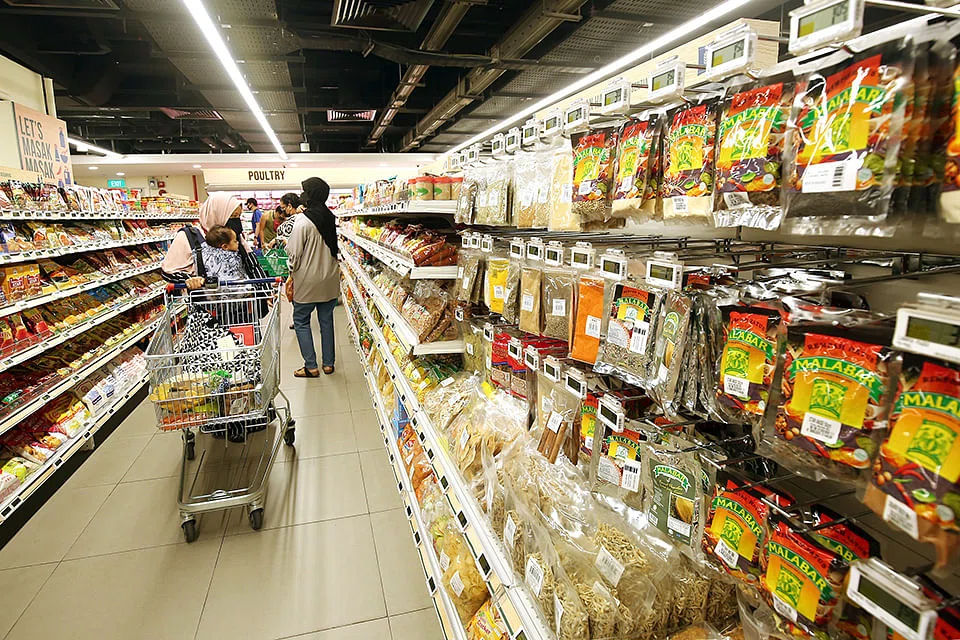

AT first, pandemic panic seemed to be what was driving up prices, whether it was for medical supplies, essential raw materials, or food. Other factors soon came into play. Border closures and lockdowns that shut factories disrupted the global supply chain, causing shortages around the world. But 2021 has arguably been slightly less depressing for most countries that have somewhat learnt to live with the pandemic. Most countries have embarked on a vaccine rollout, albeit at varying speeds, and this has helped to facilitate the road to recovery for their economies, following last year's huge setbacks.
Even so, prices haven't fallen accordingly, setting the ball rolling for the great inflation debate: are higher prices here to stay or just temporary effects of market dislocations?
The FAO Food Price Index, used by the United Nation's Food and Agriculture Organization to track monthly changes in international prices of a basket of food commodities, averaged 127.1 points in May. This is 5.8 points more than in April and 36.1 points higher than the year-ago period, making this the largest month-on-month gain in over a decade.
In the United States, consumer prices surged 5 per cent in May, the fastest year-on-year increase since August 2008.
Singapore's headline inflation in April rose to 2.1 per cent year on year, the highest since May 2014. Meanwhile, core inflation, which excludes the cost of accommodation and private road transport, edged up to 0.6 per cent year on year, the highest since December 2019.
In particular, headline inflation rose on the back of a surge in private transport costs, driven mainly by a sharper increase in car prices, as well as an uptick in housing rents.
At the moment, energy prices, household essentials and manufactured goods are most prone to inflation, according to economists approached by The Business Times.
So what's driving inflation now? Economists that BT spoke with offered a variety of possible reasons, but there was little consensus on what the key driving force is.
One immediately obvious reason is the low base effect from last year, when Singapore suffered its worst recession since independence due to the pandemic.
"A clear and dominant driver behind rising inflation in Singapore is the base effect - a collapse in prices during the circuit breaker (last) year flattering the year-on-year inflation rate," Prakash Sakpal, ING's senior economist for Asia, says, referring to the Republic's partial lockdown from April 7 to June 1 last year.
"The pandemic and tighter movement restriction have in fact weighed down demand for goods just as it should have pressured the unemployment rate upward," says Mr Sakpal.
Supply shocks are likely to have played a part too.
Says Sung-Eun Jung, an economist at Oxford Economics: "The pickup in US core inflation appears to be due to extreme moves in parts of the CPI (consumer price index) basket that are related to shortages caused by supply chain issues and reopening effects to a large degree. In particular, used car and truck prices recorded notable growth."
She adds that the reopening of the economy and the release of pent-up demand, together with supply shortages, have contributed to price pressures in the US.
However, Sumit Agarwal, professor of finance and economics at the NUS Business School, told BT that his research into why prices have gone up indicate that a shortage of supply only accounts for 20 per cent of the reason.
"Traditionally, there is this literature in the US that says when hurricanes happen, gas prices go up and prices of necessary items go up, but the effect, at the end, tends to turn out to be not that big," Prof Agarwal says.
"One-fifth of the effect that we're seeing in inflation could be because of shortage and hoarding of things by suppliers that is causing prices to go up and they are benefiting. But a lot of it is, I would say, coming from the US stimulation, but some of it is coming from local stimulation," he says.
He drew a parallel to the period right after the Global Financial Crisis in 2008, when the US injected a stimulus of US$700 billion in a bailout scheme called the Troubled Asset Relief Program (TARP).
"That spilled over to Asia because all that money came to Asia, and we are seeing something similar right now. That US fiscal stimulation of US$5 trillion is having a huge spillover for other countries," he said.
And it's not just the US that is pushing through with a hefty stimulus - other developed economies including Japan and the European Union (EU) have similarly injected fresh funds to accelerate their economic recovery from the pandemic.
DBS senior economist Irvin Seah says the fact that recovery is currently underway in many key markets around the world points to a narrowing of the negative output gap, which means economies are likely moving towards producing at full capacity, compared to the slowdown last year. It also suggests that external inflationary pressure is building up.
"That will eventually pass through into the Singapore domestic economy," he adds.
At the same time, not all of the conditions are exactly related to the Covid-19 pandemic, even if it may have helped to accelerate inflationary pressures that were already latent before Covid-19 hit.
For example, the low interest rate environment and quantitative easing policies were already in place well before 2020.
"Interest rates are currently at historical lows as governments use policy tools to help maintain activity in the economy during the pandemic. Other policy tools such as government support packages and other relief measures have alleviated the dent in some household incomes, so that spending can continue," says Paul Kent, an economist and partner of advisory at KPMG.
He adds that low interest rates enable eligible businesses that need financing to get loans at a lower cost, allowing them to grow and for innovation to continue.
Vikram Chakravarty, EY Asean strategy and transactions leader, sees " two main inflation stories" playing out across South-east Asia at the moment: "Commodity price inflation which are feeding through to the rest of the economy and is likely to benefit Indonesia and Malaysia, as well as the relocation of manufacturing facilities into this region, which could add to prices for the short term."
Mr Kent points to the global shortage in semiconductors, a key component of most electronic devices, noting that this is due to supply chain issues and geopolitical tensions.
"This means where there are digitalisation needs in Singapore, consumers and businesses may need to pay more. Similarly, disruptions to the supply chain have impacted prices of imported essential goods such as animal and vegetable oils which have since almost doubled compared to the pre-Covid-19 period," says Mr Kent.
Talk of the commodities "supercycle" has simmered down, as prices of many materials fell back from record highs this week after China clamped down hard on speculative rallies.
In asset markets however, Prof Agarwal says rising prices could create a feedback loop for those who are invested in property and equity.
"(It's) a feedback loop of this raising stock prices, raising house prices and people then feeling richer, and as a result, they're spending more," he says.
Regardless of the causes however, most market watchers appear sanguine about Singapore's inflation rate, believing that rising prices are likely to be temporary, although the situation is certainly one worth watching closely.
"In the short term, we will see a hike in prices but as the global economy gradually returns to normalcy and movement restrictions are eventually eased, we will see a return of prices to pre-Covid-19 times," says Mr Kent.
Concurring, Mr Chakravarty says: "Given the vast over-capacity in Asia, as well as expected capacity addition in South-east Asia, the current price increases are likely to be temporary despite the rising demand for commodity for infrastructure projects globally."
He adds that inflation is expected to peak by the middle of next year and then return to its longer-run average.
In Singapore, monetary policy is centred on the exchange rate, rather than the interest rate, to help maintain price stability.
"If inflation in the external environment starts to pick up, the Monetary Authority of Singapore's mandate is to keep domestic inflationary pressures stable. So it has to essentially allow the Sing dollar to strengthen, and by doing so, the cost of imports will be moderated and that essentially helps to cool down inflationary pressures domestically," says Mr Seah.
However, public expectations of inflation coud lead to a self-fulfilling prophecy, economists warn.
"A de-anchoring of inflation expectations by consumers and businesses could lead to a sustained bout of high inflation," says Ms Jung, although she considers the current episode of rising inflation to be a "transitory shock".
Giving an example, Mr Seah says during an economic recovery, where the labour market prospects are improving, workers may expect higher salaries, which raises underlying business costs. These costs may then be passed to consumers.
Prof Agarwal adds that worries about inflation could lead to interest rates being raised.
"That would have its own implications because consumers may spend less, companies may invest less ... and that may actually affect the economic output of the countries around the world," he says.
Mr Kent notes that rising inflation can lead to unemployment, which can also cause a slowdown in economic activity.
"This is a complex relationship because on one hand, there is a very vulnerable economy and hence through government spending and low interest rates, the government seeks to stimulate economic activity. On the other hand, prices are rising so a delicate balance needs to be struck." he says.
He adds that it is unlikely for Singapore to reach "extreme circumstances", even though some effects of inflation will still be felt, given the global nature of Singapore's economy.
Mr Seah says fears of inflation derailing economic recovery stem from the belief that recovery is driven by leverage, which is not the case in Singapore.
The challenge for Singapore is finding the right timing to recalibrate its monetary policy, he says.
This is because as Singapore's inflation level returns to that seen during normal circumstances, monetary policy should likewise be normalised accordingly, he says, referring to a shift towards a gradual appreciation of the Singapore dollar nominal effective exchange rate.
However, the central bank would likely need to make a decision whether to do so by October, when it is scheduled to release its next Monetary Policy Statement, as the next window to do so is April 2022.
"If the central bank responds too slowly or too passively, then inflation may become a runaway train, and when inflation starts to pick up very rapidly, then it will require more drastic monetary policy action," he says.
READ MORE: The commodities boom is luring criminals to make bigger and bolder scores
TRENDING NOW
Far East Organization’s The Serra Residences sells less than a quarter of units released at average S$3,460 psf

Singapore to use ‘every legal and regulatory lever’ against companies linked to haze: Shanmugam

Could stablecoins be the future of money?
The middle power moment arrives in South-east Asia – but not for Asean

