

Shophouses: the latest collectors' items?
The market for Singapore shophouses is seeing both transaction volume and prices rising, with high net-worth investors driving demand.
Lisa Kriwangko

AS age-old heritage properties, Singapore shophouses are proving to be a timeless asset class. Despite the onset of the pandemic last year, the market for these conservation properties has turned highly active. Mary Sai, executive director of capital markets at Knight Frank says: "Shophouses have become investors' newest collector's item given its potential for price appreciation."
In July, Knight Frank reported that the first half of 2021 saw 118 shophouse transactions valued at S$836.1 million, backed by the pick-up in activity from the fourth quarter of 2020. The half-year's total transaction value was also equivalent to 91.6 per cent of that in the full year of 2020. Average prices are also steadily climbing. Transactions from January to July reached about S$4,425 per square foot (psf) on average, a 16.3 per cent increase from that of the whole year of 2020.
Knight Frank added that buyers exhibited a "continued appetite" for shophouses, with the second half of the year having potential to reach "new benchmark prices".
As at Friday, there are 34 shophouse listings on PropertyGuru, ranging from a one-bedroom shophouse at Somerset sold for S$950,000 (S$1,522 psf) to a six-bedroom mixed-use property at Bukit Timah priced at S$38 million (S$18,243 psf).
The past few months have also seen a number of shophouses put up for sale at both central and heartland areas. These include conservation shophouses at Boat Quay and Keong Saik Road as well as Housing Development Board (HDB) shophouses at Toa Payoh and Bedok.
Roof-raising demand
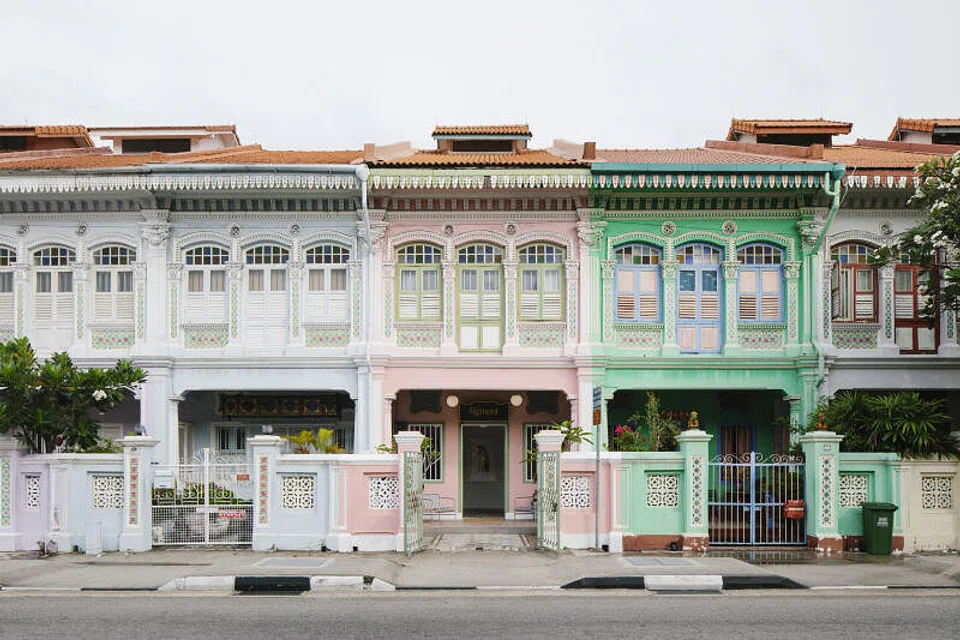
The archetypal Singapore shophouse is a narrow, small terraced house, generally two or three-storeys high, with a sheltered five-foot pedestrian way at the front, according to the Urban Redevelopment Authority (URA). Some shophouses are zoned mixed-use, which typically means the ground floor can be used for commercial use while the upper floors are residential. There are also shophouse properties zoned for residential use only.
In its quarterly market report, Knight Frank noted that the majority of shophouse purchases have been lodged under "companies" for the past decade - more of these properties are purposed for business than for private residential use.
In 2011, companies made up 52 per cent of shophouse purchases for the year. That number rose to 70 per cent in 2020, and 77 per cent for the period January to July 2021. According to Colliers, there has been a growing number of family offices, private funds, and ultra-high net worth investors (UHNWIs) buying shophouses as more of them set up in Singapore.
Shirley Wong, associate director of research at Colliers, believes that the market will remain buoyant. "Given limited supply, we believe owners are able to sell their shophouse at a reasonable price should they run into financial issues," she notes.
Steven Tan, executive director of investment services at Colliers, adds: "Shophouses are very versatile, it is flexible in its allowable property usage, which means that owners can redesign and repurpose their shophouse usage strategically depending on the property cycle and market demand, albeit subject to relevant authorities' approvals".
A firm foundation
The shophouse concept originated from travellers out of Guangdong and Fujian provinces in China, which made up a majority of Singapore's early immigrant population. They brought with them blueprints of Southern China's "bamboo houses", which had long and narrow floor plans. However, these structures have come a long way before evolving into the shophouses we see today.
With their Chinese gable roofs, European dentilled cornices, Malay timber shutters, Corinthian plaster relief panels, Tuscan columns, and a plethora of other elements, Singapore's shophouses have become architectural melting pots, drawing multiple elements from the island's South-east Asian and colonial history.
They were first built in the early 1800s when Sir Stamford Raffles' Town Planning Committee implemented the subdivision of land into smaller regular lots. These squat rectangular buildings were known as the Early Shophouse Style, built from 1840 to 1900.
Following this, they were categorised into five other distinct styles based on their time periods, namely the first transitional shophouse style (early 1900s), late shophouse style (1900-1940), second transitional shophouse style (late 1930s), art deco shophouse style (1930-1960) and modern shophouse style (1950-1960).
Under the URA, there are over 6,500 conserved shophouses in Singapore. Against a limited supply, demand is building up with owners finding newly lucrative uses for them.
Opened doors through co-living
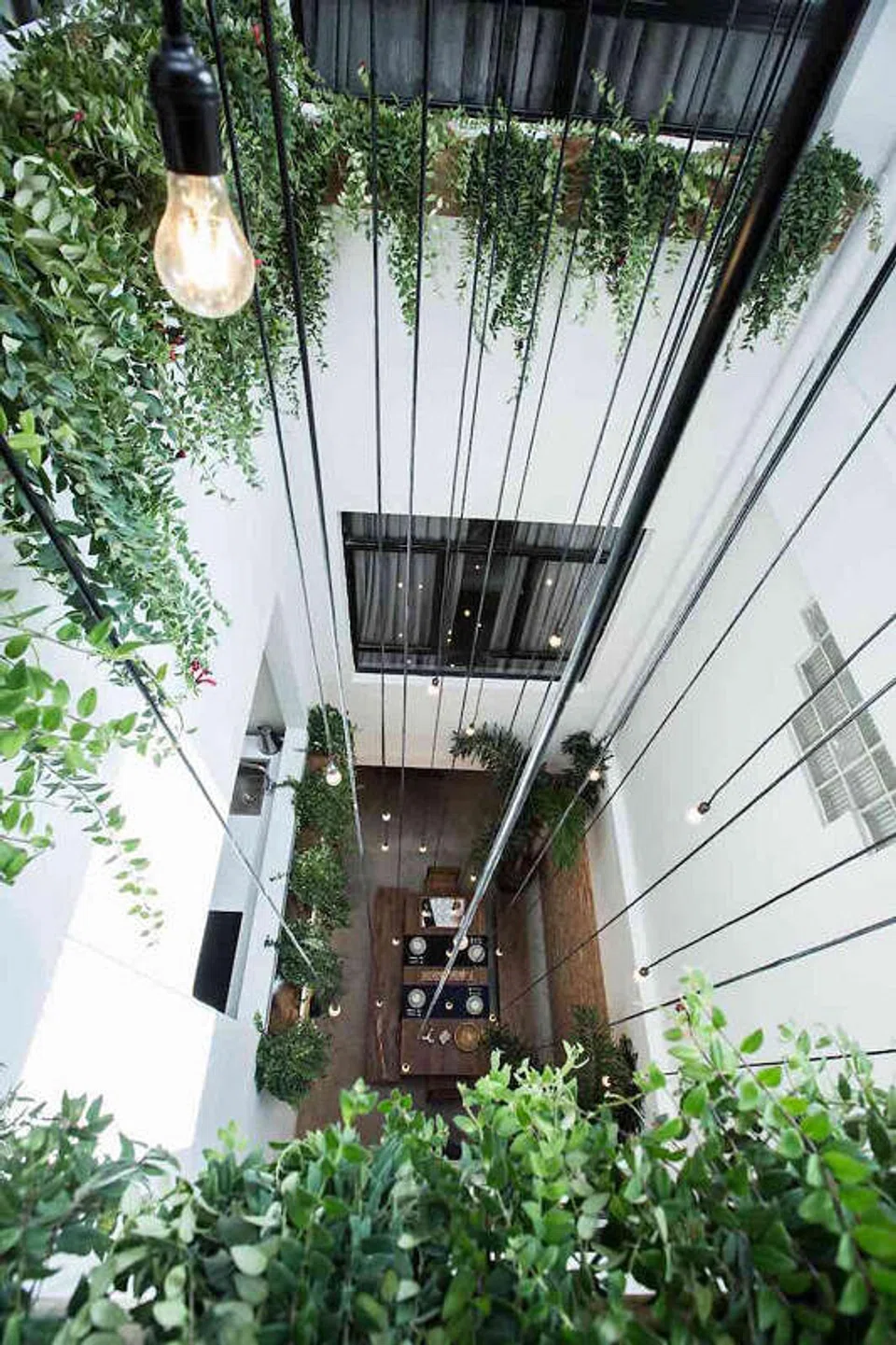
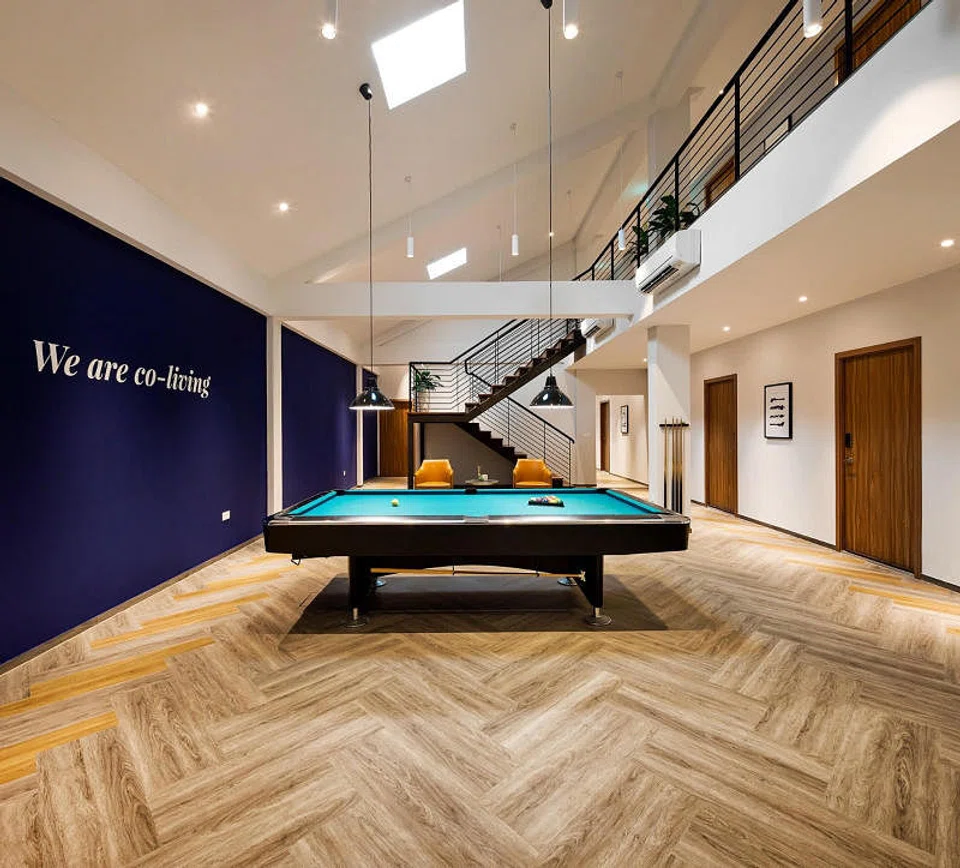
One up-and-coming use for shophouses is for co-living spaces. Co-living providers The Assembly Place (TAP), Hmlet, and Figment tell The Business Times that rentals and yields improve with management of the residential spaces.
These companies serve as property managers to shophouse owners. They take care of everything from refurbishment and maintenance to marketing efforts of the buildings' residential portions. In turn, the co-living providers are paid manager fees. For TAP, this is about 15 to 20 per cent of the rent revenue.
According to Joshua Li, chief real estate officer of Hmlet, asset owners could make up to double the amount they were previously earning in rent revenue by having their properties managed as co-living spaces. He recalls that many of his clients' residential spaces were rented out to low-income workers before Hmlet stepped in.
Eugene Lim, founder and chief executive officer of TAP, adds that brand names give residential spaces a degree of credibility. This enables asset owners to charge higher rentals, which they determine with the guide of co-living providers.
At TAP and Hmlet, the average monthly rent for a room is about S$1,800. Meanwhile, Figment, which focuses solely on shophouse living, offers studio apartments priced at about S$2,600 per month.
Mr Lim says: "Investors used to think residential yield is not strong. But with TAP, even after paying our service fees, yield is hovering around 4.5 to 6 per cent for owners."
According to Colliers, average annual residential yield is sub-3 per cent as prices have been increasing but rents have not caught up. Meanwhile, office, retail and industrial properties average 3.5 per cent, 4.5 per cent, and 6 per cent annual returns respectively.
Mr Lim also notes that the model is beneficial to both parties as it helps co-living providers remain asset-light. Mr Li adds that demand for management services has always existed, but increased after the onset of Covid-19, as the profitability of commercial properties were dampened.
Standing tall in tough times
When Covid-19 first hit and borders closed, co-living providers lost a significant portion of their target customers: expats. However, they turned to the local market and demand soon recovered.
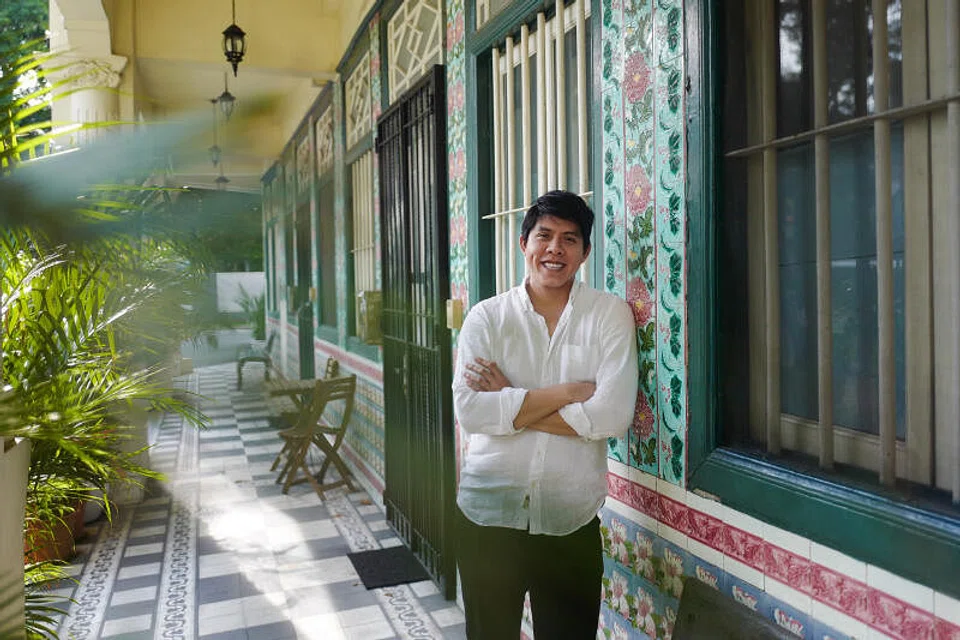
For example, before the pandemic, only some 10 per cent of TAP and Hmlet's tenants were Singaporeans. This number has now grown to 30 and 45 per cent respectively. These numbers include newlywed couples whose apartments were not completed on time, individuals who found their homes too crowded after work-from-home (WFH) became the norm, or families who are renovating their current units. According to Mr Li, shophouses also attract a certain kind of crowd, specifically "creatives who appreciate the history and character of the area".
Fang Low, co-founder and chief executive officer of Figment, was also pleasantly surprised to find that local customers were drawn to the idea of shophouse living. Previously, he thought such things were only geared to foreigners who wanted to immerse themselves in local culture.
"Even Singaporeans see this as a national heritage. They might have grandparents who lived in shophouses before, and they grow up hearing stories about shophouse living, and they want to try it for themselves. It brings a sense of nostalgia," Mr Low says.
Flexibility is also a major appeal factor for local renters. The short lock-in period of three months and availability of furniture, wifi and utilities make up a fuss-free temporary home for many renters.
Another element which is unique to co-living is the social aspect. Mr Lim says: "Since WFH was implemented, people cannot dine out with their colleagues or have small chats in the pantry. Work can get very boring. When our renters stay in a co-living environment, they get to meet people in the common areas. This creates a bit of social life, and gives a bit of sanity back to the individual."
Areas with mixed-use shophouses also come with the benefit of having many shops in its vicinity, as many of the shophouses' ground floors have been turned into cafes, fitness centres or beauty clinics. The co-living providers partner with these retailers to offer discounts for their renters, thus creating a mutually beneficial relationship.
A (timber) window to the future
Looking forward, Mr Low hopes to delve more into mixed-use assets to create Figment's very own self-sufficient neighbourhoods.
"We have this idea of a 15-minute kampung, which essentially means you have all the amenities you need within a 15-minute walking distance. You have your bakery in the corner, your co-working spaces, your yoga studios to go to in the evening. I think the only areas you can have this kind of living in Singapore are these heritage enclaves which have a lot of shophouses and footpaths."
As demand for co-living increases, the number of players has also grown. Mr Lim says that he feels the market will soon "reach a point of consolidation".
Meanwhile, Mr Li remains optimistic. He says: "The pie is big enough for everyone, everyone caters to a different target audience."
In terms of shophouses, he believes that the assets will remain profitable. "The nature of residential assets is also more resilient in a sense. Compared to retail or office, there are a lot of question marks on how things will play out, there's a lot of debate. But no one's debating whether you need a roof over your head," Mr Li says.
The co-living space providers have also seen more inquiries for their services coming from family offices and ultra-high net worth individuals.
Knight Frank's Ms Sai notes: "Prices have been improving due to interest as well as the fixed supply for this limited and scarce property asset class. While investors view shophouses as a means of wealth preservation, stable recurring income and the prospect of substantial capital appreciation over time, there is a limit on how much sellers can expect before yields are compressed and buyers become resistant."
"Nonetheless, the current volume of foreigners purchasing shophouses appears to be minor and should not have too much of an effect on prices," she says.
Amendment note: An earlier version of this article had stated TAP's co-living space was at 29 Owen Road, when in fact it was 96 Owen Road.

