Tapping the Muslim market
Singapore is well placed to make its mark on the global halal economy. Are local businesses ready to make the leap?

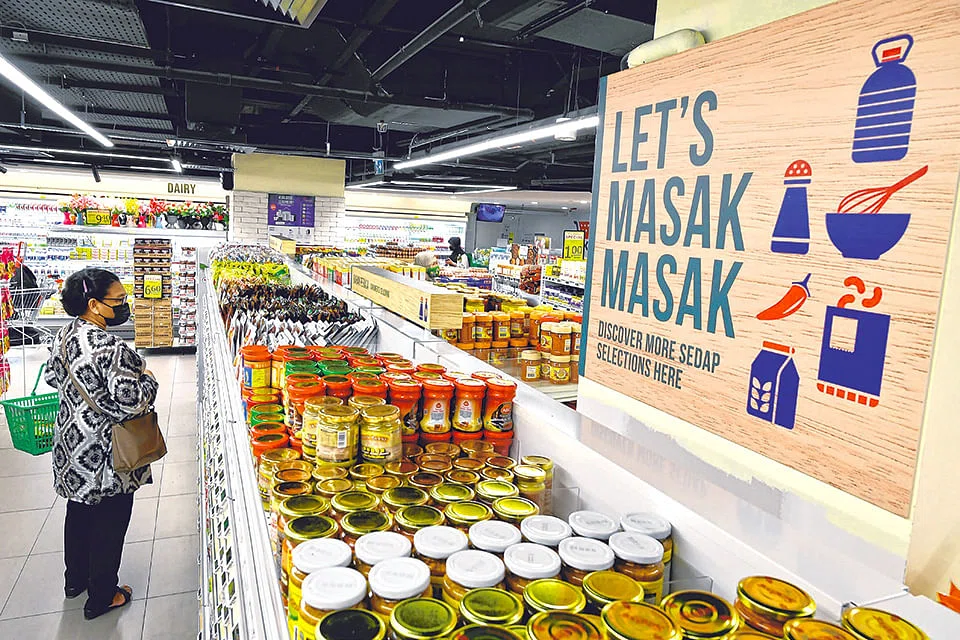
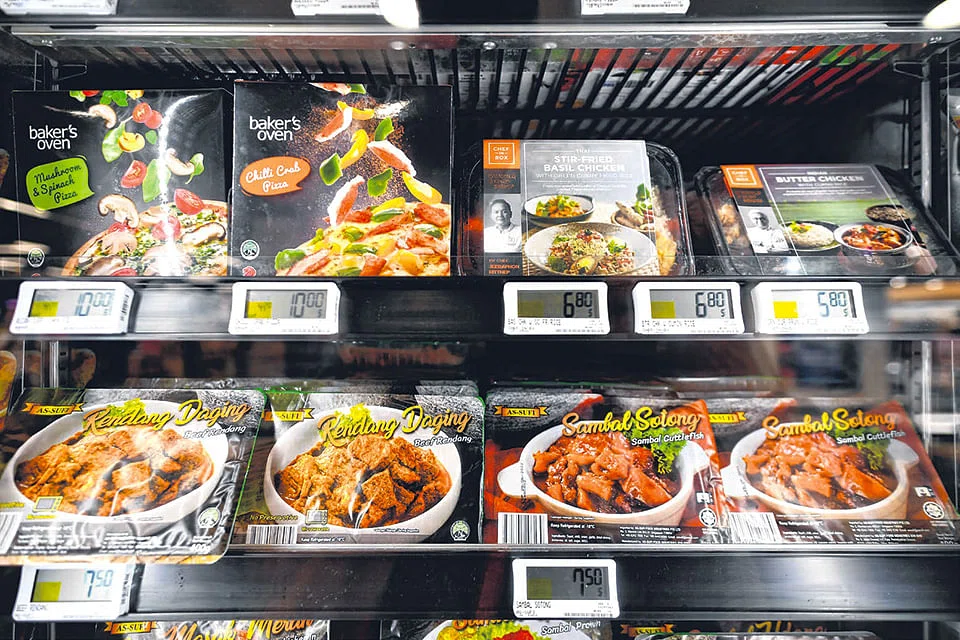

SINGAPORE looks like a market to watch in the global halal economy. Last year, the Republic climbed to 15th place in the Global Islamic Economy Indicator index, after going unranked previously - no mean feat for a country where Muslims make up 15 per cent of the resident population.
That is good news for local businesses with an eye on the international Islamic market, which will be worth US$2.3 trillion by 2024, the State of the Global Islamic Economy (SGIE) report from business consultancy DinarStandard and online news outlet SalaamGateway.com showed.
Consumer research firm Euromonitor International noted that for halal-certified packaged food and drinks alone, Indonesia clocked US$25 billion in sales in 2018, while China accounted for US$11.7 billion and the Philippines for US$3.1 billion.
Says Fara Abdullah, managing director of Singapore-based mobile app developer BitsMedia: "More and more, we're seeing that investors are starting to realise that the Islamic community is underserved. There is a gap, whether it's big or small businesses ... and they're starting to look to see how they can move into this area."
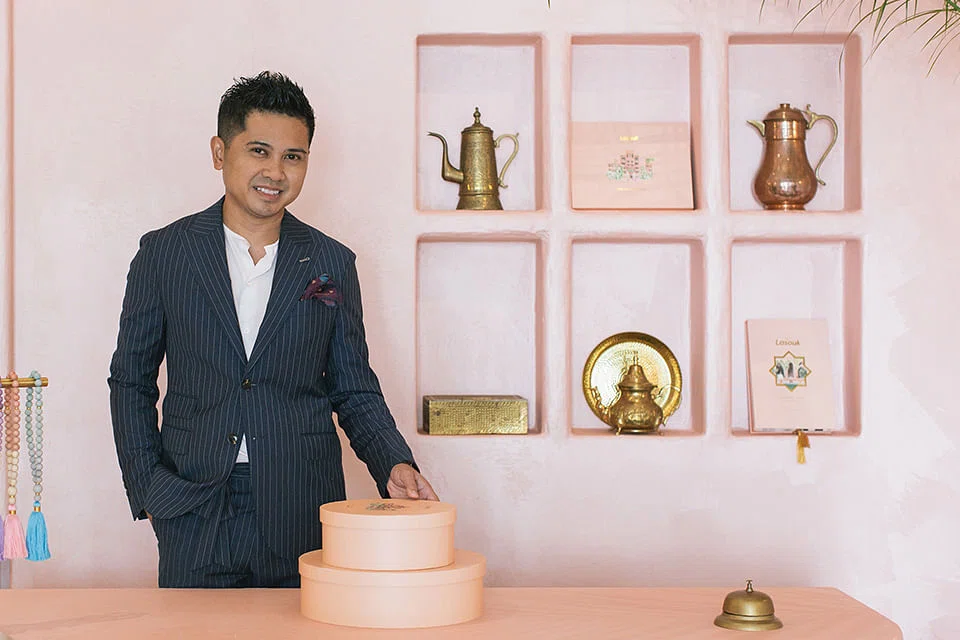
Serial entrepreneur Heikal Gani, who ran lifestyle businesses in Canada and China before returning home to Singapore during the Covid-19 pandemic, also notes that there are only so many people living on the one island: "We were conscientious in the beginning to make sure that our markets were not limited to Singapore."
But are small and medium-sized enterprises (SMEs) ready to make the leap abroad to carve a slice of the pie?
Ready to eat
Singapore comes second place in the halal food segment of the Global Islamic Economy Indicator index, and third place in both pharmaceuticals and cosmetics, and media and recreation.
In fact, food and beverage (F&B) is the dominant industry in the halal economy. It is both the largest non-finance segment and also the fastest-growing, said AT Kearney partner Hemanth Peyyeti.
Nurul Hidayah Abubakar, the Islamic Religious Council of Singapore (Muis) halal certification strategic unit's assistant head of assurance and enforcement, also told a conference in November last year that "at present, our halal certification's scope is focused on the food and beverage industry". Singapore had 4,385 halal-certified premises in 2019, of which 19 per cent were manufacturers, Muis statistics showed.
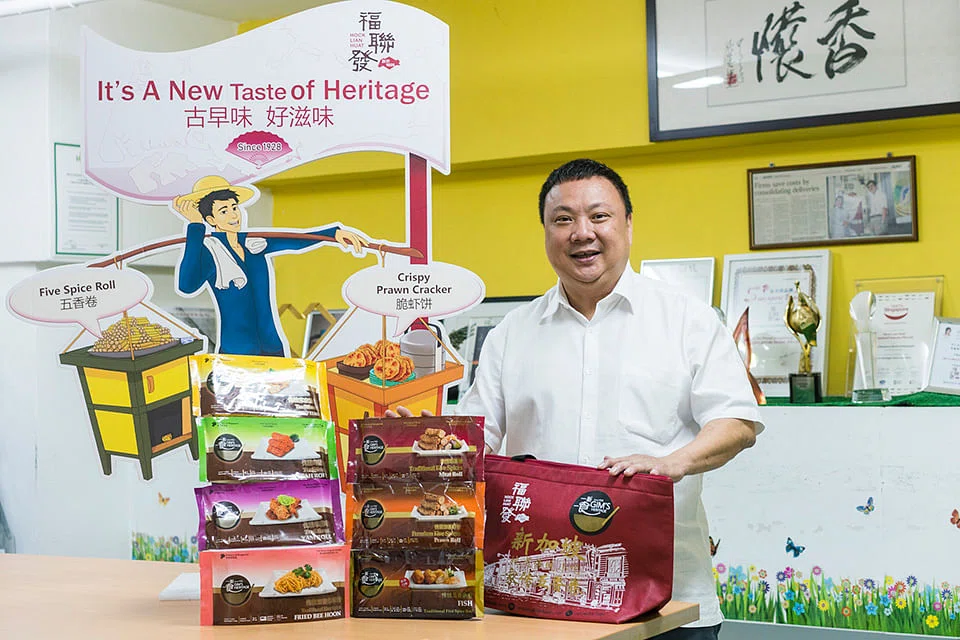
Jumping on the bandwagon is ngo hiang maker Hock Lian Huat Foodstuff Industry (HLH), founded in 1928, which cottoned on to the size of the global halal market in 2019. It is now set to open a halal-only factory in August for seafood products, under its internationalisation strategy.
"The new factory was registered as halal because we're seeing how the global halal market is getting larger. Being halal-certified, we can sell to halal and non-halal markets, making our business more complete," says managing director William Tan, who aims for exports to make up three-fifths of sales in the next two years.
"More importantly, there is increasing demand from the halal market."
Norzulkarnien Nor Mohamad, Islamic banking head at Maybank Singapore, notes a significantly high demand for halal food products from countries with large Muslim populations: Saudi Arabia, the United Arab Emirates (UAE), Egypt, Turkey, Pakistan, Indonesia and Malaysia.
Still, Dewi Hartaty Suratty, chief executive of Muis' business development arm Warees Halal, advised conference attendees last year that companies must stand out in markets where all products are already halal.
"Of course, consumer habits are also changing ... With more working mothers, for example, it has spurred companies to produce more ready-to-eat meals and even pre-mixes, to make preparation of food even easier," she remarked.
For now, food science associate professor Siti Noorbaiyah Abdul Malek from the Singapore Institute of Technology says that food exports are still limited to "kinds of products that can be easily halal-certified", such as oils or pre-packaged drinks.
But she adds that "I've seen some movement in the frozen food sector", such as sales of laksa and chicken rice to export markets in Europe.
The development of alternative proteins is another emerging trend on the halal food scene, says Prof Siti. She points to cultured meat, as well as algae and plant and mushroom proteins, as some examples.
Meanwhile, Emil Fazira Kamari, senior research consultant at Euromonitor, adds that "Singapore has a lot of potential to value-add product segments" in up-and-coming areas, such as milk and meat alternatives.
Tee Yih Jia Food Manufacturing, which is behind brands such as Spring Home, is one such innovator. The frozen food company entered the halal market in 1977 - eight years after opening - and recently launched plant-based line ALTN in 2020.
"The halal segment is a highly competitive market," notes general manager Laureen Goi. "Consistent quality and food safety is our winning factor."
She says the company is seeing annual sales growth of 20 per cent to 25 per cent, fuelled in part by how exports make up nine-tenths of turnover.
Other opportunities that Ms Goi identified include the rise of Muslim travellers worldwide: "Most food service groups are moving towards purchasing only halal products. For example, sales of roti prata for the Western market have increased by almost 30 per cent to 40 per cent since 2018."
Young and hip
Companies tapping the Muslim market are capitalising on another trend - its youth - even beyond the outsized F&B segment.
While Mr Heikal recently launched an all-pink Moroccan-themed cafe in Siglap, he had already tried reaching youthful consumers with brands such as modest fashion line Lasouk and athleisure supplier Sugarmat.
"There's a huge chunk of young adults and teenagers that is growing at this point in time. They are a bit more sophisticated - they are connected digitally as well - so we really need to cater to this group," he says.
Popcorn brand The Kettle Gourmet, which manufactures in Malaysia but is based here, also appeals to the cool crowd. It dropped its bak kwa (pork jerky) flavour and picked up halal certification in 2019, two years after launch, now offering flavours such as kaya butter toast and nasi lemak.
"We have found that by being halal-certified, The Kettle Gourmet has become more attractive to more distributors," says founder Zac Chua.
He is prioritising mainland China, Hong Kong, Indonesia and the Philippines to drive the company to its target revenue of S$5 million by 2024.
"Although Indonesia is the only Muslim-majority country we felt that it was necessary to ensure The Kettle Gourmet is edible to all consumers ... It's an integral part of our business plan," Mr Chua says, referring to the strategic role of halal certification.
Similarly, two-year-old cosmetics brand Liht Organics is seeking halal certification in Malaysia and Brunei, as founder Nerissa Low seeks to expand in the Arab Gulf region and South-east Asia. The company, which now attributes 90 per cent of its sales to international audiences, is already present in the UAE and China too.
"While the markets we are in do not make it mandatory for our products to be halal-certified, we understand that there is a greater appreciation from the market if they are certified," she says.
Firms like Liht may gain ground as the halal pharma and cosmetics market expands. The SGIE report estimated this segment could grow 2.9 per cent a year, to US$76 billion by 2024.
Service standards
Indeed, CIMB Singapore Islamic head Sazali Baharom notes that of the 295 clients that the bank has helped to access the Islamic economy so far, fewer than 5 per cent are in F&B manufacturing and export. The rest come from industries such as finance, fashion, cosmetics and travel.
The services sector may have been overlooked, especially as some associate the market only with Islamic banking and finance.
But Mr Peyyeti says that while halal services remain "nascent", Singapore is "very well placed" for the knowledge economy, even if actual production is clustered elsewhere.
That is as the SGIE report ranked Singapore in third place worldwide for Islamic media and recreation, and ninth for Muslim-friendly travel.
Singapore's best-known digital export for the global Islamic market may be popular mobile app Muslim Pro. From local prayer times and the direction of Mecca, Bits Media is now branching out to more community features, such as playlists of scriptural verses and group Quranic reading and recitation launched in time for the month of Ramadan.
Despite news outlet Vice Media's allegations last year that user location data might have been sold to the United States military by a third-party data broker, Ms Fara, the managing director, notes that the app has some 100 million downloads.
Citing ongoing investigations by Singapore's privacy watchdog, she declined to go into details on the impact of the report. But "it's made us stronger and better equipped to handle issues like privacy", she says.
Another digital player is business-to-business (B2B) startup CollabDeen, which was founded in 2019 to offer Internet-based communication platform and social media workspace.
Despite the Muslim branding, co-founder and CEO Fateh Ali suggested the platform could be repackaged as a white-label product for churches or community organisations too.
Ms Emil from Euromonitor notes that "a strong emphasis on traceability in food these days" extends to the halal market.
Two-year-old startup OneAgrix, a halal B2B agri-food trade platform, was set up to plug this gap, said founder Diana Sabrain.
"If you talk about the other competitors, none of them have traceability - we do," she said of B2B marketplaces. "This is what differentiates us from the very beginning."
Granted, some services firms have been rattled by the Covid-19 downturn, such as online media outlet Have Halal, Will Travel, which covers regional tourism options.
But co-founder Mikhail Goh tells The Business Times (BT) that revenue has held steady with a diversification in virtual events, such as Chinese New Year and Hari Raya bazaars, as well as collaborations with partners "which we never thought of working with previously", such as car brands and banks.
Meanwhile, he is also committed to retaining the brand's core travel focus and its markets in Singapore, Malaysia and Indonesia - while "going down the ranks" from middle- and high-income urbanites into other, less affluent consumer segments.
World's their oyster
Companies are not heading overseas just for new customers.
OneAgrix sought angel investors abroad, as it was harder to fund-raise here, says Ms Diana: "It would help if they keep an open mind, that halal can go global and is not just about marketplaces. And if that changes, it would be easier for us halal economy startups to fund-raise."
But that could be changing.
Says Mr Peyyeti: "There is clearly interest and push by the government towards investment in Islamic sectors, but so far we are seeing investment being driven by the private sector."
He cites a strategic tie-up between Elite Partners Capital and the Singapore Malay Chamber of Commerce and Industry, as well as seed funding for startups like WhatsHalal.
At the same time, Singapore firms have cast a wide net internationally.
Some local businesses prefer to stay in Singapore to enjoy home-ground advantage where clients have stronger purchasing power, Mr Fateh tells BT. But he urged them to look beyond even South-east Asia, as "Asia is really going to be that superpower for the global Islamic economy".
Similarly, Bits Media has identified Central and South Asia as emerging markets for expansion, after capturing Muslim-majority countries Indonesia and Malaysia.
Meanwhile, HLH's Mr Tan observes that Singapore manufacturers may have to contend with lower-cost production overseas, "so we are doing more premium products, and we may have to go a little further - markets such as Australia or Dubai, where they have more spending power".
Still, there is a limit to the halal market. Minister-in-charge of Muslim Affairs Masagos Zulkifli noted this month that the Muslim community here "must be careful not to go overboard" in halal observance.
"In some countries, halal practices have been extended to non-consumable products like refrigerators, slippers, diapers and pet food. These trends are usually motivated by business rather than religious imperatives, and reduce the common space that Muslims share with the rest of the society," he said at the Muis annual workplan seminar in May.
Prof Siti notes consumer education is needed - so buyers are more aware that not all products and services need certification.
READ MORE: