

Techies take on South-east Asia’s food waste problem
Startups fighting the icky problem of food waste have flown under the radar. But they may get a boost from growing ESG efforts and upcoming regulation.

Sharanya Pillai
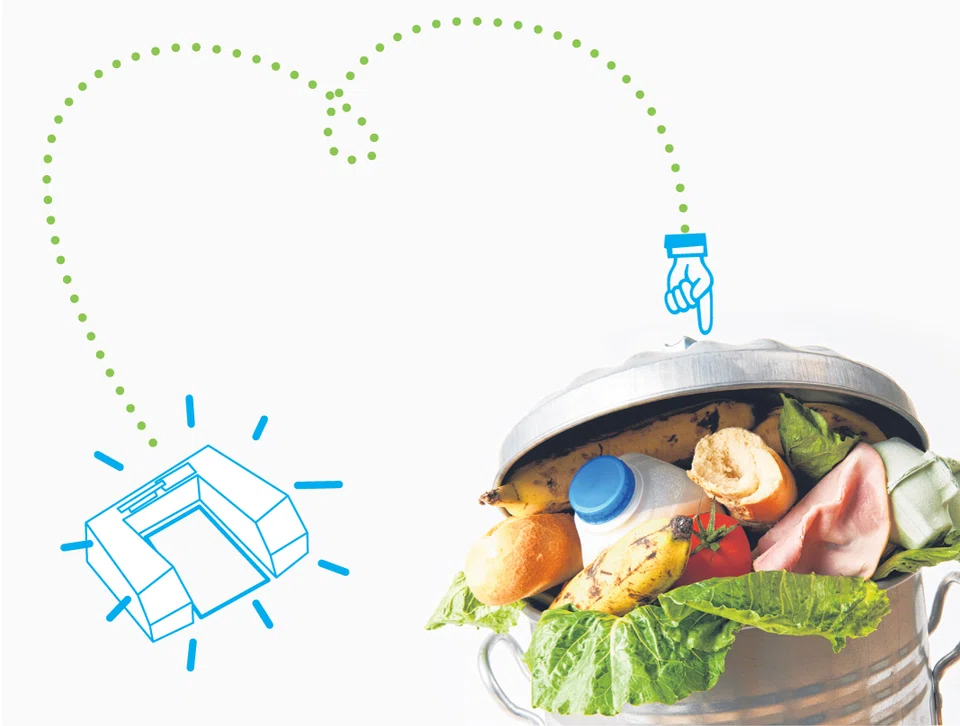
ALL-DAY buffets and dining out are back with a vengeance – but so is an insidious problem: food waste. Last year, Singapore generated 817,000 tonnes of food waste, up 23 per cent from the prior year amid increased post-pandemic economic activity. Only 19 per cent of the waste was recycled.
Across South-east Asia, the numbers are more staggering. Indonesia threw away 23-48 million tonnes of food waste annually from 2000 to 2019, local reports say. In Bangkok, uneaten food makes up almost half of the 10,000 tonnes of solid waste collected in the city daily, said a 2021 report by the United Nations Environment Programme.
Food waste is often seen as the responsibility of the government and waste companies. But some startups believe that they can make a difference using technology to influence the behaviour of food distributors, restaurants and even ordinary consumers.
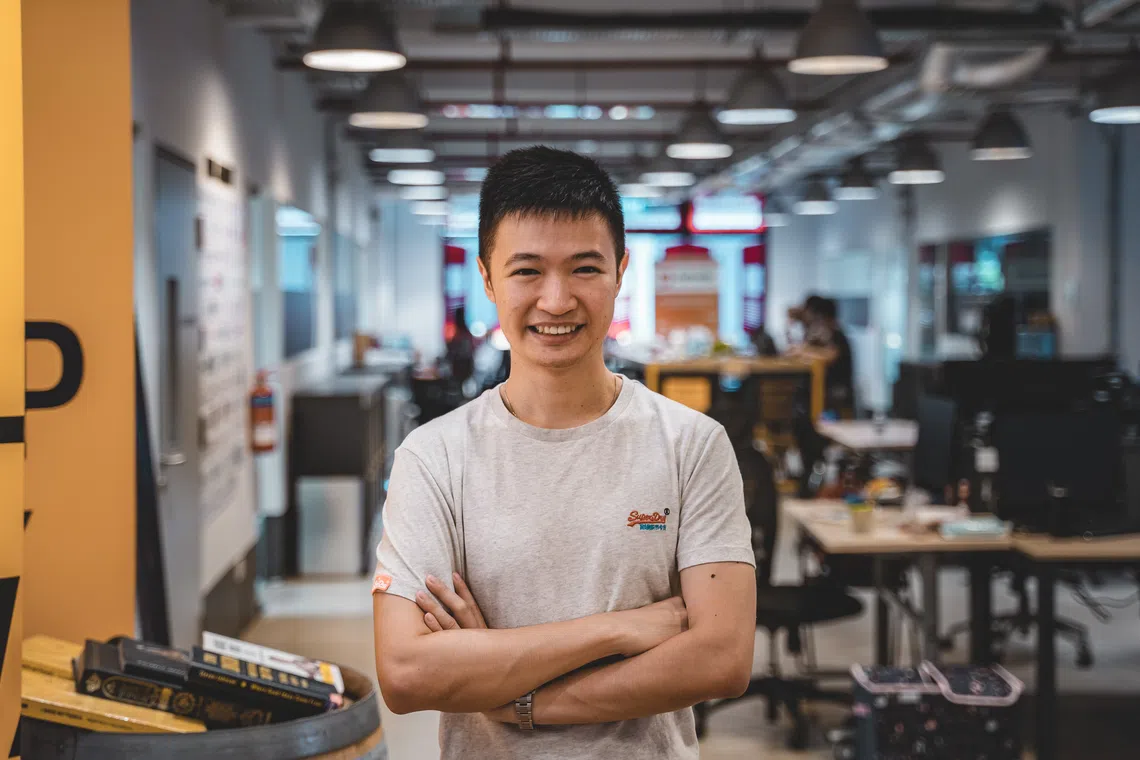
The growing ESG (environmental, social and governance) movement provides a fresh tailwind. ESG reporting has become more prevalent among hospitality and food and beverage (F&B) players, says Rayner Loi, co-founder and chief executive officer (CEO) of Lumitics, a Singapore-based startup tapping artificial intelligence (AI) for food waste tracking.
This has created a greater need for measuring commercial kitchens’ food waste footprint – but doing so can be cumbersome. Some kitchens undertake audits by getting someone to manually weigh the total waste and record it. Not only is this manpower-intensive, the data also lacks granularity.
“They don’t even know what they’re throwing away, how much they’re throwing away and when this waste is being generated. As you can imagine, when they have that complete lack of visibility over their food waste, how can they even begin to craft strategies to reduce it?” he says.
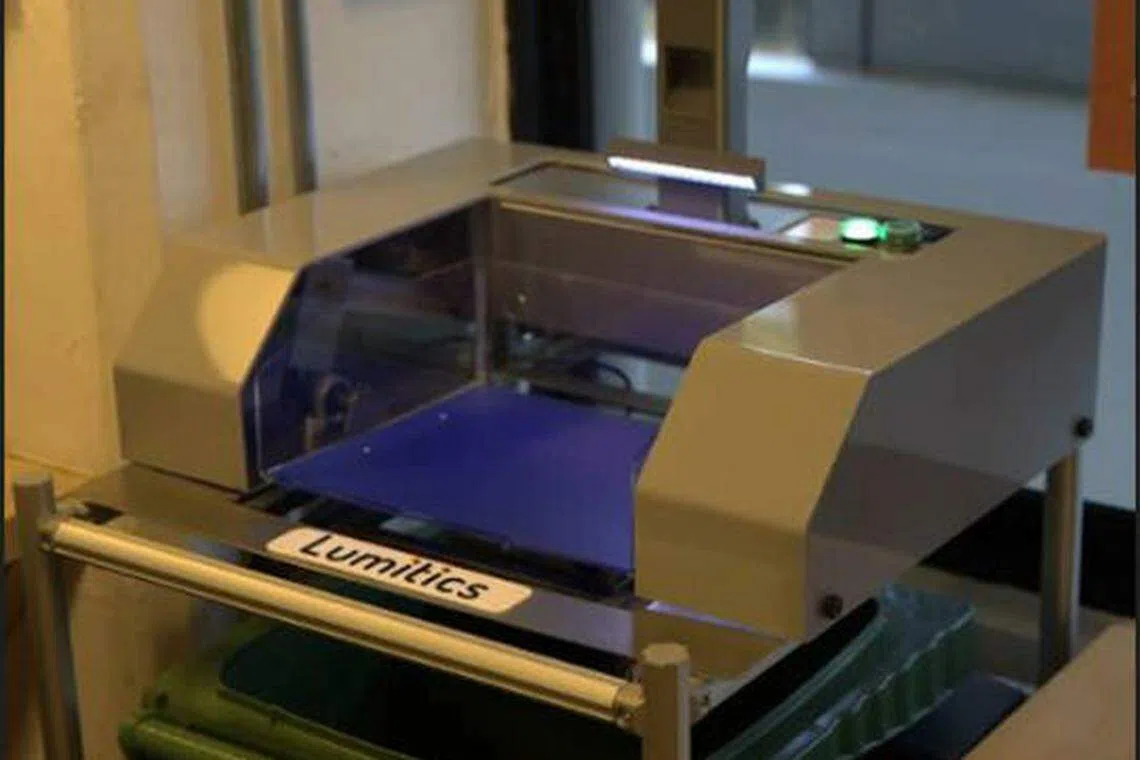
In 2017, Loi set up Lumitics to build a smart food waste tracker for kitchens to monitor their waste output seamlessly. Called Insight, the tracker can be combined with any standard rubbish bin to record the type and weight of food disposed in a kitchen, with the help of image recognition technology and sensors.
The AI is trained to recognise popular food items such as curry chicken and stir-fried vegetables, or even the mixed “plate waste” from diners’ leftovers. With this monitoring, clients are on average able to reduce food waste by up to 40 per cent, says Loi.
In the past 5 years, Lumitics has bagged high-profile clients including carriers Singapore Airlines and Cathay Pacific, as well as hotel chains Accor and Four Seasons. It has deployed its machines across 6 markets, and plans to enter 8 more markets in Asia-Pacific and the Middle East by the end of this year.
Tackling food waste at the source requires not just tech systems, but also a cultural shift within companies. Loi emphasises the importance of setting the right objectives.
“It is not a witch-hunt approach, (and) this is something we make very clear to our clients. Deploying this solution in your kitchen is not so that corporate (divisions) can take a cane and say ‘eh chef, why you throw away so much’.
“The approach is: Look, we want to be more sustainable as a brand and start getting more visibility over our impact on the environment, take steps to reduce that, and to report and account to various stakeholders,” he says.
Processing food waste
Besides tracking food waste, another pain point the industry faces is in processing it. From 2024, owners and operators of commercial and industrial premises that generate large amounts of food waste – such as shopping malls, hotels and food factories – will need to segregate their food waste for treatment, under Singapore's Resource Sustainability Act.
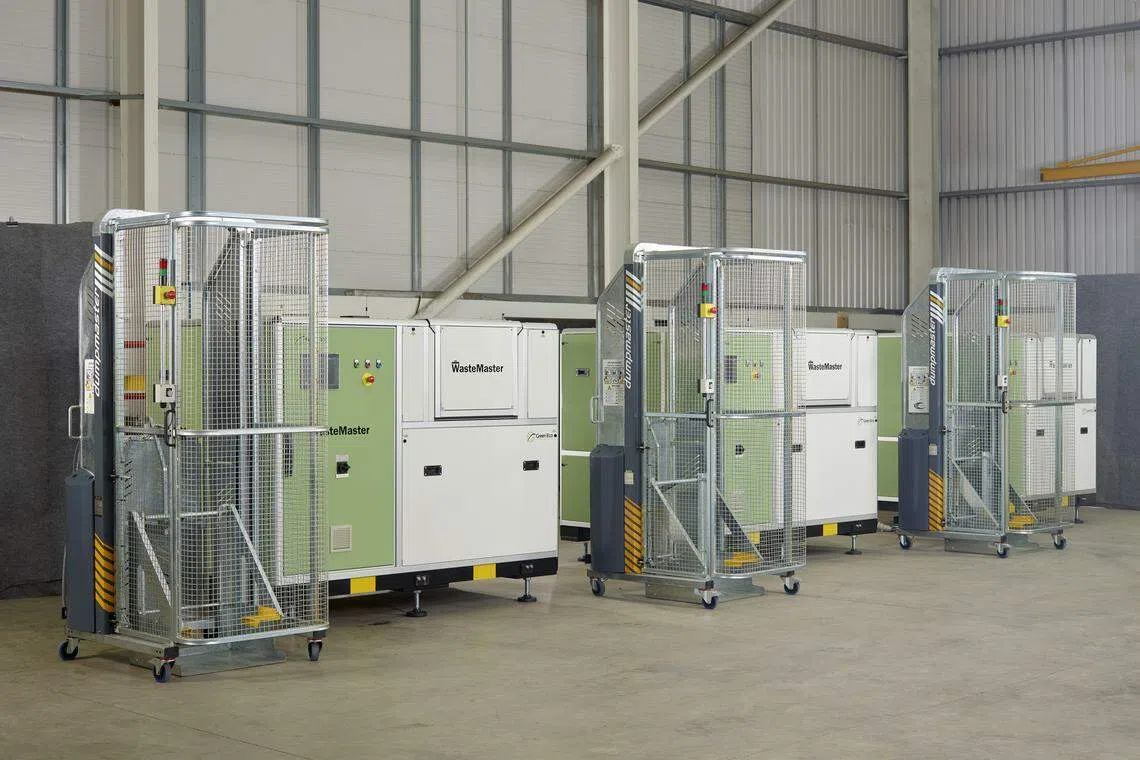
The upcoming requirement has spurred Australian food waste management startup Green Eco Technologies (GET) to plan an entry into the Singapore market in August. The company will be bringing in the WasteMaster, its proprietary system that can process commercial food waste on-site into a nutrient-rich residue.
This residue can then be used as a fertiliser, or as feedstock for an anaerobic digester that can convert the residue into biogas, which in turn can be used to generate electricity. The startup is also exploring the possibility of using the residue as feedstock for black soldier fly farms, which are typically used for producing pet and livestock feed, and organic fertiliser.
The resulting residue is also free from pathogens such as salmonella, which prevents it from being pollutive, says Moses Lim, GET’s global business development director.
GET is targeting convention centres, shopping malls and hotels in Singapore. “We identified an obvious gap in the market last year when approached by some Singapore firms,” Lim told The Business Times.
Explaining the technology, he says: “We patented a process that takes ambient oxygen from the air, and we radicalise the molecules into hydroxyl radicals. What it essentially does is it vaporises the cellular walls in food waste, and by doing so, we allow for the release of moisture at much lower temperatures. Our system runs at around 40-60 degrees Celsius.”
Many existing solutions require higher temperatures of up to 120-150 degree Celsius, he added. The WasteMaster can also tackle hard-to-process waste such as chicken bones and compostable packaging that other food waste processors can’t.
Hardware innovations like Insight and the WasteMaster are critical to get commercial kitchens and properties on board with food waste reduction. However, getting investment interest is also challenging, given that many venture capitalists tend to lean more towards software solutions than hardware.
“Food waste is not as sexy as all those other alternative protein and vertical farming sectors, mostly because our industry is still very nascent. That is evident from the number of companies in the world – not just Asia – doing something similar to us. I can count them with the fingers on one hand,” says Loi.
He added: “But I suspect this will change very quickly, especially with not just governments but also industries setting food waste reduction and carbon emission targets. With that, I think people will start to realise that food waste is a big opportunity.”
Unloved food
Some Singapore-based startups are tackling another dimension of food waste – at the supply chain and consumer level – by operating marketplaces that prevent unloved food from ending up in the trash can.
Just Dabao, founded in July 2020, runs a food redistribution platform, where consumers can purchase surplus food from over 440 merchants at discounts as much as 70 per cent. Over half of the merchants are bakeries and salad shops.
It was initially challenging to convince businesses to come on board, recalls Just Dabao co-founder Jennifer Widjaja – it took 1.5 months to get the first merchant.
But since then, many more see the value of selling food they would otherwise have thrown away – in some cases purely due to cosmetic defects, like “ugly waffles”, says Widjaja.

“This is not a brand new model that’s unheard of, it’s a proven model that’s been very successful outside of Asia,” she says, citing Denmark’s Too Good To Go, a food waste-focused marketplace that last year raised US$31 million from investors, as one source of inspiration.
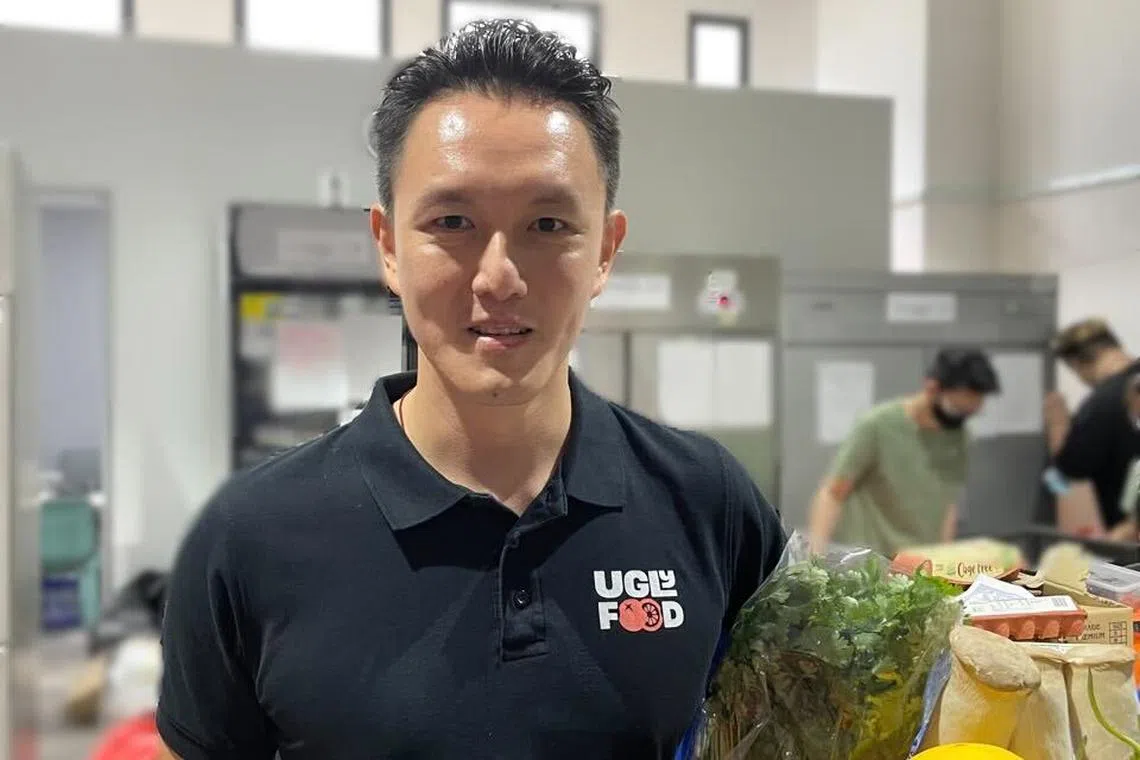
Alongside Just Dabao, another Singapore-based startup, UglyFood, runs an online grocery store – similar to RedMart or Amazon Fresh – but one that sells salvaged “ugly” and soon-to-expire produce directly to consumers.
The 5-year-old company initially started out with a cafe model. But last year, a new team at UglyFood pivoted the business to make it more scalable, says its co-founder Sean Goh.
“When you want to tackle the food loss issue at an Asean and regional level, you need to have a business model that’s replicable in other countries, from a logistics (and) procurement standpoint,” says Goh.
He is optimistic that this model can take off, given the success of Misfits Market, a US-based online grocer that similarly specialises in food that would otherwise go to waste. Last year, Misfits hit a US$2 billion valuation, following a US$225 million round led by the SoftBank Vision Fund 2.
“Food loss isn’t a concept widely propagated in Asia just yet. In Europe and the US, this is actually very big, and they’re much more forward on food loss reduction, and there are large companies doing this,” Goh says.
He adds: “From Singapore’s standpoint, the government has put a lot of effort into driving the 2030 Green Plan and food loss comes under that umbrella. A lot of the traction that we’ve gained in the past year and a half has been expedited by the government here.”
The bigger picture
The growth of food waste startups is a positive sign – after all, tackling the food waste problem is also essential for broader sustainability efforts such as reducing plastic waste, says Simon Baldwin, head of The Incubation Network, an initiative which tackles plastic leakage by promoting and backing innovations and entrepreneurs.
“We’ve got this problem of waste that’s co-mingled at the household level… One of the things that’s preventing plastic from being recycled efficiently is that food and plastic waste go in together, so the plastic material is contaminated.
“If we can think of ways to separate those two materials at source and have efficient ways of managing food waste, we can then go down a path of having a much cleaner feedstock for plastic, which makes plastic recycling more cost-efficient and likely to scale,” he adds.
There is also more room for food loss-related innovation at the upstream farm level, notes Christopher Vas, general manager of the Food Innovation Precinct Western Australia, and Australia country head of The GrowHub, a provider of sustainably-grown produce.
“(There) is a need to democratise some of the agritech innovations – how do we scale up and distribute them into the farming communities? What sort of technology transfer models can be put in place... that are able to catalyse and truncate the innovation cycle for smallholder farmers?”
A higher amount of “patient risk capital” flowing into the ecosystem will also be essential, he adds.
Ultimately, it is important to further nurture the ecosystem of startups tackling waste issues, notes Durwin Ho, chief executive of innovation and startup enabler StartupX. His firm runs HyperScale, a sustainability accelerator focused on innovations in the waste sector.
“Sustainability is not an easy topic, and waste itself is a lot harder because not many people know too much about it. It is not a very sexy topic… That’s something we need to overcome,” he says, adding that more mentors and investors will help more startups take root.
TRENDING NOW

Grab CEO’s wife Chloe Tong on life with Anthony Tan and finding her purpose
Jacqueline Loh to step down as MAS deputy MD in senior leadership reshuffle

Why 1 in 2 young Singaporeans who said ‘no kids’ now say ‘yes please’: new study
Private home prices accelerate with 1.4% rise while HDB resale values dip further in Q3: flash data

