

2021 Volvo XC60 review: Phoning it in
Volvo's best seller gets mild hybrid tech and an infotainment system built on Android. Only one of those is an improvement.

Singapore
IT'S been a good week for Volvo Cars, seeing as to how it raised 20 billion Swedish kronor (S$3.15 billion) on the Stockholm exchange last Friday (Oct 29). The listing valued the carmaker at 158 billion kronor, which makes it a handsome payoff for Zhejiang Geely Holding Group, the Chinese car company that bought Volvo from Ford for US$1.8 billion 11 years ago.
Compare and contrast that outcome with Saab's fate under General Motors' ownership (bankruptcy) or what happened after BMW Group bought Rover (you don't want to know), and consider the fact that Ford itself had paid US$6 billion for Volvo. Who says the Chinese don't know how to run a car company?
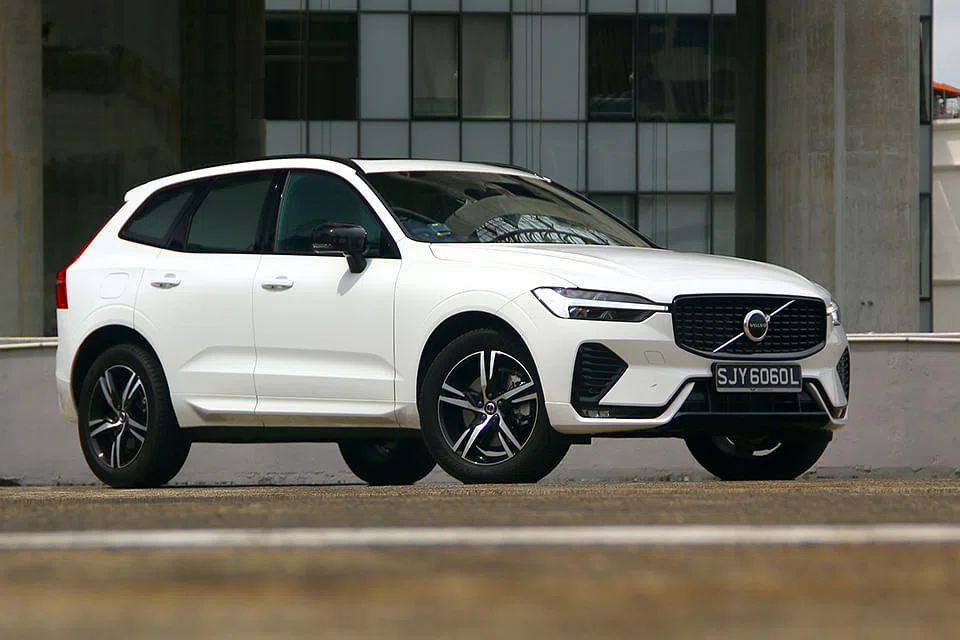
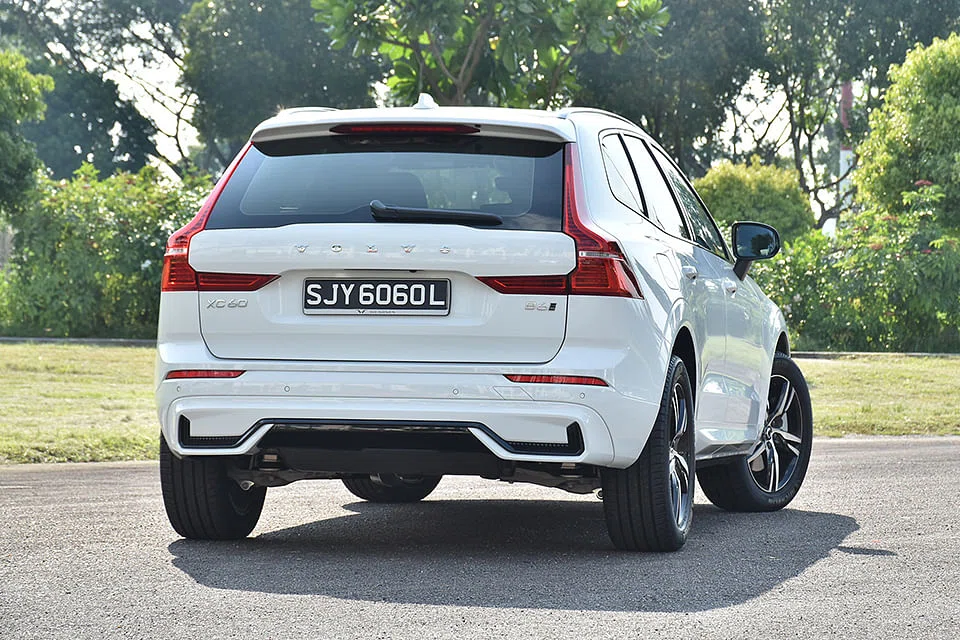
Volvo raised the money because it thinks a big, sustained rise in sales is coming. It will use its listing proceeds to raise production capacity to 1.2 million cars a year by 2025, nearly double today's volume. That makes it an interesting company to watch, which in turn makes the new XC60 B6 R-Design an interesting car. It simultaneously gives you some idea of how Volvo got here, and hints at where it's headed.
Cars like the XC60 are precisely why Volvo spent the last decade raking money in. It let Volvo ride the wave of a Sport Utility Vehicle (SUV) boom (a boom it helped create in the first place with the larger XC90), and the current version is the brand's biggest seller. It's not hard to see why; it combines handsome looks with lots of practicality and a lovely, posh-feeling interior. Plus, it has safety features up the wazoo. How many cars do you know can keep an electronic eye out for pedestrians, cyclists and large animals, so it can keep you from crashing into them?
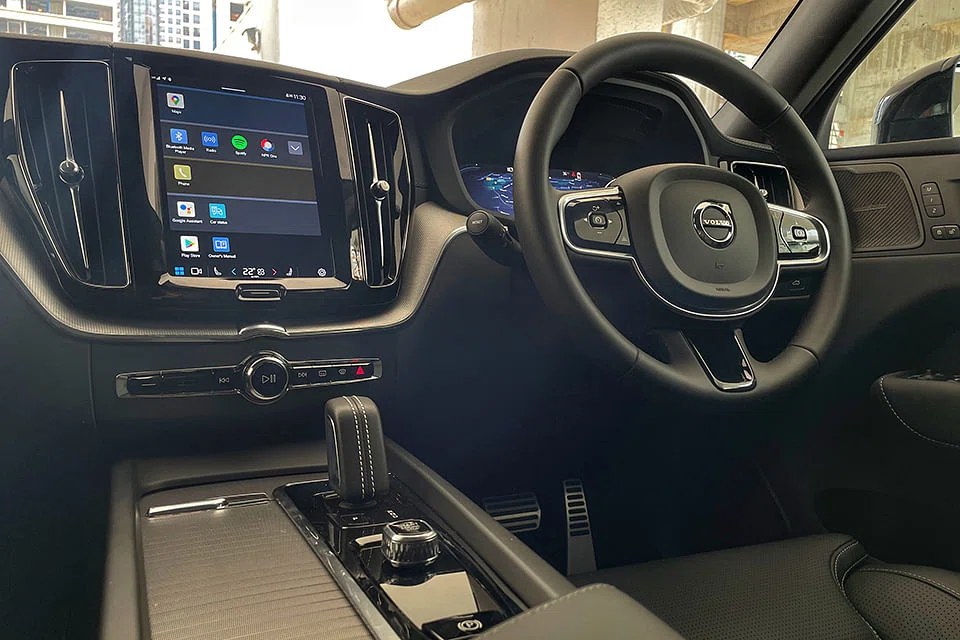
An update for the XC60 this year brings new engines with mild hybrid tech (signalled by the letter "B") and an infotainment system powered by Google.
Volvo sees the former as a big deal, and says that hybridisation is part of a "major step" towards its future as a maker of pure electric cars. It would probably seem churlish to point out that Audi and Mercedes put the same stuff in their cars a couple of years ago, and that you can now get similar systems in a Kia (and the cheapest Kia, at that) or Mazda here.
But if the idea isn't new, it's simple and elegant. The hybrid system puts energy into a 48 volt battery whenever the Volvo slows down, then uses it to assist the engine so it generally has an easier time of it.
In the XC60 B6, it works particularly well. There's a noticeable urgency to the way the Volvo responds to the accelerator, so you do feel the hybrid system giving it a push, and its starter-alternator cranks the engine awake super smoothly, so it doesn't come back to life with a shudder after shutting down automatically at the lights to save fuel.
Yet, a couple of things spoil the show. The engine sounds like Awkwafina with a sore throat, so it isn't exactly the last word in refinement, nor even the first word, come to think of it. In a car that costs this much, that matters.
Then there's the handling, which is as predictable as a pot of melted snow, but just as insipid. There's nothing wrong with the way the Volvo goes through corners, but there's also little right about it. When it comes to feedback, the steering offers bupkis, and it isn't particularly linear or precise.
Meanwhile, the suspension is firm but doesn't endow the XC60 with a sense of tautness, instead succeeding only in sending a constant, wearisome rocking motion through the cabin.
None of that is a deal-breaker, actually, because Volvos have been mediocre to drive for years now, and not everyone wants their SUV to be a hot hatch on stilts.
XC60s are bought more because they are spacious inside, decently practical, and solidly put-together. They are loved because the cabin is a lesson in quality and tidy minimalism, and the seats are lovely to spend time in (especially the ones in front, because they're ventilated).
Leaving hardware aside, the XC60's infotainment system now runs on Android Automotive. Not to be confused with Android Auto, it's an open source operating system built on the same codebase as the software that powers Android phones.
The graphics aren't as slick as they were when Volvo wrote its own user interface, but it runs smoothly and even your parents could use it, and it puts a suite of apps from the Google Play Store at your disposal - Spotify for music, Google Maps for navigation, Google Assistant if you're lonely and need someone to talk to, and so on.
But in what is still an early iteration, Android Automotive is still inferior to Apple CarPlay (or, ironically enough, Android Auto). You can't dictate WhatsApp messages with it, for instance, and if you're an iPhone user you'll have to resubscribe to all your favourite podcasts in the car. Unlike the digital assistants in other cars, it doesn't let you, say, turn up the air-con with your voice. All in, it feels like Volvo cut a corner here, but the system is upgradeable over the air, so it will undoubtedly get better with time.
While Volvo gets to grips with what is still a new OS for cars, the XC60 B6 has to grapple with an age-old problem: price. At S$290,000 with Certificate Of Entitlement, it goes up against any number of rivals that are better in various ways.
Part of the problem is that its emissions attract a S$25,000 pollution surcharge, which rather defeats the purpose of having a mild hybrid system.
The less powerful XC60 B5 version is the better choice, for S$251,000. It's likely no less fun to drive, it hasn't been hit with emissions taxes, and will probably outsell the B6 version here by far. Like stock investors, car buyers here have a way of punishing the overpriced.
Volvo XC60 B6 R-Design
Engine 1,969cc, turbocharged in-line four Power 300hp at 5,400rpm Torque 420Nm at 2,100-4,800rpm Gearbox 8-speed automatic 0-100km/h 6.2 seconds Top speed 180 km/h (limited) Fuel Efficiency 7.6 L/100km Agent Wearnes Automotive Price S$290,000 with COE Available Now
Decoding Asia newsletter: your guide to navigating Asia in a new global order. Sign up here to get Decoding Asia newsletter. Delivered to your inbox. Free.
Share with us your feedback on BT's products and services






