

16 warning signs of a company in trouble - a guide for retail investors
Report is by corporate governance advocate Mak Yuen Teen, NUS prof Richard Tan, and sponsored by accounting professional body CPA Australia

Michelle Quah
Singapore
EVER wished you had a checklist of the warning signs that indicate to you if the company you've invested in, or were thinking of investing in, was in trouble?
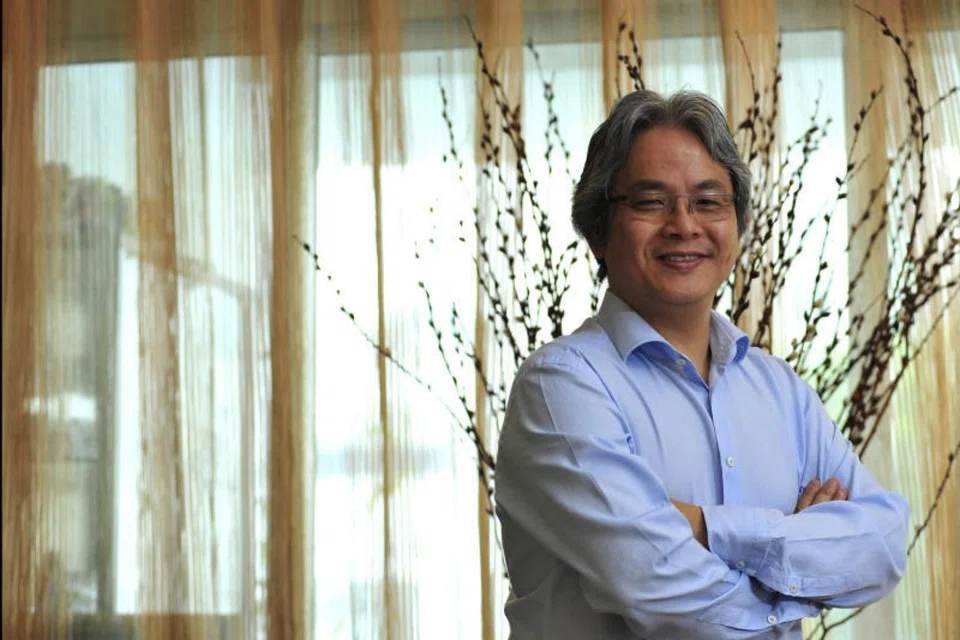
A new report by corporate governance advocate Mak Yuen Teen - listing 16 of the most important red flags and warning signs - purports to help you do just that, while also teaching you how to look at a company's business model and its key events and transactions.
The 52-page report, Avoiding potholes in listed companies, is meant for the public investor, especially the retail investor - who has access only to public information, such as annual reports and corporate announcements, and who has limited expertise in analysing corporate governance and financial statements.
"This report aims to help retail investors by highlighting warning signs and red flags from publicly available information that often precede major corporate scandals and failures, so that they can stay vigilant and minimise or prevent losses," said Associate Professor Mak, who is with the NUS Business School.
The report was co-authored by NUS Business School Adjunct Associate Professor Richard Tan, and sponsored by accounting professional body CPA Australia.
Their study begins by pointing out that companies do not implode from accounting and corporate governance scandals overnight - there are typically numerous indicators of trouble before that happens. Companies may also perform poorly or fail because of changes in the business environment, industry disruption or other business challenges.
The authors have used what they call the "B-C-D-E Model", to look at four key areas of a business, which would help to clue in investors to its fortunes: business model (how the company is making money or expects to do so); corporate governance (the ownership, board and key management, remuneration policies, risk management and internal controls); disclosure and reporting (timely disclosures and reporting of financial results, external audit and conduct of shareholder meetings); and events and transactions (specific events and business decisions that impact the company or that it engages in).
They suggest asking questions such as, is the company's business heavily reliant on one or a few major customers, or is it making a major acquisition in a new business area unrelated to its existing core business? They should focus on transactions that appear unusual or out of the ordinary for the company, including incidents such as ad-hoc diversification, rapid-fire acquisitions and disposals or write-offs.
Using this model to analyse 37 potential warning signs and red flags identified from various sources, the authors have named 16 of them as "most important". They have also cited real-life examples of 33 Singapore Exchange (SGX)-listed companies to illustrate the issues covered.
According to them, the strongest early warning signs are: unexplained changes in financial results attracting an SGX query; foreign incorporation; change of sponsor (for Catalist companies); and independent directors participating in performance incentive plans (generally, share option plans).
Other early warning signs: having a founder who is also the executive chairman/CEO; non-payment of dividends; disclosure/trading queries from SGX; profit warning; foreign auditor(s) for the listed entity or key subsidiaries; key operations in countries with weak rule of law; and low management ownership.
Key red flags are: the engagement of an independent third party to undertake a special audit or independent review; delays in holding annual general meetings (AGMs); modified auditor's opinion; sudden resignation of the audit committee chairman; and sudden resignation of other independent directors.
The authors also cited discrepancies between unaudited and audited results and significant or frequent restatements as other key red flags.
However, they were also quick to point out that investors should not assume that a company is heading for trouble just because they see one or more of the warning signs, and that the warning signs and red flags discussed in this report are not necessarily exhaustive.
"However, if they see a number of these warning signs, they should certainly exercise caution and monitor what is going on. If they see any of the red flags, they should be particularly concerned," said Prof Mak.
And, without listing them, the authors said they have identified at least another 14 companies that appear to be "clearly heading for trouble" in the months ahead because they already have many of the warning signs and red flags discussed in the report, and have warned investors to stay vigilant.
Melvin Yong, Singapore country head of CPA Australia, said: "How well companies are governed is more than just complying with rules and regulations. The way companies address other warning signs, including management and operational issues, could also be valuable in informing the public's investment strategy."
Prof Mak said he hopes that, eventually, a tool will be developed based on a comprehensive set of indicators that will serve as an early warning system for investors. "I believe that this report and the research behind it will go some way towards doing that."






