

17Live aims to be the ‘izakaya’ of live-streaming services
Its business model is based on human connections, interactions and engagement, says CEO

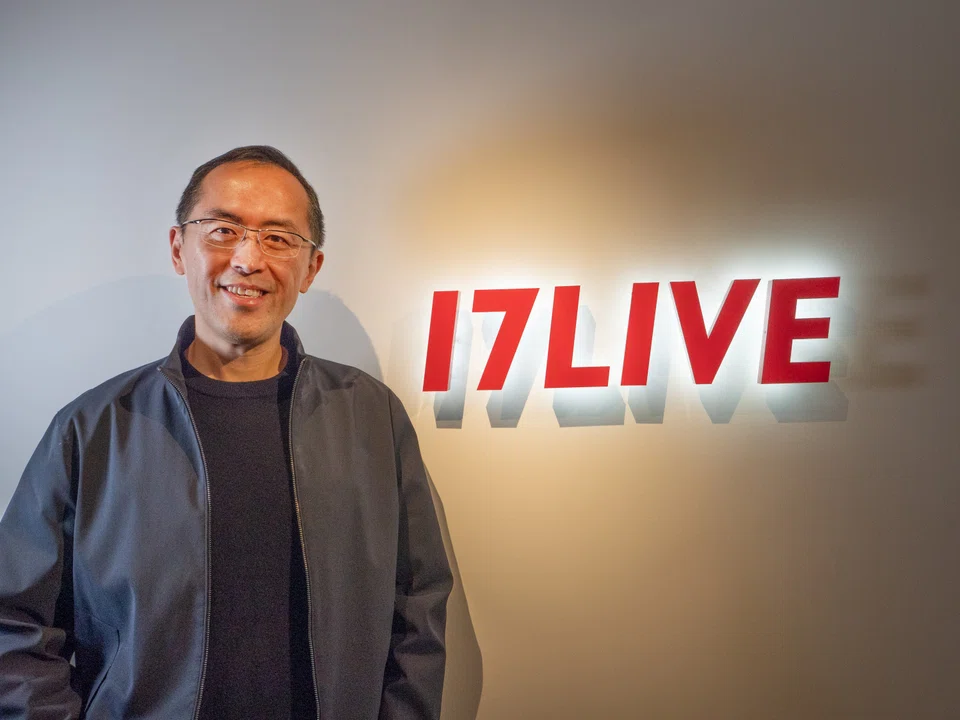
WHEN 17Live chief executive Jiang Honghui thinks of the streamers on his platform, he does not see them as rock stars performing for large groups of fans. Instead, they are more akin to Japanese izakaya chefs hosting dinner for eight to 10 guests at a time.
“That’s the feeling we’re talking about. You go in, the chef knows you, greets you, talks to you,” he said.
However, the concept has yet to be fully appreciated by public markets in Singapore, where the app has no significant presence.
Shares of the company, which is the only one here to have listed by way of a special purpose acquisition company (Spac), closed at S$0.94 on Friday (Jan 3) – a fraction of the minimum Spac initial public offering price of S$5.
Streamers on the platform have also been leaving as they gain popularity, leading to declines in overall viewership and corresponding sales.
In the six-month period ended Jun 30, 2024, the company turned in a net profit of US$1.9 million, from a net loss of US$118.2 million in the corresponding period the year before, due to a change in the revaluation of its financial liabilities.
Still, the company’s operating revenue fell 33 per cent to US$101.1 million year on year due to a decline in live-streaming revenue and unfavourable foreign currency movement. The company generates revenue largely from Taiwan and Japan.
Jiang acknowledged that the company’s strength as a smaller platform for new streamers is also a potential weakness that has led to a decline in the supply of streams on 17Live.
The platform has typically been seen as a training ground of sorts for new creators, where they can thrive as they begin live-streaming. However, they tend to leave for larger platforms when they become more popular – and often take their audiences with them.
Trying a new way
To stem the attrition of streamers, Jiang said that the company is changing its policies from this year to make it possible for them to stream on multiple platforms.
During Covid-19, streamers who signed contracts with the company had an exclusivity clause preventing them from streaming on other platforms. This was put in place at a time when the platform was just one of two players that had live-streaming and virtual gifting, he noted.
Since then, larger players such as TikTok and YouTube have muscled into the live-streaming space as well.
“If you’re the only one which is closed and you’re not the biggest player, the only thing that happens is that more people want to leave, and people cannot return because people don’t want to come back and become locked up again,” he added.
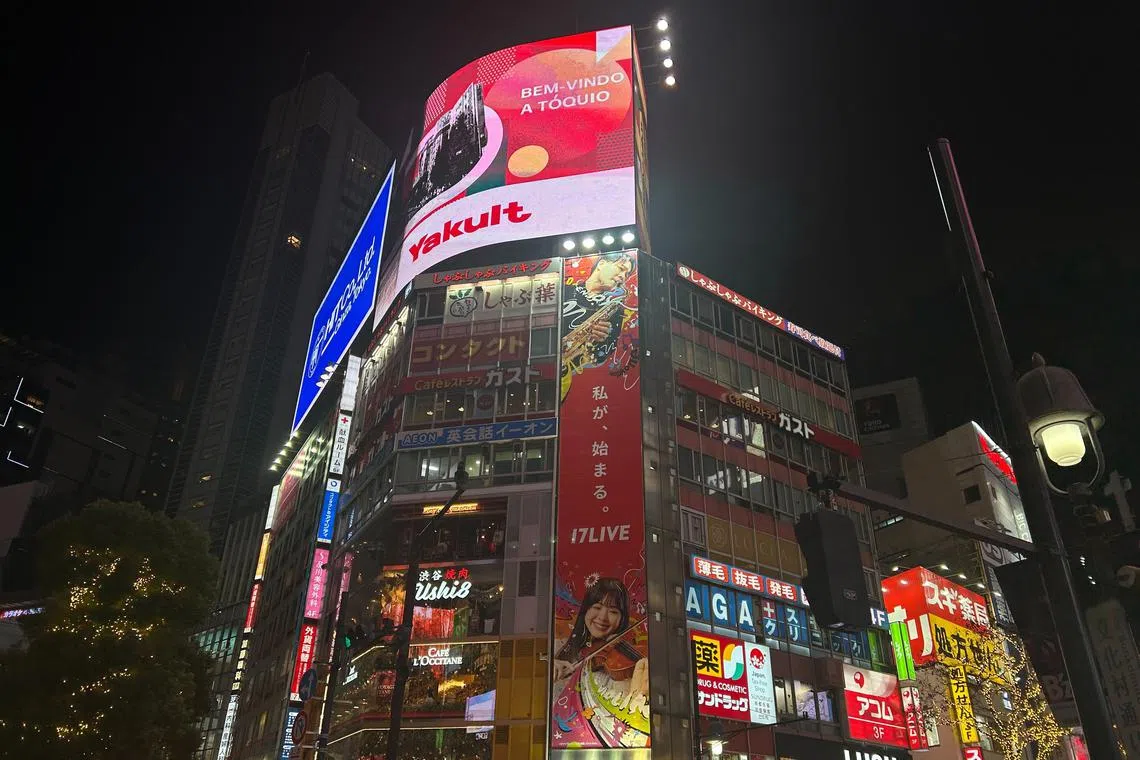
After the policy change has been made, Jiang said that the company will look to introduce more events in the next three months.
These events will be in the form of contests, where streamers will compete to garner more support from their fans through paid virtual gifts. The platform also provides streamers with tips to try and convince their fans to support them.
“When you’re competing, naturally you can use this as a means to ask your supporters to (send) gifts to you,” he said.
The prize for streamers who win would not only be in monetary terms, but also in terms of the exposure they will get.
For instance, streamers may get the chance to be featured on the runway show of the Kansai Collection, which is held in Osaka annually. They may also be featured on advertisements run by cosmetics companies and convenience stores such as FamilyMart.
“We have been working with these merchants for years, and one thing about Japanese (businesses) is that once you start working with them... they will continue to work with you,” Jiang noted, adding that this is a barrier of entry for other platforms that may try to establish the same business relationships.
Still, there are certain lines the company will not cross in its pursuit of more streamers.
For example, the company will not raise commission rates to lure streamers back, said Jiang.
Currently, the company pays out anywhere from 20 to 70 per cent of revenue generated, depending on different factors, including a streamer’s level of experience and if their performances are streamed exclusively on the platform, he noted.
This is in contrast to other platforms’ practice of offering up to 90 per cent commission rates to streamers, which he said is unsustainable.
“Because you have free capital from venture capital and private equity firms, you can burn through your bottom line, you can achieve the market scale.
“But once you reach 90 per cent, you realise the only way to sustain the business is to go through other kinds of value-added businesses,” he pointed out, adding that such businesses may be considered “grey” or “black”.
He said that the company made a conscious decision not to go into areas, such as pornography, because it received funding from limited partners that have certain social responsibilities.
Jiang was formerly managing director of investment at Temasek-owned Vertex, which sponsored the Vertex Technology Acquisition Corp Spac that merged with 17Live.
He is also the third CEO to helm 17Live since the business combination in December 2023.
Tapping virtual influencers
He added that, aside from live-streaming, the company is taking steps to grow its virtual-influencer business as well.
Virtual influencers, or VTubers, are computer-generated models that are controlled by human creators.
While revenue from the company’s V-Liver virtual-influencer live-streaming segment accounted for just 5.2 per cent of its total revenue in the half-year ended Jun 30, 2024, the segment grew by 211 per cent year on year.
On Nov 4, the company also announced the acquisition of Japanese entertainment startup Mikai, which owns Re:Act, a company that produces VTubers. The company said that the acquisition is not expected to have any material impact on net tangible assets per share and earnings per share of the group in the 2024 financial year.
Currently, Re:Act has two VTubers, Leona Shishigami and Hanabasami Kyo, with each having more than 300,000 subscribers on YouTube.
Regardless of the genre that the VTubers perform in, be it music or gaming or chatting streams, Jiang said that fans have a strong love, or gachikoi, for these streamers.
Gachikoi is a term that fans of Japanese idols use to refer to fellow fans who have a certain love and adoration for the idols.
Jiang said that the company is adding new features and tools for VTubers.
For instance, while it is a costly process to create VTuber models, 17Live will soon have a feature by which users will be able to customise and create their own VTuber models for free.
“If this were to be successful, it means our user base for (VTubers) could increase further, and (we) will… have to decide that maybe it’s time for us to (separate) these into two apps,” he said, adding that the company is waiting to achieve a sort of critical inflection point.
Even as steps are being taken to stabilise and grow the company’s revenue streams, Jiang remains confident in viewers’ willingness to pay to support their streamers.
He noted that about 30 per cent of the company’s monthly active users have continued to pay money to the platform for gifts and other perks.
“Our conversion rate is much higher, so that’s why this is a very different business model. It’s based on human connections, based on interactions (and) engagement,” he said.
TRENDING NOW

Once staunchly pro-China, Malaysian Chinese businesses are now distancing themselves from Beijing

Britain’s mansion tax shows the difficulty of targeting wealth

Three hats, one goal: How Ng Kian Swan runs sustainability at NUHS

COE review: The gap between luxury and mass-market cars isn’t the only one worth bridging

