
2024 likely to be a ‘tale of two halves’ for Brent
 Add BT as a preferred source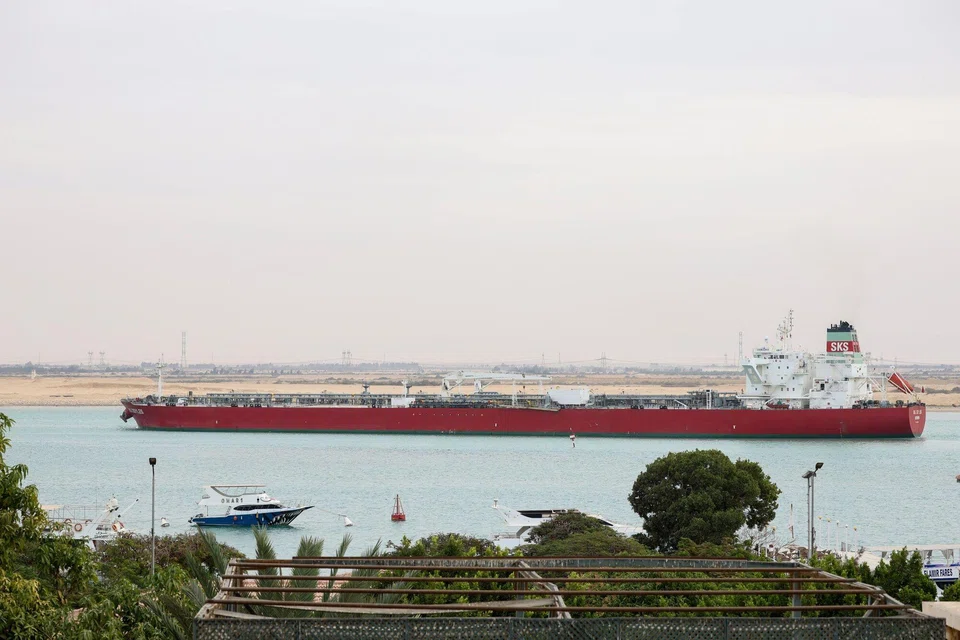
Lee Lilian &
Priyanka Sachdeva
INFLATION has fallen sharply across global economies and is now in the vicinity of targets. However, it seems very unlikely that the central banks would cut rates pre-emptively without a significant slowdown. We hope to learn from frequent historical episodes, where central banks have made the mistake of celebrating prematurely, leading to inflation plateauing and subsequently re-accelerating at an elevated level.
The biggest obstacle to the oil markets in 2023 came from the rate side, pumping strength to the US dollar, which makes investing in oil expensive. While oil players wanted to focus on the good news, such as the anticipated easing of rate headwinds, the concerns over the jump in transit costs and halted supply in the Red Sea are stealing the limelight for now.
Earlier this year, the Biden administration turned a blind eye and lifted sanctions over Iranian oil supplies. This facilitated the fund flow of millions of dollars, sparking debates about its role in the recent Israel-Hamas conflict. The restricted flow of oil tankers from the Red Sea, coupled with the ongoing Russia-Ukraine crisis amid extended supply cuts by the Organization of the Petroleum Exporting Countries (Opec+), is likely to keep the supply-side narrative in check. Given the remarkably low prices of Brent, trading with almost 9 per cent year-to-date losses, any strong rally would require an improvement in demand. However, with the Chinese demand already above pre-pandemic levels, we do not see much scope for a further pickup in demand, at least not in the first quarter of 2024.
Investors should bear in mind that the markets have priced in the expectation that economic growth will go smoothly, and that central bankers will succeed in finding the thin path of a soft landing to land the inflation flight. While an imminent US recession is not on the horizon, 2024 is likely to be a “tale of two halves”, with a cautious first half for oil prices giving way to a stronger performance in the second half of the year.
If we look at the technical aspects, oil is forecast to trade at relatively flat prices in the first half next year as geopolitics remains a concern. Taking a close look at Brent’s technical daily chart, by extending the trend line, joining recent lows (red line) and highs (green line), it reflects a triangle formation. Based on this observation, investors are advised to follow a “sell on rise strategy” as long as the strong US dollar remains an obstacle. For now, oil markets look balanced in the first half of 2024, with a deficit expected in the second half.
If global oil demand remains flat in the second half and Opec+ producers refrain from implementing deeper supply cuts, oil prices could experience immense pressure. However, we predict a tighter market in the latter part of 2024, with demand expected to grow by one million barrels per day. We expect Brent to average slightly over US$90 a barrel in the second half. The price projections for oil are highly vulnerable to the downside risk of Saudi Arabia deciding against rolling over its voluntary cuts. This would be a strange move given the efforts they have put in this year to support the market, although markets cannot ignore the growing signs of disagreement between some Opec members. The potential for stricter and more effective enforcement of US sanctions against Iran would also leave room for an upside to our current forecasts.
Navigate Asia in
a new global order
Get the insights delivered to your inbox.
It seems that Beijing is struggling to find a new economic engine, which is causing weakness in the city. Despite the Chinese government’s efforts to stimulate the economy, oil demand from China, the world’s largest importer of crude oil, is expected to grow at much lower levels than originally anticipated by markets. 2024 is a big year for elections globally, with 40 nations scheduled to go to the polls. This includes four of the world’s five most populous countries, covering over 40 per cent of both the world’s population and gross domestic product. From Taiwan’s upcoming presidential elections in January, to the successful candidate’s stance in China, and Prime Minister Narendra Modi pushing to secure a third term in India ahead of the US presidential election in November, these elections could have implications for global financial markets. In such a politically heavy year, it would not be ideal for oil prices to rally, making persistent headwinds over oil in 2024 the most plausible outcome.
The writer is senior market analyst, Phillip Nova
Decoding Asia newsletter: your guide to navigating Asia in a new global order. Sign up here to get Decoding Asia newsletter. Delivered to your inbox. Free.
Copyright SPH Media. All rights reserved.

