

4Q shaping up to be more volatile than 1Q
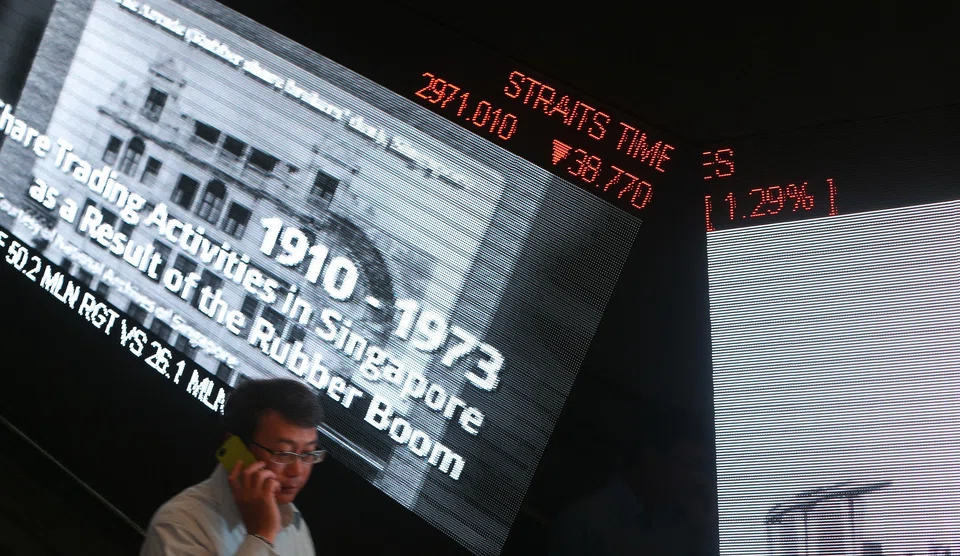
THE fourth quarter looks like it could be more volatile than the first, with fluctuating oil, Deutsche Bank woes and the US presidential election replacing China's stock market crash, yuan devaluation and the one constant throughout 2016, fluctuating oil.
In 1Q the Straits Times Index started at 2,882, sank to a 52-week low of 2,532 on 21 Jan for a loss of 12 per cent in three weeks before recovering to end at 2,840 on 31 March, bringing its loss for the quarter to 1.45 per cent.
For the fourth quarter, the index's starting level is Friday's close of 2,869. Where it will end is anybody's guess, though one suspects that after years of underperformance, downside must surely be limited, even if 2016's starting mark of 2,882 has proven difficult to surpass on a sustained basis.
However, this does not mean the local market will suddenly outperform in 4Q . Speak to fund managers and analysts and the impression is that it is difficult to be bullish on Singapore stocks.
Macquarie Equities Research on 21 September, for example, said it has lowered its 12-month target for the index from 2,950 to 2,900, adding that this target "implies a pedestrian 6 per cent total return and it is difficult to get positive on Singapore at the index level''.
It also thinks that the market is not cheap given a lacklustre earnings outlook. Its index target implies a forward price-earnings multiple of 13.1x for the STI, in line with current levels.
The source of the "pedestrian'' outlook is slowing global growth and trade. The World Trade Organisation (WTO) last week said trade in 2016 will grow at its slowest pace since the US sub-prime crisis. WTO's 2016 forecast growth is 1.7 per cent down from 2.8 per cent previously, whilst 2017's growth is now forecast at between 1.8-3.1 per cent compared to 3.6 per cent earlier.
Credit Suisse, however, offers some hope. In its October Investment Monthly, it said the recent market consolidation in Asia presents an opportunity to add exposure to the region as less hawkish comments from the US Fed has provided a healthy backdrop for a further rally.
"Market fundamentals are also aligning for a constructive medium-term outlook for Asia with initial signs of stabilization in the Chinese economy, as reflected in the recent macroeconomic data, which gives greater confidence in the eventual L-shaped economic recovery.''
For Asia ex-Japan, CS said while valuation appears fair on a standalone basis with the MSCI Asia ex-Japan Index trading at an estimated 2017 price-earnings of 12.9x, the region is the most attractively valued within the emerging markets space and is trading at the lowest premium to its 10-year average.
Apart from US' November elections, oil is the big wild card. Last week's oil bounce that came after OPEC countries agreed to cut production may not last, at least not according to most experts.
ABN Amro said there are doubts as to whether supply will really be reduced. "The target range of between 32.5 and 33.0 m barrels per day would be taking into account the production increase in the first half of this year,'' said ABN.
"In November last year, the ceiling was 31.5mb/d and the new target range is still above this. The new range is slightly below the production in August though. This 'agreement' will be ratified at the next meeting on 30 November. In conclusion, there needs to be an agreement on quotas for the individual countries, which could be a challenge. This uncertainty will likely cap oil prices in the near-term''.
As for Deutsche's problems, rumours of a reduced US Justice Department fine helped shore up stocks on Friday. It remains to be seen whether this will be enough to stimulate a sustained uptrend in what is shaping up to be a very volatile quarter.
TRENDING NOW

Simba admits exceeding spectrum limits amid failed M1 deal; parent company Tuas’ full-year profit surges 277%

He built the Vingroup empire. Now South-east Asia’s richest man is handing some key roles to his sons

Ex-execs of CW Group, Allied Tech charged with offences linked to lawyer’s S$76 million misappropriation

Singapore to prioritise high-value AI infrastructure as Asean markets play to their strengths: Tan Kiat How

