A year of adventure for PIL as it stages a dramatic turnaround in fortunes

Singapore
FOR Pacific International Lines' (PIL) 66-year-old executive chairman Teo Siong Seng, the year 2021 began as a crisis: he had to quickly solicit creditors' support for a scheme of arrangement to save the boxship operator once held closely by his family from sinking under a sea of debt.
"I think it's a year full of adventures... Nobody knew what's going to happen when we started the year," said Teo, who is better known as SS Teo.
Yet PIL would finish the year with a full repayment of US$1 billion in what is arguably the shortest restructuring ever in Singapore.
The scheme was completed on March 30 but PIL would now repay all the scheme creditors with accrued interest or distributions by Dec 30 this year.
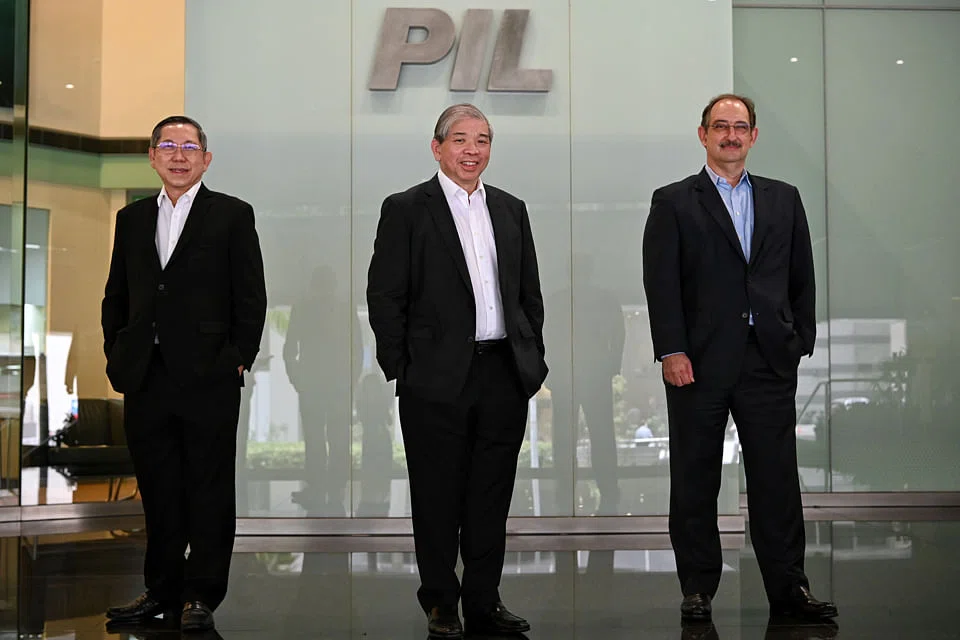
"I always say 'What you borrow, you have to pay back. They trusted you," Teo, together with co-presidents and executive directors Gan Chee Yen and Lars Kastrup - both 62 years old - shared with The Business Times in an exclusive interview.
Gan and Kastrup came on board as senior advisers last July, and took on the executive positions in March when PIL entered into the scheme.
Gan is a director of several firms, including Heliconia Capital Management, which first provided PIL with an emergency credit lifeline of US$112 million and is now its majority shareholder after pumping in US$600 million via a mix of equity and debt.
Kastrup is a veteran in the shipping industry, having helmed container shipping line Neptune Orient Lines and APL as chief executive officer. He also served as executive vice-president of CMA CGM group strategy and M&A, and vice-president of AP Moller-Maersk.
The idea of PIL repaying the scheme creditors early was floated in August, when its profits were better than forecast.
"We made our assets sweat," Teo said.
A market upturn due to higher shipping demand and reduction in available capacity in the industry, as well as PIL's various initiatives, helped the firm to pull off the "most dramatic" turnaround.
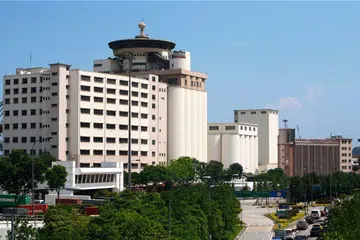
PIL divested non-core assets as well, including its office tower PIL Building. BT earlier reported the sale price of PIL Building as slightly above S$330 million.
The repayment surprised its creditors, as they expected debtors to preserve liquidity in times of uncertainty in a pandemic.
As some scheme debts take the form of perpetual securities, PIL could have kept them in its book perpetually without redemption. Not only is it repaying, PIL is taking a step further: repaying the full principal debt with accrued distributions to those that had earlier accepted a 50 per cent reduction in the debt owed.
In contrast, unsecured creditors, including the holders of its S$60 million notes, would have gotten only 2 cents on a dollar, had PIL been liquidated.
Two foreign creditor banks wrote to the firm to commend it on the early repayment. "I think it speaks well for Singapore Inc," commented Teo.
Gan stated that PIL is now well-capitalised with a sustainable capital structure to address and mitigate the cyclical nature of the industry, despite forking out US$1 billion for the repayment.
He noted: "I think our financial ratios today are a lot healthier than (they were) 12 months ago, in terms of our debt equity ratio, in terms of our interest coverage, as well as our debt servicing coverage. That puts us in a strong position to have the confidence to move forward, not just on the financial side, but also on the business side as well."
PIL will see its debt-equity ratio go under 1, post repayment.
It's a different picture when PIL was struggling with an over-geared capital structure earlier, and it became apparent in 2018 that it required external funding to stay afloat.
Teo cited taking actions decisively and timely to tackle PIL's financial situation as well as being very transparent with the stakeholders about its plight as some of the factors that have helped it stave off liquidation.
He started talking to investment bankers and potential investors, and subsequently requested a standstill on debts owed to lenders and lessors. Meanwhile, PIL tasked investment bank Evercore Asia (Singapore) to source for investors.
Heliconia, the wholly-owned subsidiary of state investor Temasek, saw the commercial viability in PIL and also wanted to preserve the established name as "there's a lot of brand value", shared Gan.
"I think it's a very, very balanced and very measured approach....It was quite timely that Lars and I came in as senior advisers to the company. We were initially involved in the due diligence before the Heliconia investment came in. The fact that the two of us are here, not only help in whatever way we can on the business side, but also to help along the restructuring as well, and also the investment proposition for Heliconia."
Kastrup said the company had started optimising the network of ships pre-restructuring, as part of the agreement with lenders. Now it operates a fleet of about 100 container ships. "At the same time, we saw the upturn in the market, so we have to be very agile in the way we operate the ships and our containers."
When the scheme went through and the investment from Heliconia materialised, PIL - founded in 1967 - took the opportunity to embark on transformation with new initiatives, including digitalisation and sustainability.
"It's a reset for PIL," said Teo. "We have been doing the same thing for 54 years."
As PIL optimised its network, some ships were freed up. These vessels have been deployed to other services where customers are in need of added capacity, especially as supply chains get disrupted.
The company has put out new trade lanes as well, in a bid to deepen its presence in Asia. This will allow the Republic to better connect to China and the whole region. It has trade services in Asia, Africa, the Middle East, South America and Oceania.
Despite its optimisation bid, the shipping line did not resort to any staff cut. "On the contrary, we actually have more people today than before, which is a success, because we have been able to attract ... good technical, experienced people," said Kastrup.
Most of PIL's 11,000-strong staff stayed with the group when it was navigating the financial storm. Not only that, some had to face creditors chasing payments while others dealt with difficulties brought on by the pandemic such as preventing potential outbreaks on board and finding venues for crew change after many countries steered clear of it.
The repayment will help to boost the morale of the staff, as PIL sees it.
Besides its staff, PIL's creditors, suppliers, business partners, investors and customers as well as his family shareholders had played pivotal roles in making the restructuring a success, stated Teo.
The stakes held by his family were diluted to less than 15 per cent, following PIL's debt restructuring.
"Nobody wished the company (would) go down," he noted.
READ MORE:
Pacific International Lines creditors to receive US$1b repayment ahead of schedule
New projects on AXA Tower, PIL Building sites set to yield more office space
Creditors vote in favour of Temasek-backed plan for Pacific International Lines' debt revamp