

ABN Amro banker sees pullback of easy credit in trade finance
In China, the greater complication lies with liquidity chasing yield, and ongoing reform to tackle overcapacity in the economy
Singapore
THE easy credit so richly associated with commodities over the last few years has waned, with the infamous case of fraud at Qingdao prompting some banks to retreat amid the broad rise in anxiety over counterparty risks, says a top executive at ABN Amro in Asia.
At the centre of much hand wringing in the trade finance segment is China - and there, the greater complication lies with liquidity chasing yield across various inflationary assets, as well as ongoing industry reform to tackle overcapacity in many sectors.
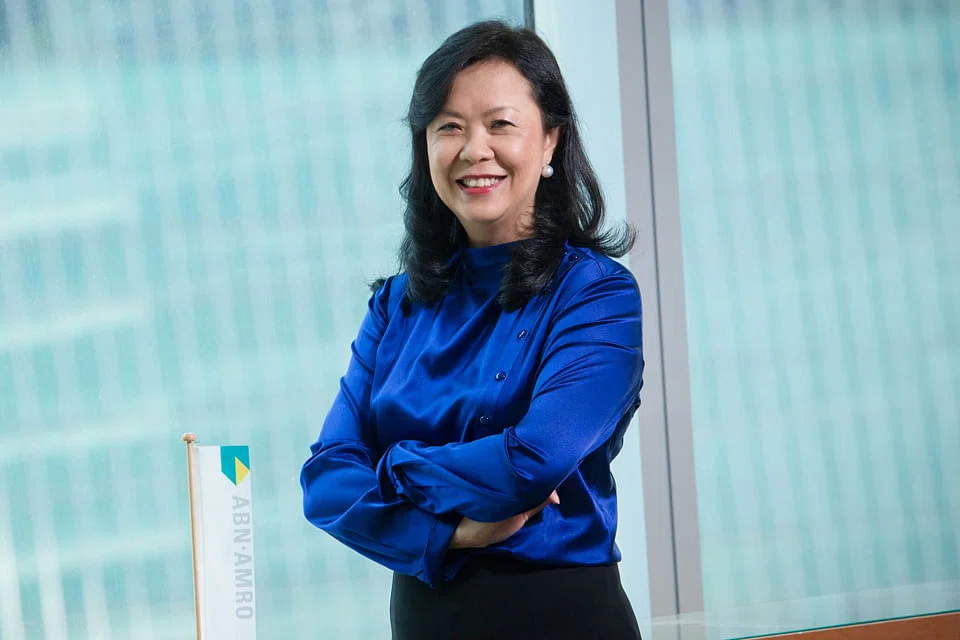
But the uneven pace at which reform is chugging leaves some to worry that the true health of many corporations there remains masked, says Jacqueline Chang, regional head of commodities Asia at the Dutch bank.
"It (China) is complex," she said in an interview. "We try to understand it. Every day is dynamic."
A veteran in the business with more than 20 years' experience, Ms Chang observed that integration at Chinese firms - orchestrated to manage the tremendous supply glut - remains patchy. "When you talk about commodities, a lot of sectors are in an overcapacity situation in China. China recognises that. So there is more effort being put towards supply-side reform," she said.
"Of course, it's not the easiest thing to do. A lot of it is in the hands of the SOEs (state-owned enterprises). For instance, if you look at the steel sector, there's so much overcapacity, the rightful thing to do is to consolidate the industry. There has been push on that front, but in reality the execution of that is challenging. There are also cases where some of these companies are grouped together - in that, yes, they have achieved consolidation, but the real integration, and the real execution, is still lacking."
One critical consequence is that certain forms of credit are still being doled out by Chinese banks under what Ms Chang described as "loose conditions". "You see that with the bureaucracy and how things are done all these many, many years, mean that all these structural deficiencies cannot be addressed head on. They are trying, but it's going to take time, which means it harbours weak companies, unduly so," she said.
Coupled with this is the massive anti-corruption campaign being led by Chinese President Xi Jinping. "The decision-makers are struggling with how quickly they want to do certain things," she said. "I think everyone is wary of what to do and what not to do. It has not yet fully unfolded."
Banks have been in intense competition over trade finance in the last five years or so, but specialist commodity banks have made it clear that they see themselves apart from traditional corporate lending in the commodities space.
Corporate banks offering trade finance from their Asian base, such as from Singapore, typically stand to represent an exporter, and take a Chinese bank as their counterparty. The Chinese banks, in turn, represent an importer. Banks are facilitating the trade between importer and exporter, and making a transaction fee off this service.
This is different from pure commodity financing, which is financing actual commodity flows from global traders. Banks have to watch, among other things, the changing market value of the commodities - which they take as collateral. They can structure sale-and-repurchase, or repo, agreements with trading houses, such that a trading house can sell commodities such as metals to a bank and is contractually bound to buy the commodities back later, at a higher price.
In late 2014, investigations into fraud at Qingdao port sent reverberations across the industry, as Chinese authorities shut facilities on suspicion that traders had been churning for loans from multiple banks by using the same stockpile of metal. Some 400,000 tonnes of metal were reported to be pledged fraudulently for loans at the world's sixth-largest port.
"The Qingdao incident has put a lot of fear into the banks," said Ms Chang, whose bank has found no irregularities in its trades at Qingdao. "These court cases are still ongoing. And if one is not a specialised bank, it's very easy for one's senior management to say, 'look, I don't understand this so well, it's so complex, maybe we should go slow', which is what we're seeing here."
The fraud at Qingdao has reflected more broadly a furious yield chase in China, as many sought leveraged returns through high-yield products, real estate, the stock market, and now, the commodity futures market.
"Hold on to your seat - the party is going to be over soon," Ms Chang said, referring to the trading frenzy in the futures market. "If you look at the participants, they are all retail investors. They make good money in the first 15 days, and they think they can forever make that money. It's of course changing, and I think the government is putting in some measures to control this frenzy."
With the layers of financial engineering peeling away commodities financing, what has emerged is the high inventory in many sectors - particularly metals - that translates to slower growth in physical tonnage compared to prior years, said Ms Chang. In absolute terms, lower prices translate to lower revenues.
ABN Amro does not break down its numbers for Asia; in the first quarter of 2016, income from its markets outside of Europe made up 9 per cent of total earnings.
"Many pockets of disguised transactions have moved away," said Ms Chang. "If you look at actual net increase in physical commodities, there is still a growth rate, although more modest than before. If I look at my back office, they are complaining that they are very busy."
The slowdown has also been exacerbated by the effective end of arbitrage between onshore and offshore renminbi rates, which had earlier contributed to stronger transaction fees for corporate banks based in offshore renminbi centres, such as Singapore.
The developments in China and the dramatic fall in oil prices are just two examples of how volatile the commodity financing business can be - with Ms Chang observing that protectionism is also on the rise.
"If you look at that magnitude of change in the short period of - goodness, just two months - it's phenomenal. It's almost unprecedented. But such is the velocity of change today," said Ms Chang. "Which also means that if you really want to survive in this trade, your size and scale can be important, because you have to be able to withstand many of these shocks. And the shocks are all converging. There's weather shock, there's geopolitics shock, there's event-driven stuff - Saudi, Iran, Crimea. A lot of big events that can trigger quite dramatic changes in a heartbeat."
The industry's risk awareness - amid a fog of uncertainty - has risen, said Ms Chang; although there are no bets that exuberance will not return in a different shape, at a different time. "Expertise can be bought, so people do move, people do hire experienced people. But when it comes to a subject like commodities, which is so broad, so deep, and so global, buying expertise in a number of people, or even in a team or two, while is good, it also depends on the institution, how other parts of the bank operate and function," she said.
"Overall, I think the industry has wised up, but at varying degrees."
ABN Amro is far more alert than ever in these complex times, sussing out "solid brick-and-mortar transactions" , said Ms Chang. It will shun "opportunistic parties", and work with niche traders that should add real value in the supply chain.
"Some banks see it as just balance-sheet lending. If your balance sheet in the last three years is good, I'm quite prepared to take a certain amount of risk. Then you multiply that by five banks," said Ms Chang.
"It's rather tempting to go aggressive, because if all I have is a bank risk, why do I care so much? But then you start to have certain nasty cases - where there is fraud, where people contest and dispute. You may still get your money at the end of the day, but it's very taxing. In today's market of compliance, and extra scrutiny, that cannot be good for anyone."
TRENDING NOW

Once staunchly pro-China, Malaysian Chinese businesses are now distancing themselves from Beijing

Britain’s mansion tax shows the difficulty of targeting wealth

Three hats, one goal: How Ng Kian Swan runs sustainability at NUHS

COE review: The gap between luxury and mass-market cars isn’t the only one worth bridging

