ABN Amro to expand selectively in Asia
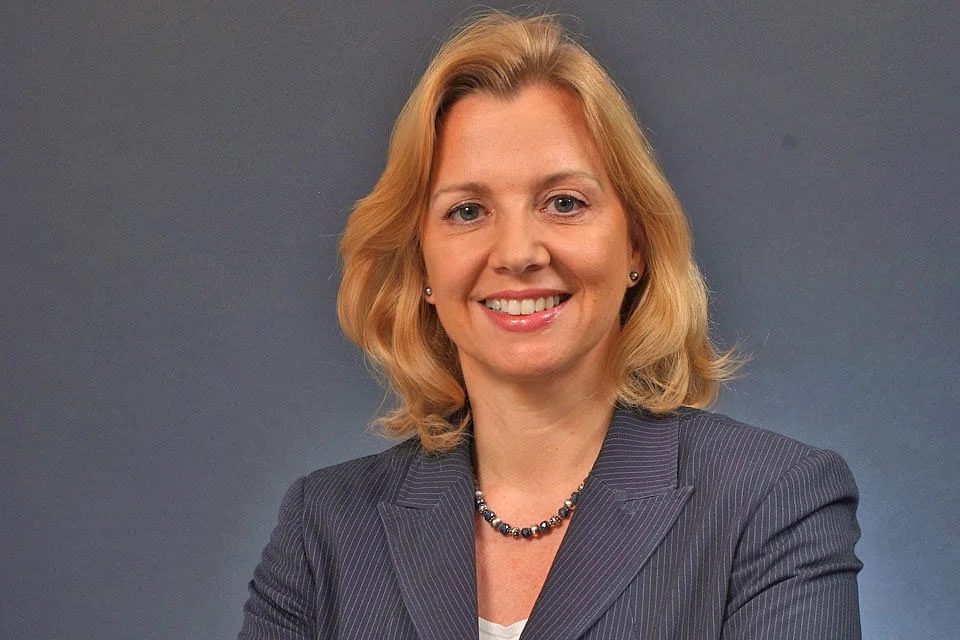
Maureen DeRooij, chief executive Asia-Pacific, says focused nature means that the bank will grow at a steady clip amid boom and bust.
ABN AMRO has a way of toasting to the deals they did not do - that is, when those deals go bust.
It is not too surprising, when considering the Dutch bank is focused on trade finance deals in sectors that would raise some chills at first mention. Some industry examples that prove the point: shipping, energy, and metals - all of which have gone through some painful corrections in recent times.
ABN AMRO is now pacing itself in expanding in Asia to tackle specialised demands from these sectors, having showed off its niche understanding in selecting companies to back, and in pricing risks right.
"This is where it pays to be in it, and have a bit of grey hair," said the Singapore-based Maureen DeRooij, chief executive Asia-Pacific of the Dutch bank ABN AMRO in an interview with The Business Times. "We celebrate the best deals not done."
Having led the bank's regional push since late 2013, Ms DeRooij is keen to grow out the business by growing out its team to finance basic materials and food deals, though she did not to provide exact projections on hiring this year.
To be sure, to add some diversity as the other industries are "somewhat correlating", the bank is also building out expertise to advise financial institution groups, particularly as insurance companies are looking acquisitive, Ms DeRooij observed. The bank has hired a banker formerly from BNP to lead the charge in Asia.
Chinese leasing companies backed by banks may also require some fundraising advice and may be keen to access international fund flows, she added. And as China expands into the clean energy market, the Dutch bank can likewise offer advice on deals tied to green bonds, for example, for which China has emerged as a top player in the world.
The Dutch bank does not break down the contributions from its Asian operations, but Ms DeRooij would say that it's "nowhere near a rounding error". Its financing in these sectors are mainly based on the value of assets, such as vessels, to see if there is a market for them, and if the companies that own such assets have contracting power.
"Then we know they have future cash flows. If you have a two or three year dip, but if they have that contracting capability - and we know the players - then we say, these are going to weather the storm," said Ms DeRooij.
The bank also watches the evolution of companies. For example, she suspects that a few decades ago, the Dutch bank would have done business with Hanjin, the South Korean shipping company that collapsed under the crippling weight of debt.
"But Hanjin became more corporate. Then we cannot be a bank to them - and luckily we're not," she said. "Once we see a company become more of a corporate lending kind of entity, that's not for us. It's usually where banks lose their shirt. We stay out of that because that is not how we see shipping."
The bank is also keen on shipping deals tied to liquefied gas, which it deems as a good asset, with the bank backing shipping companies that have been "nimble enough" to convert to that line of business.
ABN AMRO's key shipping deals in Asia last year included the US$290 million loan to Singapore-based BW LPG to finance a VLGC (very large gas carrier), and a US$95 million loan to Singapore's Epic Gas for a pressurised LPG vessel.
The focused nature of ABN AMRO also means that it would grow at a steady clip amid the boom and bust, said Ms DeRooij.
"We recognise that in the last years, when prices are down, trade finance would decrease. You can pressure your people to do more, but then they go for lower market," she said.
"As a culture, globally in our bank, if this happens, we know that this part will just go down a bit, but there is no pressure. People do crazy things under pressure. It helps, because we know (markets) will come up."
TRENDING NOW
Grab CEO’s wife Chloe Tong on life with Anthony Tan and finding her purpose
Singapore-based Ryde accused of pump-and-dump fraud in class action lawsuit
Malaysia’s F1 return: A low-cost second chance, possible Singapore boost
Canada is upping oil flows to Asia, but South-east Asia’s refineries aren’t ready to handle them yet