

About 30 SGX listcos show early interest in Value Unlock programme to lift valuations
Market participants say weak disclosure and poor investor engagement often drive mispricing on the exchange – gaps the initiative aims to close
Koh Kim Xuan &
Ranamita Chakraborty
[SINGAPORE] Around 30 Singapore Exchange (SGX)-listed companies have made early inquiries into the newly launched Value Unlock programme, underscoring growing interest in efforts to lift valuations by sharpening corporate strategy and investor communication.
The initiative was rolled out alongside the Monetary Authority of Singapore’s (MAS) S$5 billion Equity Market Development Programme (EQDP).
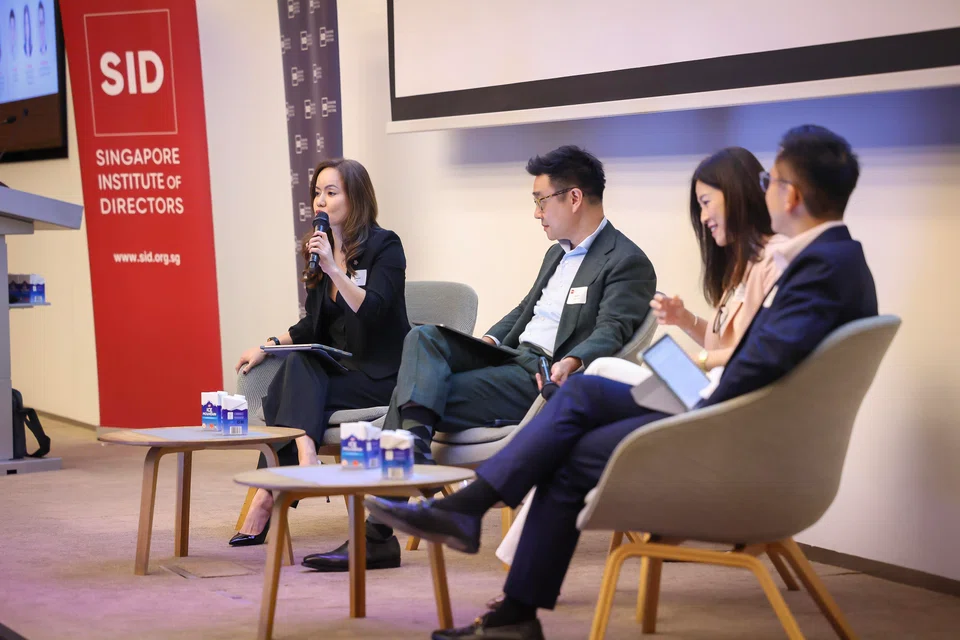
It reflects a broader push to address market mispricing that can arise when demand and supply do not move in tandem, said market participants at the sidelines of the launch of the Singapore Institute of Directors (SID) Chairpersons Guild programme on Friday (Jan 16).
Chan Kum Kong, head of capital market development at SGX, described the Value Unlock programme as a movement to sharpen the focus on shareholder value in the boardroom.
Achieving this requires a collective effort from listed companies to foster a mindset focused on value creation, he told The Business Times.
This, in turn, will lead to better communication with investors and attracting greater demand for the company’s shares, which will ultimately drive up its valuation.
“We are in a good position to orchestrate the various parts of the ecosystem to come together and reinforce this shareholder value focus,” said Chan.
Positive trends
When asked about which sectors are most likely to benefit from the Value Unlock programme, he highlighted construction as a segment with strong structural tailwinds.
While the sector boasts a strong cluster of companies, many have focused more on building their businesses than prioritising shareholder value or investor engagement, he noted. However, as funding needs rise to support growth, improving valuations and securing more favourable funding terms will become increasingly important.
He pointed to South Korea’s 2024 Corporate Value-Up Programme and the Tokyo Stock Exchange’s 2023 reforms, where both countries saw their indices rise soon after the initiatives were rolled out.
While Singapore’s Value Unlock programme is still the newest of the three, Chan noted that the market response has already been positive, with its indices trending upwards.
Applications opened on Friday for its two grant schemes, Equip and Elevate, which offer tailored support for companies at various stages of growth. Chan said that there have already been initial inquiries from around 30 to 40 companies.
“We need demand and supply to work hand in hand,” he added.
Even though demand is present, the challenge lies in lifting supply, particularly for companies that may be obscure or have poor communication. When these companies are not properly discovered, they become mispriced in the market.
However, by tapping Value Unlock grants, companies can transform through redefining their strategy, improving communication, or addressing pricing issues. The market will naturally adjust to correct the mispricing, Chan noted.
To facilitate this, there is a need for more opportunities beyond traditional exchanges where buy-and-sell transactions occur, he said.
“As an orchestrator, we need to work with the brokerage community, which is a very essential part of it,” he said. He added that research is equally vital, as analysts can help by conducting detailed studies and generating reports on companies, which brokers can then share with fund managers.
This approach is further supported by initiatives such as the EQDP, which works alongside the Value Unlock programme to enhance the local ecosystem and drive investor interest.
Clear communication is key
Jasmine Koh, head of advisory and sales at UBS Wealth Management in South-east Asia, Japan, India and Australia, pointed out during a panel discussion that SGX is dominated by old-economy companies.
They often appear less attractive to investors compared to firms listed in global markets such as Nasdaq, where sectors such as artificial intelligence are fuelling growth and driving valuations. As a result, SGX-listed companies may face challenges in achieving higher valuations.
Koh made these remarks while moderating the panel titled “Investor Insights on Strategies for Value Up and Value Unlock” at the SID Chairpersons Guild and SID Board Academy launch on Friday.
In response, panellist Kenneth Tang, a senior portfolio manager at Amova Asset Management, noted that old-economy companies such as property developers have taken to recycling and thus unlocking capital that can be used to pay shareholders. This signals their capacity for growth, which deepens investor interest.
Fellow panellist Hian Goh, co-founder of Openspace, a private-equity and venture-capital firm, pointed out that this is where SGX-listed companies can harness the EQDP funds and Singapore’s “safe haven” position to grow through deepening investor relations.
The EQDP aims to strengthen the local asset management and research ecosystem, as well as increase investor interest in Singapore’s equity market, with a focus on small and mid-cap companies.
Amova Asset Management plans to launch two new funds under the EQDP this year, while JP Morgan Asset Management (JPMAM) launched its JPMorgan Singapore & Asia Equity Income Fund on Friday. They are part of the nine asset managers selected to receive a portion of the S$5 billion fund.
Pauline Ng, managing director of JPMAM, believes that when companies have a “clear communication accountability”, it then becomes a much better valuation creation for companies and investors.
“Share-price appreciation, whether it’s return through dividends or consistent share buyback, is one of the very important key performance indicators that boards need to think about very seriously,” she added.
TRENDING NOW

Government to bring forward raising of retirement age, give employers more financial support to create flexi-load jobs
Former minister Maliki Osman, Revolut chairman join Asia Gulf Holdings advisory board

Is Manila Asia’s new dining hot spot?

Simba at risk of losing operating licence over spectrum misuse

