AcroMeta eyes booming co-working lab scene

Ry-Anne Lim
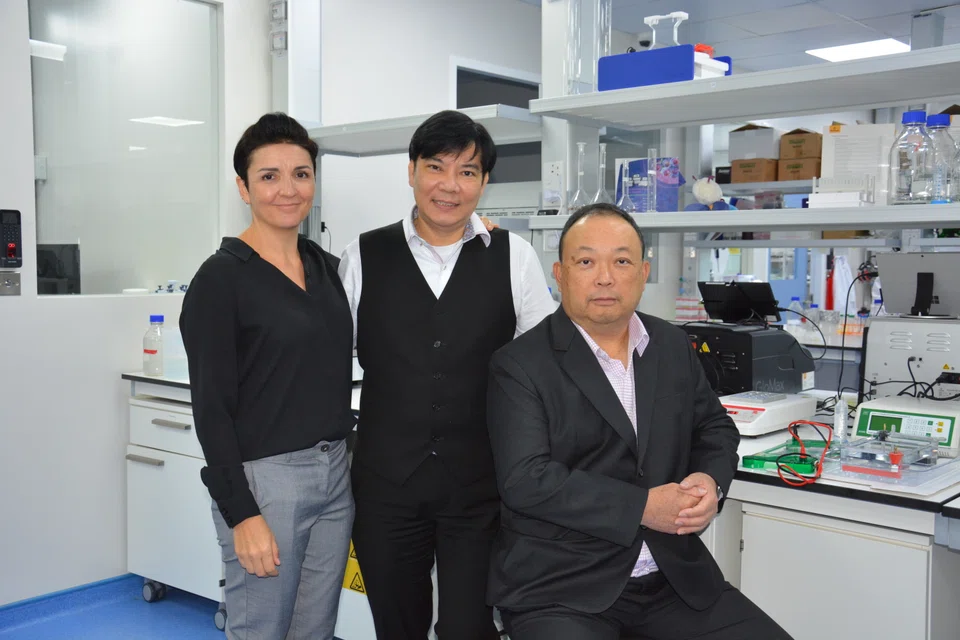
FLEXIBLE workspaces are having a moment, with demand in the sector seeing a resurgence post-pandemic. It’s no wonder then that specialist engineering firm AcroMeta , previously known as Acromec, wants in.
The group ventured into the coworking laboratory space in 2021 with the opening of the Life Science Incubator (LSI), and is now eyeing further expansion in this business segment.
“Back in 2020, we realised that a lot of people were talking about doing research work but they lacked the space… and sometimes capital to establish their own lab,” AcroMeta’s recently-appointed executive chairman Levin Lee told The Business Times..
Lee noted that setting up a 150-square-metre (sq m) lab could cost S$750,000, and this excludes monthly rent as well as the price and “hassle” of maintaining it. All that means immense cost and risk for companies, particularly start-ups and scale-ups that are at the early stages of the research and development process.
Located at the German Centre, in Jurong East, LSI is a coworking lab facility spanning about 600 sq m. AcroMeta owns a 70 per cent interest in the lab.
The facility holds 37 lab benches and six private suites for rent, for a minimum of three months. Members get access to state-of-the-art equipment, such as centrifuges and microplate readers; specialised rooms for autoclaving or tissue culture work; and a 350 sq m coworking office space.
There is also a team of lab assistants managing the facility and providing round-the-clock support to researchers.
Lee said the idea is to “let researchers focus on the science and innovating” instead of wasting time and money on building and maintaining the infrastructure.
This is very much in AcroMeta’s wheelhouse – besides operating LSI, the group’s two other business segments are in designing and constructing controlled environments, as well as managing facilities and equipment in such environments. Past projects include the construction of cleanrooms for the Agency for Science, Technology and Research; and medical facilities and labs for Singapore General Hospital.
Since its launch, LSI has seen around 30 companies come through its doors. It has been able to maintain an occupancy rate of 60 per cent to 80 per cent. Presently, it has 21 member companies ranging from start-ups to multinational corporations. Among the latter are tech giant HP and IT consulting firm Accenture.
Most rent a space for nine to 12 months, although Lee said there are a few shorter-term tenants as well.
One of its newer tenants is Panomix Biomedical Tech, a Chinese metabolomics company that studies the chemical processes of small molecules (commonly known as metabolites) in biological samples.
The company started renting a private suite and two benches at LSI in November 2022. It is currently testing the waters in Singapore as its “first step” abroad, said scientist Yin Fenfang.
“We tried renting a space at JTC to build our own lab, but... it would take four to six months to get the necessary permits and renovate the place before we can start work,” she said. The company instead opted for LSI’s coworking lab. Although rent is costly at more than S$10,000 a month, Yin said the cost is well worth it after factoring in time saved and convenience.
Biotech start-up Quvo Labs has been renting a bench at LSI since early-2022.
Chief scientific officer Burak Ozturk estimates the team saved more than S$100,000 renting a bench instead of establishing its own lab. “This money can be used to hire people or purchase consumables instead,” he said.
Besides providing the lab space and equipment, Ozturk said LSI also plans events for member companies to connect with potential clients, vendors and even collaborators.
Growth prospects
LSI contributes just a small portion to AcroMeta’s revenue with no breakdown provided in the company’s financial statements.
Lee’s aim is to grow the coworking lab business in “parallel” with AcroMeta’s mainstay engineering, procurement and construction operations. The company will explore coworking lab opportunities in markets such as Japan, China, Hong Kong, Thailand and Australia. LSI last month inked a non-binding memorandum of understanding with a German commercial property management group to collaborate on a coworking lab project in Brisbane, Australia.
On the home front, AcroMeta intends to open a second coworking lab space – one that’s much larger than its current facility at the German Centre, with a wider range of facilities and equipment – by Q1 2024.
The team is also toying with the idea of providing consultancy and advisory services for start-ups. This means pivoting from an operator role to one of an “incubator and accelerator”, said Lee. “(That) will help us augment the group’s project base and create more sustainable sources of revenue.”
Much of AcroMeta’s revenue is derived from projects. Based on its latest annual report, around 87 per cent of revenue in 2022 was from projects. This works out to S$55.2 million, up from S$22.5 million in the previous year.
The group also saw net profit skyrocket to S$1.07 million in the first six months ended March 31, from S$98,000 in H1 FY2022. Revenue in the same period grew 77 per cent to S$39 million, from S$22 million in the first half of the previous year.
Changing board and business
AcroMeta is also hoping to expand into the renewable energy sector, specifically the operation of waste-to-energy plants.
The company said its plans in this space have been derailed by the pandemic.
Besides changes to its business composition, the group has seen a slew of changes to its board. Several new directors have been appointed, including Lee.
Co-founder Goi Chew Leng, meanwhile, has stepped down as its non-independent and non-executive director. Goi has been paring his stake in the company.
Shares of AcroMeta closed at S$0.038 last Friday, giving it a price-to-earnings ratio of 3.18 and a market capitalisation of around S$10 million. The stock is up 5.6 per cent this year, but is still far from its IPO price of S$0.22 when listed in 2016 as Acromec.
Analysts said growth in the biomedical laboratory property sub-segment has been healthy in the past few years.
As a “very niche space” with high barriers to entry, operators need to have the domain knowledge to target life sciences startups, said Alan Cheong, Savills Singapore’s executive director of research and consultancy.
Cushman and Wakefield research head Wong Xian Yang pointed out that demand in coworking lab spaces is anticipated to grow in the coming years as Singapore’s life science industry expands.
Demand is also supported by prevailing megatrends in Asia – such as increasing populations and ageing societies – and the government’s focus on “high value-added activities”, he said.
“The sector is poised for growth, with more coworking lab spaces expected to be set up and possibility of more players entering the market.”