From faster checkouts to connected data: How unified payments can support retail growth
Adyen’s mobile checkout solutions and unified payments platform can help retailers simplify operations, protect sales and gain better customer insights

CASHLESS payments may be second nature to Singapore shoppers, but for retailers, the story is more complicated than just turning on a payment terminal.
Behind every transaction is a growing network of payment methods, terminals and vendors that merchants need to manage – often across physical and digital channels. Checkout friction costs sales, and fragmented payment data makes it harder to understand customers and scale.
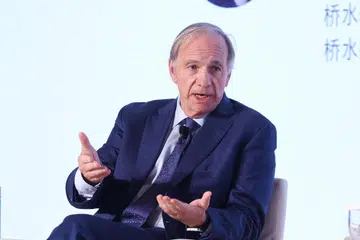
“The landscape is characterised by a massive behavioural shift where digital and cashless transactions are the standard,” says Ben Wong, general manager of South-east Asia and Hong Kong at global fintech platform Adyen. “Singapore is a market evolving at a rapid pace, defined by a move towards personal and portable payments.”
More payment options have given shoppers greater convenience, but they have also increased operational complexity for merchants – particularly when different methods require separate terminals, vendors or back-end processes.
When these systems are concentrated at designated counters, checkout capacity can become constrained during peak periods, leading to longer queues, abandoned purchases and lost revenue.
Back-end issues abound, too.
“Managing a fleet of physical payment terminals can be incredibly cumbersome,” Wong explains. “With different payment terminals, payment data becomes fragmented; refunds and other processes are trickier. The manual refund, reconciliation and fleet management when scaling is extremely time-consuming.”
According to the latest Adyen Retail Report 2025, 40 per cent of Singapore retailers say managing multiple payment vendors takes significant time and resources away from growing their business. He adds that since digital and physical payment systems often operate independently of one another, this fragmentation can leave retailers juggling multiple providers.
These back-end hurdles can also adversely affect customer experience: the report found that 56 per cent of shoppers in Singapore will walk away from a purchase if their preferred payment method is not available.

Meanwhile, fragmentation also impacts a brand’s relationship with a customer – when a consumer is flooded across disconnected touchpoints rather than being recognised as the same person across online and in-store channels, customer loyalty takes a significant hit.
Beyond convenience, towards growth
Adyen helps tackle this challenge with its suite of mobile point-of-sale (mPOS) solutions.
The term “mPOS” refers to wireless mobile payment devices that process payments. Unlike regular POS machines, they can accept payments as long as they are connected to the Internet and do not need to be plugged into a power source.
This helps solve multiple issues for merchants. Firstly, it addresses the “fixed counter” problem by enabling sales staff to accept payments from anywhere in the store. Transactions can be made at the spot, and customers do not have to queue to pay for their items, decreasing the likelihood of them abandoning their carts.
This “queue-busting” feature, according to Wong, makes a huge difference, especially during busy sales periods.
This is exactly how Adyen helped R. M. Williams, an Australian footwear and clothing company. Making the payment process mobile not only eliminated queues but also enabled staff to provide personalised assistance and complete checkouts anywhere in the store, creating a faster, more engaging in-store experience.
With offices around the world, the fintech company works with the likes of Meta, LVMH, Shein, Uber, L’Oréal, Cathay Pacific, Grab, Klook and Singapore Airlines.
Closer to home in Asia, Adyen’s work with beauty retailer Sephora led to the launch of stores without cash registers. This helped streamline the entire shopping journey by allowing customers to complete a purchase with any employee on the shop floor.
Additionally, Adyen supports a breadth of payment methods across its services. It also provides a single-platform payment solution, where all aspects of the journey – from payment gateways to payment processing and settlement – are integrated into one holistic system.
Having real-time access to transactions in a single dashboard also means that purchasing and payment data is collected in one unified platform. According to a Forrester Consulting report, Adyen’s platform could help enterprise businesses reduce the operational labour involved in launching in new markets by 75 per cent, representing a present value of US$1.2 million over three years.
It is not just about savings, either. As Adyen’s work with Prada shows, a unified platform breaks through silos and enables the collection of reliable data about a single customer. For luxury brands, in particular, this paves the way for better personalisation and experiences, fostering greater customer loyalty that in turn strengthens brand perception and drives revenue growth.
This contributes to better insights, less guesswork and more informed decisions, ultimately leading to seamless, tailored customer experiences.
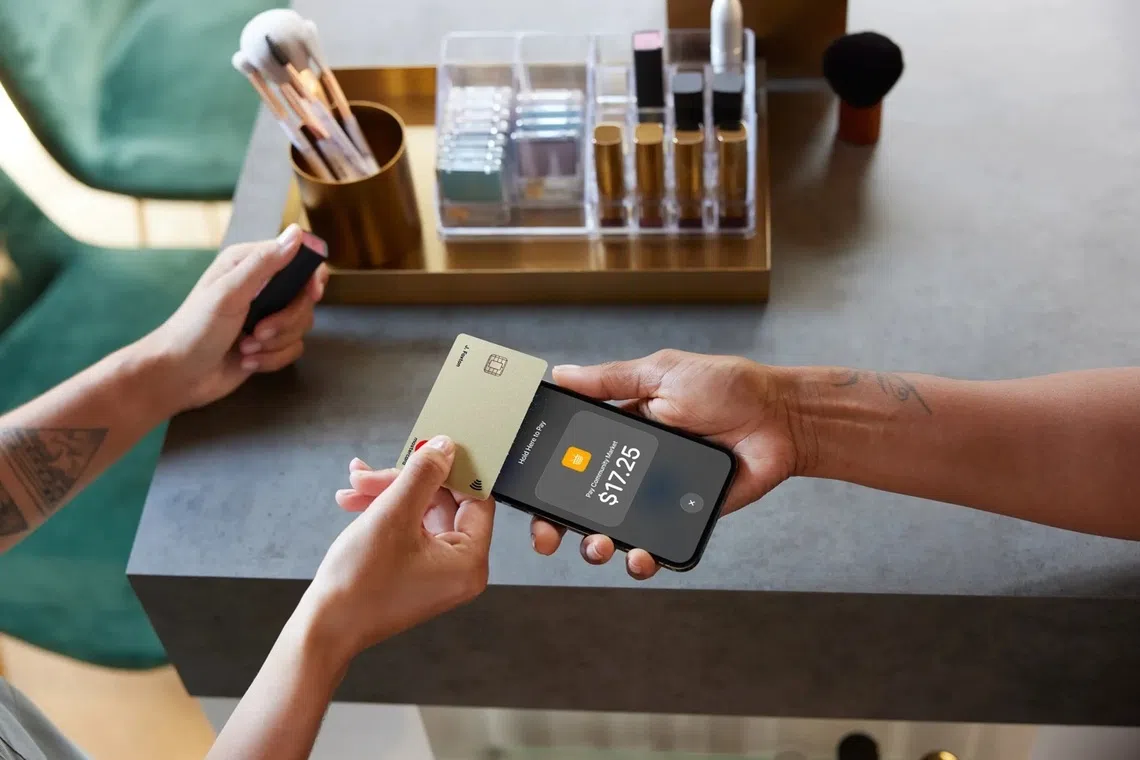
The launch of the Tap to Pay on iPhone (TTPOI) feature in Singapore, which Adyen supports, has also expanded the kinds of mPOS terminal options a merchant can use.
TTPOI turns compatible iPhones into payment terminals, allowing merchants to accept payments without having to set up and configure new POS terminals. This means companies can plan for new activations, such as pop-up events at different locations, without needing to worry about the logistics of physical terminals.
Looking ahead and seeing the bigger picture
Wong shares that beyond these business advantages, Adyen looks at mPOS solutions – and specific features like TTPOI – as a powerful equaliser that drives financial inclusion by “levelling the playing field” for businesses of all sizes, from solopreneurs to global retailers.
“This shift empowers any business to seamlessly join the digital economy using only the iPhone in their pocket, lowering the overhead barrier for small businesses and also transforming the payments experience into something trusted, quick and invisible,” he points out.
The firm is also seeking to drive greater impact on businesses beyond its core solutions. Through Adyen Giving, merchants can integrate donations to a charitable organisation of their choice into the checkout process with zero overhead.
With these, Adyen sees itself as not only a vendor of payment solutions but also as a long-term and strategic growth partner to its clients.
“We want to be the single platform that bridges the gap between online and offline worlds,” Wong says. “By consolidating data, we help brands recognise the human behind the transaction, turning payments into a source of customer insight rather than just a utility.”
Learn more about Adyen and how it leverages Tap to Pay on iPhone on its website.
This article was first published in Tech in Asia.

Share with us your feedback on BT's products and services