After bumper year for main bourse, Vietnam sets sights on top 4 ranking in S-E Asia
Ho Chi Minh Stock Exchange sees unprecedented boom from first-time retail investors, rise of fintech
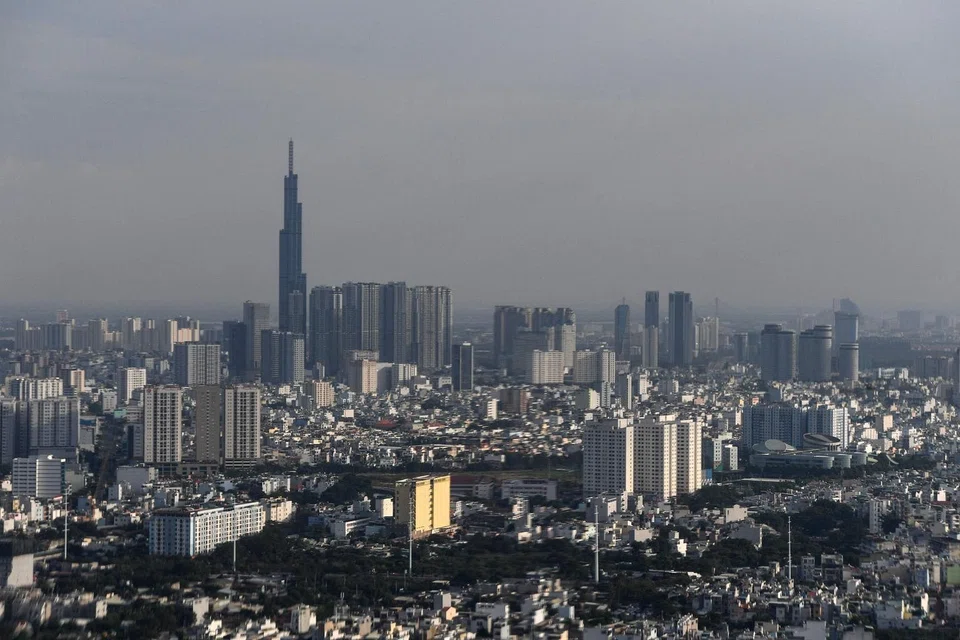
Hanoi
VIETNAM'S Ministry of Finance recently laid out its plan to see the country's stock exchange be ranked among the top 4 in South-east Asia by 2030.
In the region, it currently ranks fifth in terms of market capitalisation to gross domestic product (GDP) after Singapore, Malaysia, Thailand, and the Philippines, said the World Bank.
"We are working with other ministries on the development strategy of our stock market to actively integrate with the world's stock market. Our goal is to be among the 4 major stock markets of the Asean region," said Deputy Finance Minister Nguyen Duc Chi in a recent speech.
It has been a bumper year for the main bourse the Ho Chi Minh Stock Exchange (HOSE), which has experienced an unprecedented boom in recent months.
The VNIndex, a basket of stocks listed on the HOSE, hit a record 1,500 points on Nov 25 - a nearly 36 per cent increase since the start of the year.
Fuelling the spike has been a huge increase in the number of first-time retail investors who have used their spare time during the Covid-19 lockdown to dip their toes in the market.
"They have been saving a bit because they are not going out and consuming as much. They could use that extra discretionary income to have a flutter on the exchange," said Kent Wong, the head of banking and finance at VCI Legal.
The relatively nascent exchange had 3.86 million registered accounts as of October this year, an increase of almost 40 per cent from the 2.77 million at the end of 2020.
Wong said these new entrants into the market have been dubbed locally as 'F0s', a playful twist on the official term used to refer to people who have been infected with Covid-19.
"The experts say they are chickens going to the slaughterhouse, but surprisingly, it hasn't turned out that way," he said.
In Vietnam, the rise of fintech has been partially driving this trend with a slew of micro investing apps now available.
Two of the most popular ones - Finhay and Fina - give investors the opportunity to invest small amounts of money through their mobile phones in the stock market and real estate respectively.
But having this access to financial markets is only part of the story.
Wong said there has also been a "funnel effect" whereby other investment options have become less attractive. Lower interest rates on deposits, for example, are sending investors in search of higher yields.
Those higher yields, however, are largely attributed to greater risk.
Vietnam is still listed on the FTSE Russells Equity Country Classification's watch list as a "frontier" market with a number of structural issues that need to be addressed before it can advance to become a "Secondary Emerging" market.
A reclassification could spur another boom in capital and push Vietnam's equity market even higher.
An interim review is due in March 2022.
Wong said that combining the HOSE with the Hanoi Stock Exchange could pay big dividends as well.
"It will be more integrated and there won't be so much confusion about where to list. It will encourage high-frequency trading once it's more centralised like that," he says.
That, however, may still be some time away. In the immediate term, the future of the market is still somewhat uncertain.
"It will depend on the Covid-19 measures and the restrictions. If there is a continued disruption to supply chains, it may slow things down," Wong said, although he remained optimistic about the next few years.
"I think we could see it continue to rise - just like a year ago in the US when the bourses reached all-time highs just after the main wave (of Covid infections), so you could probably see that in Vietnam too."