

After durians, what next for Serial System?
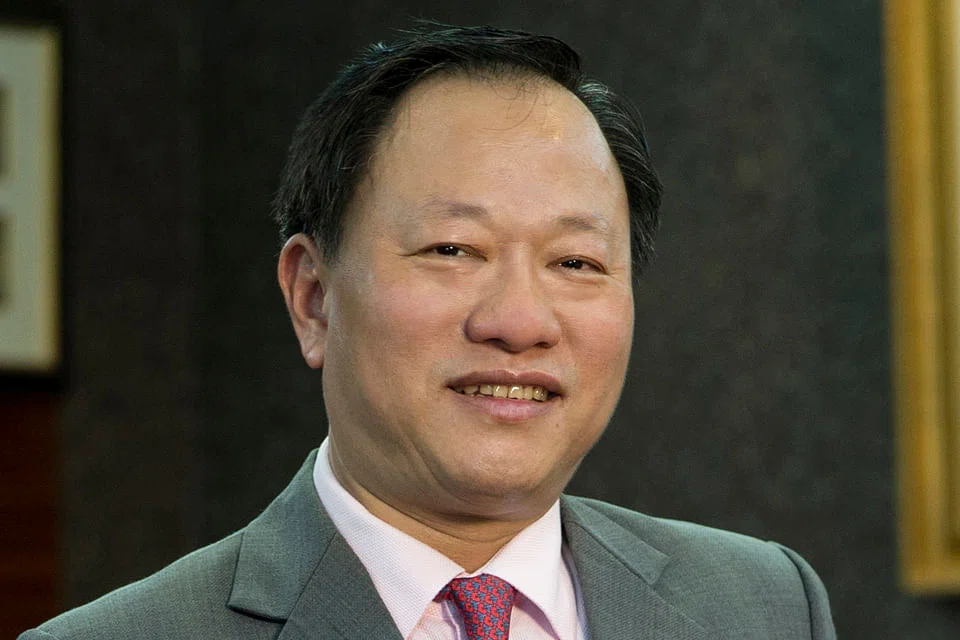
SERIAL System, the largest electronics component distributor listed on the Singapore Exchange, earlier this week made the very unusual move of investing in a Malaysian durian business, involving a total sum of about S$1.915 million.
Electronics and durians are as different as cheese and chalk. But viewed against Serial System's history of acquisitions, the move seems less bizarre. The group, after all, has a history of dipping its fingers into various pies. But attractive and important as diversification is, company managers must also bear in mind that it can bring about new challenges.
The group said in an exchange filing on Monday evening that it has invested in a joint venture with its CEO Derek Goh and an individual named Philip Ting Ding Ing. The joint venture, in turn, subscribed for 10 new shares in Musang Durians Frozen Food for RM10 million (S$3.17 million).
Musang Durians manufactures, processes, trades and exports durian puree and durian-related products. It made a net profit of about RM1.8 million for the three months ended June 30, and had net assets of about RM2.06 million as at that date.
With the new investment, Musang Durians will further scale up its operations, Mr Goh told The Business Times. He is expecting the investment to bear fruit in about two years.
Serial System will also use its extensive distribution network to grow and expand the business, the firm said in its announcement.
The turn towards the food business comes as Serial System hunts for higher margins.
While its revenue has been increasing in the past three years, to a high of US$1.4 billion in 2016, profit has been steadily declining. Its per-share earnings have dropped from 1.05 Singapore cents in 2014 to 0.35 cent last year.
Gross profit margins have been cut thinner by increased sales of lower-margin electronic components in South Korea, Singapore and Taiwan, as well as greater competition in Hong Kong and China. The consumer products distribution business, which the group diversified into in 2014, also delivers smaller margins.
There may yet be upside in this business, as the group streamlines processes and consolidates various consumer products distribution businesses. These comprise Swift-Value Business Pte Ltd, which distributes printer accessories such as ink and toner cartridges; Achieva Technology, which carries brands such as Intel, Samsung, Adata and Asus; and Serial I-Tech (Far East), which distributes IT, mobile, photographic and timepiece products including brands such as Apple and Fossil.
In its main electronic components distribution business, Serial System will continue to explore opportunities to expand in higher-value business segments such as security, automotive, smart devices and enterprise cloud solutions, Mr Goh told BT in a recent interview.
Many technological trends that are unfolding, such as Internet of Things and blockchain, would bring about projects that require integrated circuits and chips, he added. Mr Goh has therefore set a target of raising the group's revenue to US$5 billion to US$10 billion within 10 years.
Serial System is also involved in other sectors.
Through wholly owned subsidiary Serial Multivision Pte Ltd, it supplies meal ordering software to hospitals in Singapore. Through another wholly owned subsidiary Contract Sterilisation Services, the group assembles and distributes customised perfusion tubing packs used in heart operations to hospitals across the entire Asia Pacific.
The list of associated businesses runs on. There is a 27.3 per cent stake in SPL Holdings (Australia) Pty Ltd which provides laundry services to hotels, resorts, care centres, hospitals and restaurants in Australia.
And nearer home, it holds a 21 per cent stake in Singapore-based food manufacturer and caterer Tong Chiang Group Pte Ltd.
In May this year, Serial System bought 70 per cent of a managed print services company, Print IQ Singapore, which serves established brands such as Seagate, Charles & Keith, Soup Restaurant, Swarovski, Pan Pacific Singapore and OG Department Stores.
To be sure, Mr Goh, who worked alongside his hawker father at the food stall in his childhood, has spent his life bucking norms. Much of Serial System's present success is due to his hard work.
The food business is also not entirely new to Serial System, given that it had acquired Tong Chiang and three other associated companies in 2015.
In fact, NRA analyst Liu Jinshu views the latest move favourably. To some extent, the principles on which these food and beverage businesses run are similar to Serial System's well established distribution business, he told BT.
"The intuition is to probably scale up these businesses and list them at a later stage, possibly with the previously acquired Tong Chiang group as a combined and larger entity," he said.
Still, at a certain point, too much diversification does more harm than good. It confuses investors as to what the company stands for, and can spread the management's attention too thinly. Different types of expertise and skillsets are also required for different types of industries.
Furthermore, the track record of Serial System's investments so far does not inspire confidence. The group has recorded losses in its share of results from associated companies for the past five years, with the figure coming in at a negative US$3.95 million in the 2016 financial year.
Perhaps it might take more time for these investments to start turning in a profit. But perhaps too one cannot take diversification as a silver bullet for a poorly performing core business.
TRENDING NOW
Prima to move out of historic Keppel Road flour mill building in 2028

Grab CEO’s wife Chloe Tong on life with Anthony Tan and finding her purpose

OCBC sheds S$8 billion in value as shares close nearly 6% down; analysts cautious on banks
As Asia’s food delivery giants rejig the pie, who will win the market?

