Agri-commodities sector on edge as Red Sea troubles continue

ESCALATING tensions in the Red Sea could push up prices of agri commodities across the board and reintroduce volatility into a sector that was initially poised to have a less troubling year, market watchers said.
Attacks on commercial shipping in the Red Sea by Houthi rebels in Yemen since mid-November have affected passage through the Suez Canal – the shortest maritime route between Asia and Europe.
This has compounded disruptions to shipping routes and supply chains, which for months already had to grapple with a drought-stricken Panama Canal.
Since the second half of 2023, some ocean carriers had already rerouted trade through the Suez Canal, away from the Panama Canal.
“Reduced traffic in the Panama Canal had seen shipments bound for Asia diverted across the Atlantic Ocean and through the Suez Canal,” said analysts from Fitch Solutions unit BMI.
BMI analysts noted that the Suez Canal accounts for more than 15 per cent each of global rice and wheat trade flows, and about 7 per cent of global corn trade flows.
The Panama Canal, meanwhile, accounts for more than 20 per cent of global soybean trade flows which depart from the US Gulf and northern Brazil for China and other Asian markets. It also accounts for more than 15 per cent of global corn trade flows and nearly 8 per cent of global wheat trade flows.
The crisis has led to spikes in shipping costs and delivery times.
Darren Stetzel, vice-president of soft commodities for Asia at financial services group StoneX, said agricultural markets could see higher volatility in the near term – particularly in the early months of this year due to global politics.
Other than the Houthi conflict, he said other macroeconomic issues to watch include the Russia-Ukraine war and the war in the Gaza Strip.
Markets should also keep a close eye on crude oil prices, as the commodity is one factor that influences agri-commodities’ prices.
“There is no agricultural commodity that will be impacted more than another at this stage, but the interplay between agricultural and oil prices is always a big factor,” Stetzel said.
“It is widely recognised that tensions in the Red Sea and the redirection of oil-carrying vessels have added some significant support to oil prices recently, and will continue to do so given concerns about global oil supply disruption from the region,” he added.
Aletheia Capital analyst Nirgunan Tiruchelvam said markets have so far taken the conflicts in Gaza and the Red Sea “in their stride”, with prices of agri commodities seeing only a minimal increase.
But with the US stepping in to “widen the fray” with attacks to repel the Houthi rebels, market watchers said this could be a turning point for the agri-commodities sector.
“There’s a possibility now that we could see further drops to supply levels,” Tiruchelvam said.
While he cautioned that it is still premature to speculate if prices of agri commodities will touch new highs, he added that this could happen if the conflict gets prolonged or intensifies.
For now, prices of most agri commodities have been mixed in the year to date as at Singapore market close on Thursday (Jan 18).
Good moisture levels in Argentina and Brazil have caused corn prices to fall, while weaker Chinese pork prices and lower sow herds have contributed to a decline in soybean prices.
The El Nino weather phenomenon has, on the other hand, pushed up prices of sugar, as outputs for cane sugar are now weaker.
Robusta coffee prices, too, have risen this year, as imports of the coffee variant from key regions into Europe have become more costly and slower amid brewing Red Sea tensions.
More broadly, the S&P GSCI Agriculture Index is down 4.2 per cent this year.
Rabobank analysts said in a note that 2024 kicked off with a “weaker tone” for agri commodities, as South American rainfall has boosted production prospects for several crops. This was, however, partially offset by a sharp appreciation in the US dollar, which in turn weighed on prices.
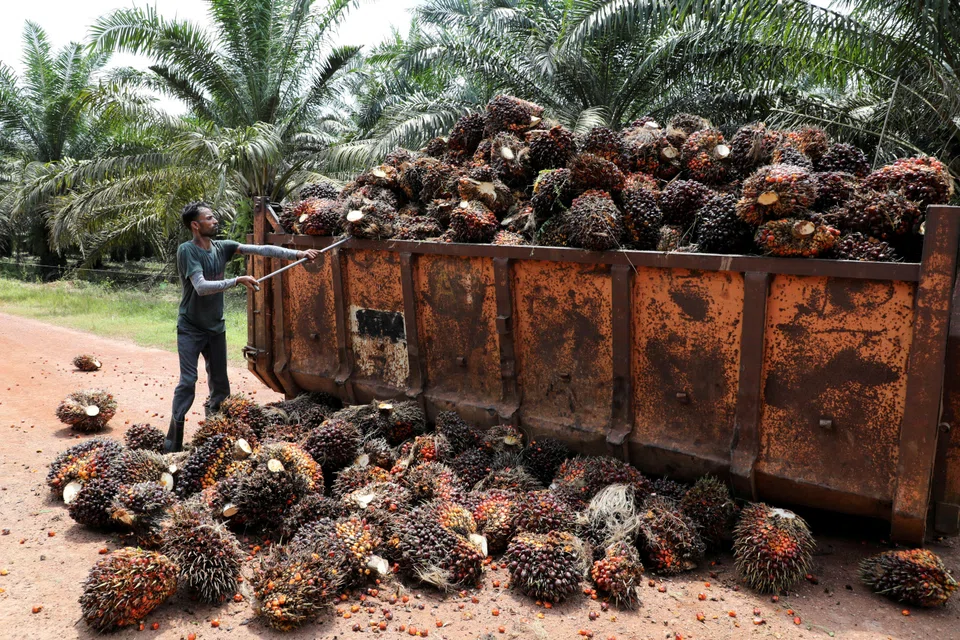
Aletheia Capital’s Tiruchelvam said the conflicts, along with the ongoing El Nino phenomenon, make for a worrisome near-term outlook for commodities such as palm oil and rubber.
Both commodities are largely produced in the tropics and receive especially harsh weather during the El Nino phenomenon, which could wipe out a large portion of supply.
Singapore, which imports almost all its food products, is a “sitting duck” in cases where macroeconomic events bring about volatility and supply disruptions, Tiruchelvam said.
However, he added that a Singapore dollar rally could bring about a brief reprieve for end consumers here.