AI is changing banking jobs, forcing a rethink of skills: UOB’s innovation head
Lenders must ensure employees can adapt to technology in a ‘comfortable’ way, Lee Zhu Kuang says

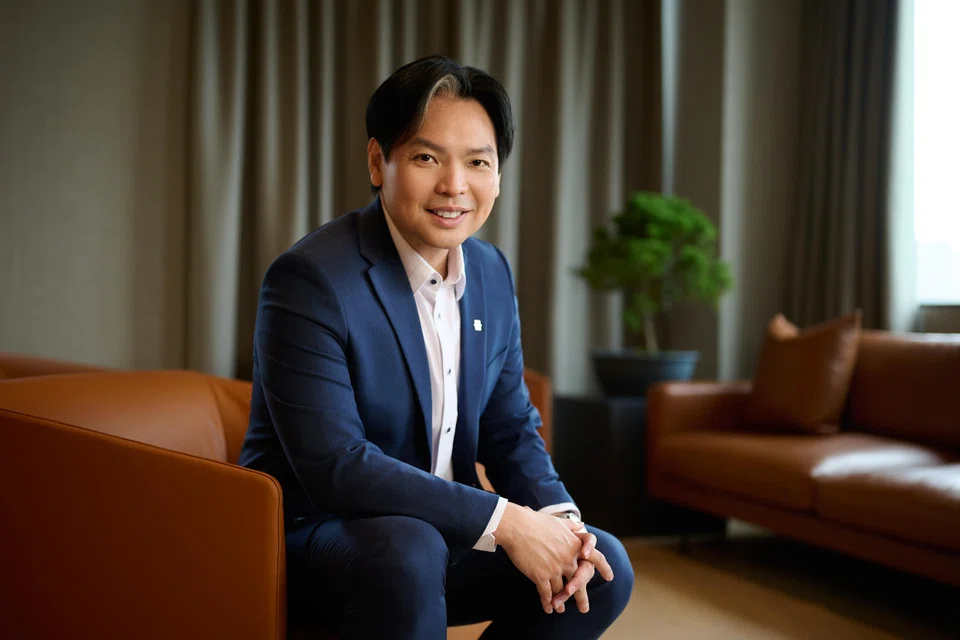
[SINGAPORE] Lee Zhu Kuang describes himself as a “deeply curious person”.
“I like to learn new things, and I like to transform ideas into road maps,” said Lee, who joined UOB in July 2025 as group head of its innovation group.
The bank set up the innovation group in 2025, to help it better use technologies such as artificial intelligence (AI) and blockchain. The business unit also looks at developing employees’ tech skills.
Lee’s passion for learning, whether from mentors, peers or staff, has helped him stay ahead of emerging trends.
He said: “I tell (young people), you need to continue to learn on the job and have a lifelong continuous learning mentality, because technology is just changing too fast; you cannot be relying on whatever you have learned in university.”
Having led transformation in several banks prior to UOB, Lee said lenders must ensure employees can adapt to technology in a “comfortable” way.
But for the staff themselves, having the mindset to continuously learn and reskill would benefit their careers in the long run as well.
“We believe that people can be trained and re-skilled, but it takes two hands to clap – the person must be willing to learn as well,” said Lee, who is currently pursuing his doctorate in business administration.
“Lifelong continuous learning… is the type of mentality that I hope to nurture in this place,” he said.
Here are some excerpts from his conversation with The Business Times:
How did you end up in your role?
I started my career as a consultant in IBM, but I found that consultancy had very industry-specific focuses and I did not want that, so I moved into the banking sector.
I have been with a few banks, to accelerate transformation. What attracted me to UOB is that the bank is of the right size to allow innovation to move faster.
One thing that was very striking to me was also the consistent messaging from executive committee members: the focus on innovation, and the people-first approach, which is very consistent with my values.
Could you elaborate on a key trend you see within your area?
There are three main areas: AI and data; the way we innovate and the new ways of working; as well as digital assets.
Innovation is very challenging because the innovator can only scale with guardrails and governance in place.
How do we also make the correct technology that allows us to adapt fast enough, and how do we get people to believe in tech given that they are used to the way they work?
Meanwhile, because of the Genius Act in the US, which requires stablecoins to be backed one-for-one by US dollars or other low-risk assets, stablecoins have become a very hot topic among the banks, because of the potential they can bring to banking, from deposits, to FX (foreign exchange) and cross-border payments.
How does this affect your role?
We need to make sure that the mindset to see technology is correct, and we need to help people to adopt new technology in a very comfortable way.
The innovation group was created in April last year. Now, we have an opportunity to merge all the bank’s components into a library of services to create business services quickly.
Most people in a bank have a product mindset, but we need to expand that to a network mindset. This means that we are not the only ones that can manufacture our products and services, but we can tap into products and services across our ecosystem.
From the skillset perspective, we are very big on rescaling and redesigning roles responsibly: the technology-human collaboration is about enhancing human capability, not replacing them.
We also need to let employees create their own bots, for example, to help them with their work. Of course, that needs to be done with guardrails in place to make sure that we are using AI in a responsible and accountable way, so that it doesn’t lead to shadow IT or shadow AI, which is the use of IT or AI applications without security oversight.
While we look at big, longer-term initiatives across risk management, compliance, relationship managers, engagement and wholesale credit, and more, we also need to show quick wins and that the usage of AI is actually here to help people.
TRENDING NOW
He built the Vingroup empire. Now South-east Asia’s richest man is handing some key roles to his sons
Grab CEO’s wife Chloe Tong on life with Anthony Tan and finding her purpose
Deal between tycoon friends sparks scrutiny of Philippine power sector
Singapore’s S$80 million vertical farm must pass the 50-cent test to succeed