From AI to ESG: Keppel CEO Loh Chin Hua’s take on the big trends
He sees a ‘very bright’ future for the company, in that its strengths have positioned it to succeed, even amid climate, energy and digitalisation challenges

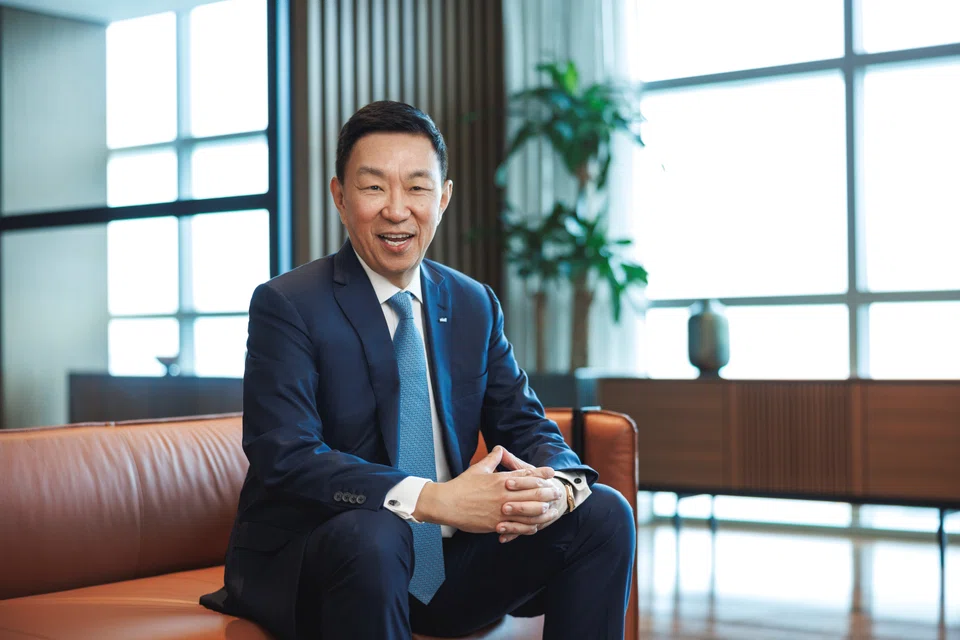
[SINGAPORE] Loh Chin Hua has big plans for Keppel. The asset manager is gunning to hit S$200 billion in funds under management (FUM) by 2030, while also tackling challenges such as climate change, the energy transition and digitalisation.
Real estate used to be Keppel’s largest earnings contributor, but the company has evolved significantly in its transformation in recent years. The company’s latest annual report, released on Friday (Mar 28), gave an insight into Loh’s thoughts on a range of subjects – from artificial intelligence (AI) to environmental, social and governance issues.
The Business Times reproduces excerpts:
Q: How is Keppel positioning itself to capture opportunities in infrastructure?
Amid a volatile environment, infrastructure remains a highly attractive asset class, providing stability and resilience to investors. The infrastructure market is poised for significant growth, driven by rapid digitalisation and the energy transition.
As a global asset manager with deep operating capabilities in sustainability and connectivity solutions, Keppel is strategically positioned to capitalise on these transformative opportunities, to create value for our limited partners and shareholders.
We have evolved our infrastructure business significantly over the past few years to focus on opportunities across renewables, clean energy and decarbonisation, while growing Keppel’s reputation and track record as a leading infrastructure asset manager.
In 2024, Keppel was ranked in IPE Real Assets’ list of Top 100 Infrastructure Managers, emerging as the third-largest globally by listed investments, and the sixth-largest in the Asia-Pacific by assets under management (AUM).
As at end-2024, our infrastructure FUM stood at S$19 billion, spanning a portfolio of diverse energy and environmental assets, as well as digital infrastructure such as the Bifrost Cable System.
Keppel was also able to secure the first closing of its third private credit fund, which will invest in private debt focusing on infrastructure assets. Our ability to deploy funds across the capital stack will enable Keppel to seize more infrastructure opportunities, undertaking larger and increasingly complex solutions that the world needs.
Q: How is Keppel positioning itself to capture opportunities from the digitalisation and AI wave amid the disruptions?
Like climate change and the energy transition, digitalisation and AI are megatrends that are here to stay. To support the significant computing power, data storage and networking requirements needed, the world will continue to require more digital infrastructure such as data centres and subsea cables, which Keppel is well positioned to offer.
Disruptive technological innovations such as DeepSeek can help reduce the costs of AI and promote further adoption of Generative AI. This could in turn spur greater demand for AI solutions and encourage further investments into more advanced solutions, auguring well for Keppel’s connectivity solutions.
In the past six years, our data centre portfolio grew about 2.7 times, from 240 megawatts (MW) in 2018 to 650 MW in 2024. In the next few years, we aim to almost double this to 1.2 gigawatts, harnessing capital from our third data centre fund and other co-investors.
Our investment in the Bifrost Cable System, the largest high-speed transmission cable across the Pacific, is progressing well. When completed in the second half of 2025, it will not only deliver enhanced connectivity and network diversity to our customers, but also generate attractive returns for Keppel and its private fund co-investors, with an expected internal rate of return of over 30 per cent on our five fibre pairs.
Keppel will also continue to earn long-term operating and maintenance fees of over S$200 million for each fibre pair over 25 years. Beyond Bifrost, we are pursuing opportunities for two more cable systems, with over 30 fibre pairs connecting South-east Asia to the rest of Asia and beyond.
Succeeding in this dynamic landscape requires seizing opportunities at speed and scale, as well as significant investment capital.
Keppel is uniquely positioned to drive growth by leveraging our deep operating capabilities, access to third-party funds, asset recycling platforms, and partnerships with leading cloud and technology companies, including Amazon Web Services and Meta.
As an ecosystem player, our expertise in data centres, green energy, cooling and subsea cables positions Keppel well for future global tech partnerships, in which we can drive advancements in sustainability and connectivity, while delivering good returns to our investors.
Q: What are your views on the real estate business, which used to be Keppel’s largest earnings contributor?
Real estate continues to be an important segment for Keppel. However, the way we operate has changed, pivoting from a traditional developer into an asset-light real estate solutions provider, focused on recurring income.
We have announced the monetisation of about S$3.6 billion in real estate assets, making up slightly over half of Keppel’s cumulative asset monetisation of S$7 billion as at end-2024.
In line with our asset-light strategy, we have reduced our China land bank by about two-thirds, from S$3.1 billion in 2017 to S$1.1 billion in 2024, significantly de-risking our exposure to China property.
Through our multi-year restructuring, we have also generated significant run-rate cost savings of above S$100 million over the past two years.
The real estate division will continue to focus on growing recurring income by offering sustainable urban renewal solutions through KSURF, and provide consultancy services for large-scale developments, leveraging Keppel’s established track record in Asia.
Q: There has been some backsliding on ESG in certain markets. What is Keppel’s approach towards sustainability?
Keppel remains committed to sustainability. We see it not just through the lens of compliance or disclosure, but as an integral part of risk management and how we create value.
We are committed to running our business responsibly, including reducing carbon emissions, and also investing in and creating solutions that contribute to a sustainable future. Climate change is one of the most serious challenges facing humanity today, and we see strong demand for the sustainability solutions that Keppel provides.
Beyond the “E” aspects of ESG, we are also focused on enhancing the governance and social aspects, whether through the adoption of a board gender-diversity policy, executing our zero-fatality strategy, or contributing to the community through philanthropy and staff volunteerism.
Q: How do you see Keppel’s prospects in 2025 amid the uncertain global environment?
Keppel’s comprehensive transformation has positioned us to thrive in the current volatile operating environment, marked by increasing geopolitical risks, technology disruptions and trade tensions.
I am confident that Keppel is poised to seize opportunities, leveraging our deep operating capabilities and access to diverse capital pools, to deliver the solutions that investors and customers seek.
I believe the future is very bright for Keppel, with our strengths positioning us for success. We will harness our synergies and deep operating capabilities to entrench Keppel’s position as a strategic ecosystem partner, and leverage cloud and AI technologies to drive efficiencies and competitive advantage.
Embracing a growth mindset, we will execute our plans with discipline and agility while staying ambitious. We will also make Keppel a great place to work for global talent, where fulfilling careers are built.
When we succeed, Keppel will be a leading global asset manager and operator with an FUM of S$200 billion, tackling the challenges of climate change, the energy transition and rapid digitalisation, while delivering strong returns to our limited partners and our shareholders.