AI is moving faster than the infrastructure powering it, panellists say
Microsoft, Keppel executives say the AI boom is forcing new approaches to power and data centre investment


ARTIFICIAL intelligence may be advancing by the second, but the energy systems needed to power it can take decades to build – a mismatch that is becoming one of the biggest constraints on the global artificial intelligence boom.
Wong Wai Meng, chief executive officer of data centres at Keppel, said there are already insufficient energy systems globally to meet the AI-related demand the company is seeing, even before the industry tackles the question of powering that growth sustainably.
“The energy system takes decades, but AI, innovation and cloud… by the seconds, I would say, is evolving,” he said during a fireside chat with Mark Souza, corporate vice-president and chief technology officer at Microsoft Asia.
They were speaking at Shell’s Powering Progress Together Forum on Friday (Oct 9) at the Marina Bay Sands Expo and Convention Centre, held as part of Shell’s 135th anniversary celebrations.
The discussion was moderated by Aw Kah Peng, chairman of Shell Companies in Singapore, who framed the conversation around the increasingly close relationship between technology and energy.
While Microsoft and Keppel’s data centre business may not immediately come to mind at an energy event, she said, “energy is the first layer of that stack”.
The challenge, the panellists said, is that AI is moving at a pace far quicker than the physical infrastructure supporting it.
For data centres, this goes beyond electricity. Wong said that water, network connectivity, land and financing must also keep pace with growing computing capacity.
He argued that these systems can no longer be planned in isolation.

The infrastructure supporting AI needs to be considered as one interconnected stack, he said, stretching from energy and water through to data centres, chips, applications and, ultimately, the tokens generated by AI models.
At present, however, “every piece basically is in its own… silo”, he said.
‘Bring your own power’

That tension is already shaping how governments approach the growth of data centres.
Wong said regulators in different countries are increasingly asking data centre operators and AI companies to “bring your own power”, rather than relying entirely on electricity grids that also serve households and other industries.
He said the principle was understandable, but added that the infrastructure needed to deliver that additional power must also be built.
If gas is part of the solution, for instance, there must be sufficient fuel supply and pipeline capacity, he said.
Policymakers therefore need to think further ahead about how energy infrastructure develops alongside data centre demand, Wong added.
Souza similarly argued that consumers should not have to bear the additional energy costs created by new data centres.
“When we put in a data centre, we are going to take on the extra cost – we are not going to put it to the consumer and the communities that we build in,” he said of Microsoft’s approach.
Companies building data centres also have a responsibility to ensure the communities hosting them benefit, including through jobs, education and investment, Souza added.
Energy remains the more difficult constraint, he said. AI chips require significantly more power, while the supporting cooling infrastructure adds to the overall electricity requirement.
Souza said demand for AI infrastructure is already outstripping supply, with technology companies spending “billions and billions of dollars” to provide customers with the power, space and computing capacity they need.
“That backlog will be there for several years,” he said.
Still, the surge in AI-related power demand could also become part of the solution, Wong said.
He noted that new energy systems require large and reliable customers to underpin investment. Historically, that scale could come from government policy or large commercial users.
AI is now producing a level of demand that could itself support investment in new energy infrastructure, he said.
“Never before have we seen a scale of offtake like demand from AI,” he said, adding that such demand could become the commercial offtaker needed for new energy systems to be developed.
Rather than seeing rapid AI growth and pressure on the energy system as separate problems, Wong argued that they could instead be considered together.
Aw picked up on the point, noting that companies increasingly need to bring different parties together instead of remaining within their traditional industry silos.
Rethinking the data centre
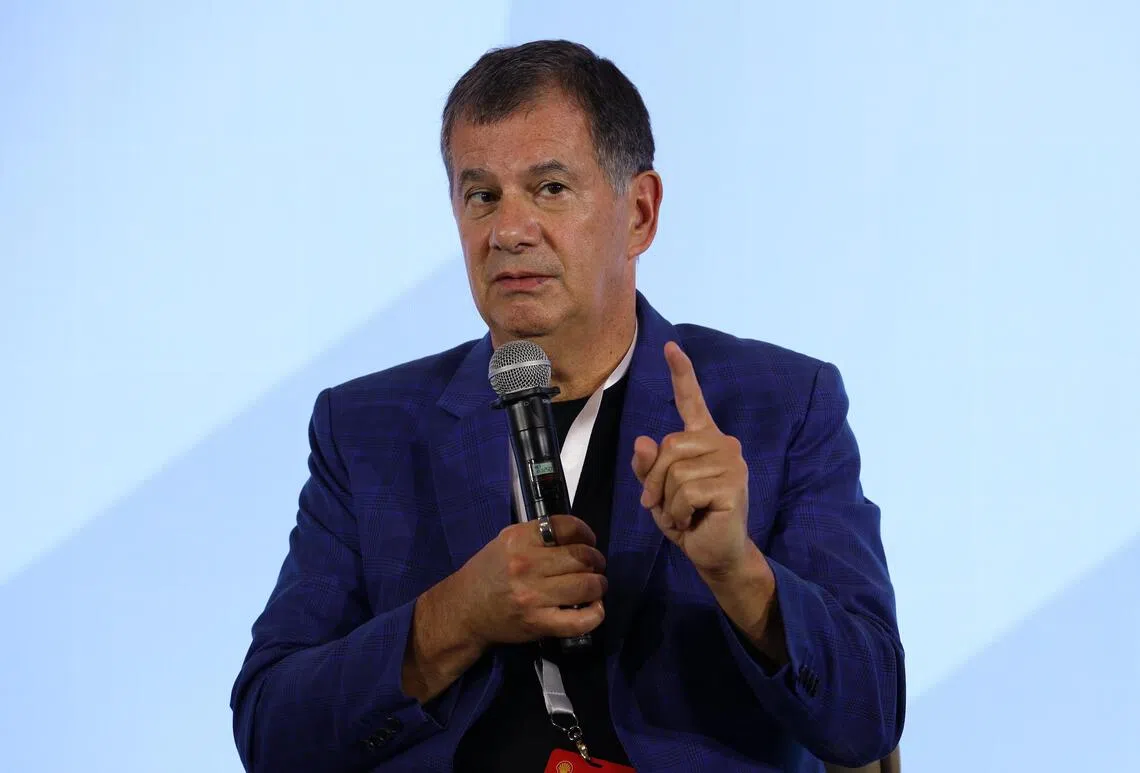
The speed of AI development is also changing the economics of the data centre business itself, Wong said.
A data centre built seven or eight years ago might have been designed to last 30 years, he noted.
Today, however, some of the technology inside a new facility could need to be replaced within around five years as successive generations of graphics processing units arrive.
While the building itself may remain, Wong said operators need to think differently about how easily individual systems could be changed out.
That has implications not just for engineering, but also for the way investments are depreciated and paid off, he added.
He pointed to cooling systems as an example.
Rather than designing them as largely permanent installations, Wong said data centre operators may need systems that can be swapped out when the requirements of a new generation of chips change.
He likened the approach to replacing individual Lego-like modules, rather than rebuilding an entire system.
The shift also requires regulators and industry to plan further ahead, even as technological requirements continue changing rapidly, he said.
Wong cautioned that short term responses such as requiring operators to provide their own power could become “Band-Aid policies” if they are not accompanied by a longer term infrastructure plan.
“Over the long term, are we creating a very messy infrastructure?” he asked.
A similar challenge arose with Keppel’s floating data centre project, which he said took more than five years to reach the construction stage.
Government agencies including the Maritime and Port Authority of Singapore, National Environment Agency and Building and Construction Authority were supportive of the concept, he said.
The difficulty, according to Wong, came from the fact that the project crossed several traditional areas of responsibility.
“Sometimes that silo is a curse when you need to innovate, when you need to cross disciplines,” Wong said.
He suggested that governments could consider how regulatory structures might better accommodate projects that cut across industries and disciplines.
Keeping up with AI
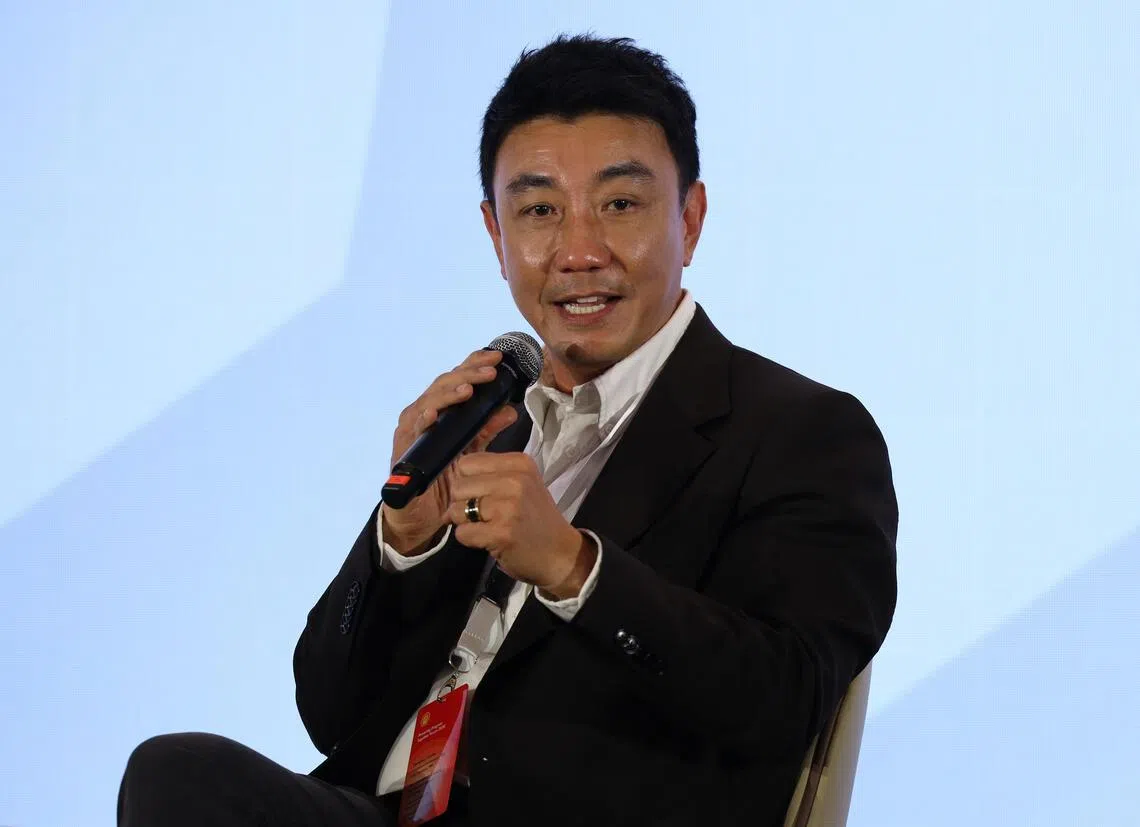
But infrastructure is only one side of the adjustment, the speakers said. Companies and their workers are also having to change how they operate as AI capabilities improve.
Souza said the companies furthest ahead in AI adoption tend to have strong backing from the top of the organisation.
The same holds true in Asia, he said, although companies in the region face additional challenges including multiple languages, localisation, restrictions on moving data across borders and the availability of computing resources.
He added that while it has become relatively easy to build AI agents, the harder task is deploying them securely and efficiently, while putting the necessary governance around them.
That has to be followed by training and clear use cases, he said, rather than simply giving employees access to AI tools and telling them to experiment.
At Microsoft, even the initial roll-out of its Copilot productivity tools required repeated efforts to encourage adoption, Souza said.
The company shares effective prompts and examples internally, uses elements of gamification and recognises teams that make heavier use of the technology, he added.
Wong said Keppel is similarly trying to push employees to change how they work.
One method is to deliberately create resource constraints and challenge teams to achieve more with the same – or fewer – resources, while asking them to consider how AI could improve productivity, he said.
At the same time, Keppel has invested in AI training and is sharing use cases to give employees ideas about how the technology can be applied in their own functions, he added.
Aw said the harder task may be changing the mindset around learning itself.
Rather than treating training as something employees must find separate time for, organisations need to develop “a state of mind of learning all the time”, she said.
That becomes increasingly important as companies confront concern over whether AI will displace workers.
Souza argued that AI is more likely to replace individual tasks than entire jobs, drawing a parallel with the introduction of calculators.
Companies can use AI primarily to reduce costs and perform the same work with fewer people, he said, or use it to increase what their existing workforce is capable of doing.
“You can be a company that embraces it and does more,” he said. “And I think we all aspire to be that company.”

Decoding Asia newsletter: your guide to navigating Asia in a new global order. Sign up here to get Decoding Asia newsletter. Delivered to your inbox. Free.
Copyright SPH Media. All rights reserved.